Archive for the ‘Language and Translation’ Category

Beau-frère

April 3, 2013

I was celebrating Easter with my girlfriend, at her aunt’s house. Most of the people there were from Togo because she is from that country. The party had a lot of wonderful food and great African music. People were dancing, drinking and being merry.

I was speaking to a man from Sudan about several things. We were conversing in French and at one point a man in his fifties who was dressed in a beautiful colorful striped African shirt approached me and remarked that he was surprised I speak French. Well, I understand a lot more than I speak, I explained. I introduced myself and my girlfriend who was sitting next to me. I thought maybe they were relatives but they didn’t know each other despite the fact that this party was at her aunt’s. The man was pleasant. He was also surprised that my girlfriend is from Togo and he called me “Beau-frère.” In French it means “Brother-in-law.” The man from Sudan said it was a privilege to be referred this way by a stranger.  After greeting us he left us and joined the people he had come with to the party.

man playing percussion instrument

Photo by Craig Adderley on Pexels.com

Later on when we decided to go home and when we started to say our good-byes, this same African man came to bid us farewell. He was very polite and held my hand. Then he looked at my girl-friend and said: “This woman is my daughter. Please make sure you take good care of her. Take care of my daughter please. Treat her well. I trust that you will.”

I promised and assured him I would always treat her well. I thanked him for his concern. I was touched by this man’s good intentions and sense of fraternity towards his own kin.

Copyright © 2013 Jorge Luis Carbajosa

All Firearms Are Discharged By The Devil

December 17, 2012

There’s a Spanish proverb which says Las armas las carga el diablo which is also known as las armas son del diablo. It is a proverb that would be good for the American conscience to think about and be aware of at this time of tragedy, and it means that the devil is the one who discharges all firearms. So it doesn’t matter who carries or owns a firearm, ultimately it is the devil who will fire it.

The NRA and all gun supporters can make all the arguments in favor of weapons they want, but in the Spanish world we know this proverb to be true, and not necessarily in the sense that there is a devil out there who will indeed control any weapon you happen to be carrying, but in the sense that humans don’t quite realize what it means to take someone’s life, and how powerless we are over weapons that discharge themselves accidentally and have done so in too many tragic instances. It is for a reason, after all, that that the Fifth Commandment says “Thou shall not kill.”

Everyone knows that the kind of massacre that recently occurred in Connecticut, rarely, if ever, happens in Europe, where guns are basically banned almost everywhere. And ask yourself the following question: What business do you have owning an assault weapon, or a hand gun? If you really are so much into guns, I would not oppose that you own a hunting rifle, and that is all. Think about this: Do you want to carry a firearm? Sure, bring a rifle. I really have no problem with that and I don’t say it sarcastically because I will be able to see at a distance that you have one. And let’s see how well you can conceal a hunting rifle. I think police and security guards will agree.

I don’t want my children to grow up in a country where civilians have relatively easy access to firearms that are not hunting rifles or alike. I’m not a gun expert, but I think you understand what I am saying. I don’t like the idea that my 3 and 8 year old are not safe in this society. I don’t want my sons’ lives to be taken from them tragically by a fool. I don’t want my children to be raised in vain and to have their lives vanish because of someone’s lunacy.

The press now talks about a possible new ban on assault weapons. Well anyone can tell you  it will have to be much more than that. I’ve already expressed what I think of hand guns. Making elementary schools hire security guards could help (and possibly even decrease unemployment). But like a lawyer friend of mine pointed out there must also be firm liability laws to make gun ownership extremely expensive and to make manufacturing companies liable for their products.

Until then, or until something is changed in our society, what happened in Sandy Hook will not be of much surprise to any of us who live in this country. We will simply continue to hope that it doesn’t ever happen in our school district, or in the malls we go to.

Copyright © 2012 Jorge Luis Carbajosa

Languages of Kenya

November 21, 2012

Unlike many other countries, Kenya is predominantly a trilingual country, meaning that many people speak three languages. Kenyans grow up speaking their tribal language at home, which some refer to as a “vernacular” language and then they learn Swahili at their schools, which they also read on the press, listen to it on the radio, TV, songs and learn it by speaking to others. It is also referred to as the Kiswahili language, and it is considered the National language of Kenya and a Lingua Franca of East Africa. Finally English is also learnt much the same way as Swahili by Kenyans and it is considered the official language of Kenya, which means it is the language that the government of Kenya conducts business in. Vernacular languages are no longer taught at schools in Kenya.

The “vernacular” languages spoken by the 42 tribes of Kenya can be divided

189943_4702083105779_466937013_n

Purple leaves in Nairobi

into three different language groups: The Bantu, the Nilotic and the Cushitic. The most spoken tribal language in Kenya is the Kikuyu language. The Kikuyu tribe is about 20% of the population in Kenya. Kenya’s current president, Mr. Emilio Mwai Kibakint,  is a Kikuyu.

President Obama’s father, Barack Hussein Obama Senior, was from the Luo tribe, which are a Nilotic tribe found in Tanzania, Southern Sudan, Uganda and Kenya. They speak the Dholuo language.

Copyright © 2017 Jorge Luis Carbajosa

References: Wikipedia and some Kenyans.

Black and White: Everything’s Relative

August 9, 2012

I learnt at an early age that everything is relative when it comes to physical features and appearance.

During my early childhood I lived in Spain and Brazil. Over there I was considered “rubio” and “louro” which both words mean blonde in Spanish and Portuguese respectively, but they also mean light skinned or fair.

When I was nine,  my family moved to Denmark and I remember being told that I was not blonde. The children who accused me of this, and whom I hopelessly argued against, were of course blonde and blue eyed, like most Danes. My light brown hair, which had so often identified me as blonde, was now all of a sudden very dark and my greenish-brown Mediterranean eyes did not help my cause either.

Later on as a grown man, when I married a woman from Haiti, I remember she would sometimes tell me that there are white people in her country. But when I visited Haiti, I noticed that the people my wife was referring to as white, were what in the U.S. and Europe people would always call black. They were basically light skinned black people. No one in Europe or in the U.S. would dare call these “white” people white.

In fact, the nick name of one of my brother-in-laws is “blanc,” which means white in French, and this is because he is considered light-skinned, but as you can probably guess, he is very dark skinned, and very African looking to the lay person.  It appears these people are referred to as white by my wife and others in Haiti because they can see they are lighter skinned, or that they have some European features which are uncommon to them. It seems that the word “white” in Haiti, has a similar meaning to the word “black” in the U.S. where everything that is not 100% white could be referred to as black.

What is also interesting is that some of those people my wife referred to as white, were so dark skinned that even in Latin America or in the Spanish world, they would not be called  mulatos, a word that is commonly used in Spanish but is considered a pejorative by some people in the English speaking world, which means someone who is half-white and half-black, like our president, Mr. Barack Obama, and kind of like my children.

So in conclusion, it is to one’s advantage that everything is relative and that we don’t have to live inside labels that are true in one place but false in the next.

Copyright © 2012  By Jorge L. Carbajosa

La Chuleta

March 27, 2009

The word chuleta in Spanish has several meanings. In Spain besides meaning a meat “chop” it also means “cheat sheet,” or a person who is a flashy type, cool at doing certain things, or a showoff. This is probably why a cheat-sheet in Spain and Venezuela is called chuleta and not hoja de apuntes para hacer trampa, a more literal translation. The meaning of this word as cheat-sheet comes into the Diccionario de la Real Academia www.rae.es in the 1950s. In Chile chuleta also means a “sideburn”.

But what is really interesting is that cheat-sheet has so many different ways of being said in Spanish. Ours is una cultura picaresca pretty much in all 21 countries where Spanish is spoken (I include Puerto Rico because although it might not technically be a country, it most definitely feels like its own country).  Our culture is indeed so picaresque that I remember one Latin teacher I had in high school expected us to cheat at the tests. “You’re dumb not to cheat” he would say, “and dumber if you get caught,” he’d add. That is how I passed Latin in High School by the way.

I have made a list here of how to say cheat-sheet in all the Spanish speaking countries. I don’t think this list even exists in any dictionary, reference book or in the internet. To compile it, I consulted with numerous translators and professors in Spanish speaking countries:

Argentina: Machete. Bolivia: Chanchullo (Occidente); Copie (oriente). Chile: Torpedo. ColombiaComprimido, copialina, pastelCuba: Chivo. Costa Rica: Forro. Ecuador: Polla. El Salvador: Copia. Filipinas: Código. Guatemala: Chivo. Guinea Ecuatorial: Chuleta. España: Chuleta. Honduras: Chepie & Copia. México: Acordeón. Nicaragua: Copia. Panamá: Batería. Paraguay: Copiatín & Copiatini. Perú: Plagio. Puerto Rico: Droguita. República Dominicana: Chivo. Uruguay: Tren & Trencito. Venezuela: Chuleta.

I’ve included the Phillippines because the Tagalog and other Phillipino languages have been influenced by the Spanish language tremendously. In the Tagalog código is spelled kódigó. In Tagalog the K has replaced the Spanish c (when preceding the a, o and u only) and qu in most instances.

man sitting on a chair and writing on a tablet

Photo by Ivan Samkov on Pexels.com

My father tells me when he was a young student he would see very elaborate chuletas, some of them were rolled up with a rubber band so they could remain small and be scrolled easily during a test.

Machete in Argentina is a very important element of the Gaucho culture, the knife. Batería is probably used in Panamá because when you cheat during a test you are in a sense recharging your battery. Chepia in Honduras is from the Honduran verb chepear, which means to copy. Perhaps the Peruvian plagio is the most straight-forward and honest word. Polla in Ecuador is pronounced the same way as Poya, which in Spain is vulgar way of describing a man’s penis. Chivo means kid or goat. A Cuban interpreter told me that perhaps el chivo te berrea las respuestas (reveals the answers to you). Berrear also means to bellow, bawl, scream and shout. Chanchullo means an easy, profitable source of livelihood or a swindle.

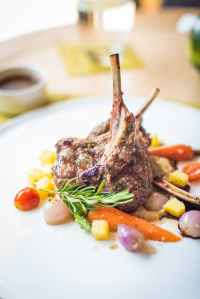
close up of meal served in plate

Photo by Chevanon Photography on Pexels.com

One dish that I loved when I lived with my parents was chuletas de cordero lechal, which means “baby lamb-chops.” This is a dish that used to be de temporada (seasonal) in Spain but that now is available most of the year. When cooked at home they are usually fried at high temperatures until golden brown. They are best if fried in aceite de oliva para freir (not the virgin kind) and some ajo machacado (smashed garlic). If served in a park or in the country side they are usually cooked a la parrilla  (grilled/broiled) and accompanied only con ensalada y pan, since they are small and a normal serving can be as much as 10 or 15 chuletas per person.

Copyright © 2009 By Jorge L. Carbajosa

Jalapeños or chiles toreados

December 15, 2008

The word chile in Mexico means pepper, the country where it comes from. In Spain we call it pimiento and it was brought to us from Mexico or North America (Yes, for those of you who don’t know, Mexico is in North America). The word chile or chili comes from the Nahuatl language, a Native American language. Native Americans in Mexico for me are not Indians, I refer to them in the same way that I refer to natives here in the U.S. One time, when I was working as an interpreter, an immigration judge interrupted me in court when a Guatemalan individual was saying the word indígenas and I translated it as “natives”. His Honor disagreed. The natives over there should be called Indians, he enlightened me. Of course interpreters should not really defend themselves in court because the record speaks for itself. But I am often amused by the ridiculous labels that have been created to describe different people.

Many words in the Mexican Spanish dialect come from the Nahuatl also known as Nahua in Spanish, specially those that have the “ch” in them.

Chiles toreados are in a way lightly “browned” or lightly roasted peppers because they are quickly fried in a little oil, and turned. They are in a sense “toasted” in oil, because they are only slightly cooked. Sometimes you can see blisters on the jalapeños from the heat, but how much you cook them is your choice. In order for them to be considered toreados , however, they should not be cooked too much. Just like a toast, you usually don’t want to over toast it.

In Mexico the verb torear(to bullfight) means the same as in Spain. But it also means to “rub” the chile pepper in order to have the seeds release their juice and make the pepper hotter. So supposedly the jalapeño is hotter when you cook it up this way but there is also a Spanish verb torrar, which means to toast. This word also exists in Portuguese and Catalan, and perhaps it is more frequent in those languages because I’ve only heard someone use it in Spanish once or twice.

Torradas in Portuguese are toasts and I remember my grandmother in Portugal would toast bread on an iron skillet, the grilling kind, since she didn’t have a toaster and since Portuguese white bread isn’t really shaped to put in a toaster. Toasts also taste a lot better when they are made in this old fashioned way. So the torradas were made in a similar way as these jalapeños toreados are made, with a different type of skillet of course, and the jalapeños toreados are only lightly cooked, not quite toasted like a toast.

The word turrón, a special “nougat”  made out of almonds and honey, which looks a little like peanut brittle, and which comes from the Alicante province of Spain, also comes from the word torrar or its Catalonian or Valencian version of the word because the delicious mixture of honey, almonds and sugar were toasted up or baked after being mixed together.

Toreado and torrado are the past participles of the verbs torear and torrar respectively.  I understand why perhaps the verb torear was chosen to describe the action of rubbing the peppers, after all, you are fooling them or tricking them (into becoming hotter) which is another meaning of the verb torear.

But does putting the jalapeños in the skillet for a couple of minutes really make them hotter? I think that is debatable.  It really depends on the jalapeño itself. The more I think about the word toreado, the more it sounds very much like a  mispronunciation of torrado.

In any event, I was fortunate to visit Albuquerque, New Mexico, this year and I enjoyed some of these wonderfully hot jalapeños toreados. I slice them up and eat them with meat, usually steak or chicken. This pepper is for the person who really likes hot food. Even my wife is hesitant to eat them prepared this way and I have always joked that she is capable of eating jalapeños like Spaniards eat olives.

Maybe I like hot food more than her after all.

Copyright © 2009 By Jorge L. Carbajosa