Guía completa sobre el ITIN en los Estados Unidos: Obtención, Utilidad y Ventajas

August 13, 2023

El Número de Identificación de Contribuyente Individual (ITIN, por sus siglas en inglés) es un documento esencial para quienes no son elegibles para obtener un número de Seguro Social en los Estados Unidos pero necesitan cumplir con sus obligaciones fiscales. En este artículo, exploraremos cómo obtener un ITIN, su utilidad, las instituciones financieras que aceptan este número para abrir cuentas bancarias, las compañías que ofrecen servicios para obtenerlo y las ventajas de gestionar el proceso por cuenta propia.

¿Qué es el ITIN y para qué sirve?

El ITIN es un número de identificación fiscal emitido por el Servicio de Impuestos Internos (IRS) de los Estados Unidos. Está destinado a individuos que no son residentes ciudadanos o extranjeros no residentes que tienen la obligación de presentar declaraciones de impuestos en los EE. UU. El ITIN se utiliza para informar y procesar las declaraciones de impuestos, así como para otros fines fiscales.

Pasos para obtener un ITIN: (lo puedes leer directamente del portal del IRS aquí)

  1. Formulario W-7: Debes completar el Formulario W-7, la Solicitud de Número de Identificación de Contribuyente Individual. Este formulario recopila información sobre tu identidad y razón para solicitar el ITIN.

  2. Documentación de identidad: Adjunta documentos originales o certificados que respalden tu identidad y estatus de extranjero. Estos documentos pueden incluir pasaportes, visas, certificados de nacimiento y otros.
  3. Declaración de impuestos: Incluye una copia firmada de tu declaración de impuestos federales si estás solicitando un ITIN para cumplir con tus obligaciones fiscales.
  4. Envío de la solicitud: Envía la solicitud completa junto con los documentos requeridos al IRS. Puedes hacerlo por correo postal o en persona en una de las oficinas del IRS.
  5. Espera y verificación: Una vez que el IRS reciba tu solicitud, procesará los documentos y emitirá el ITIN si todo está en orden. La verificación puede llevar algunas semanas.

Agente Tramitador del ITIN autorizado por el gobierno estadounidense

El gobierno estadounidense autoriza a varias empresas a tramitar tu ITIN. Aquí tienes una lista y más información. El proceso para obtener un ITIN puede tardar más de 7 semanas.

Empresas privadas que te pueden ayudar a obtener el ITIN:

Si prefieres obtener un ITIN a través de un servicio especializado, varias compañías ofrecen asistencia en el proceso. Algunas de estas empresas incluyen ITIN W-7 Application, Greenback Expat Tax Services y ITIN Pro, entre otras. Estas compañías pueden ayudarte a completar los formularios y asegurarse de que presentes la documentación correcta. En los barrios hispanos de Chicago también hay empresas que te pueden ayudar a obtener el ITIN.

Si usas una empresa privada para obtener el ITIN lo haces bajo tu propia responsabilidad y este blog y su autor no se hacen responsables si te roban o si te engañan.

Instituciones financieras y cuentas bancarias con ITIN:

Numerosos bancos y cooperativas de crédito en los Estados Unidos aceptan el ITIN para abrir cuentas bancarias. Algunas instituciones que generalmente aceptan el ITIN incluyen Wells Fargo, Bank of America, Chase, Capital One y Ally Bank, entre otros. Sin embargo, las políticas pueden variar, por lo que siempre es recomendable verificar directamente con la institución antes de abrir una cuenta.

Ventajas de obtener un ITIN por tu cuenta:

  1. Ahorro de costos: Al gestionar el proceso por ti mismo, puedes evitar los honorarios que algunas empresas de servicios pueden cobrar por su asistencia.
  2. Control y transparencia: Al realizar la solicitud personalmente, tienes un mayor control sobre el proceso y puedes asegurarte de que toda la información sea correcta.
  3. Conocimiento personal: Al aprender sobre el proceso de obtención del ITIN, adquieres conocimientos valiosos sobre el sistema fiscal de los EE. UU.
  4. Experiencia educativa: Gestionar tu propia solicitud te brinda una experiencia educativa sobre la burocracia y los procedimientos legales en los Estados Unidos.

En conclusión, el ITIN es una herramienta vital para aquellos que necesitan cumplir con sus responsabilidades fiscales en los Estados Unidos. Si bien existen empresas que pueden ayudarte en el proceso, obtener un ITIN por tu cuenta puede ahorrarte costos, ofrecerte un mayor control y proporcionarte una experiencia educativa valiosa.

Photo by Mark Youso on Pexels.com

The GhanaFest in Chicago 7/30/23

August 1, 2023

Please see this article which I co-authored:

Written by Jorge Luis Carbajosa and Reuben Hadzide

Sankofaonline.com is a blog lead by Mr. Reuben Hadzide which sometimes publishes my stories. Thank you Reuben. It’s an honor for me to be part of the Ghanaian and Togolese community.

Why was Trump allowed to lie if government employees are not?

May 17, 2023

Think about it.

A government employee will lose his/her job if he/she lies. So how come Trump was allowed to lie while being paid with our tax money?

Why do we people allow politicians to lie with our tax money?

Copyright © 2023 Jorge Luis Carbajosa

Nutrition Facts Labels Europe vs U.S.A.

February 15, 2023

European nutrition facts labels are easier to understand than American labels because they use 100g units, making the grams interchangeable with percentages (100g=100%) and giving the consumer a much clearer picture of what they’re eating. Below I make some comparisons between food labels in the U.S. and Europe:

Milk Nutrition Facts

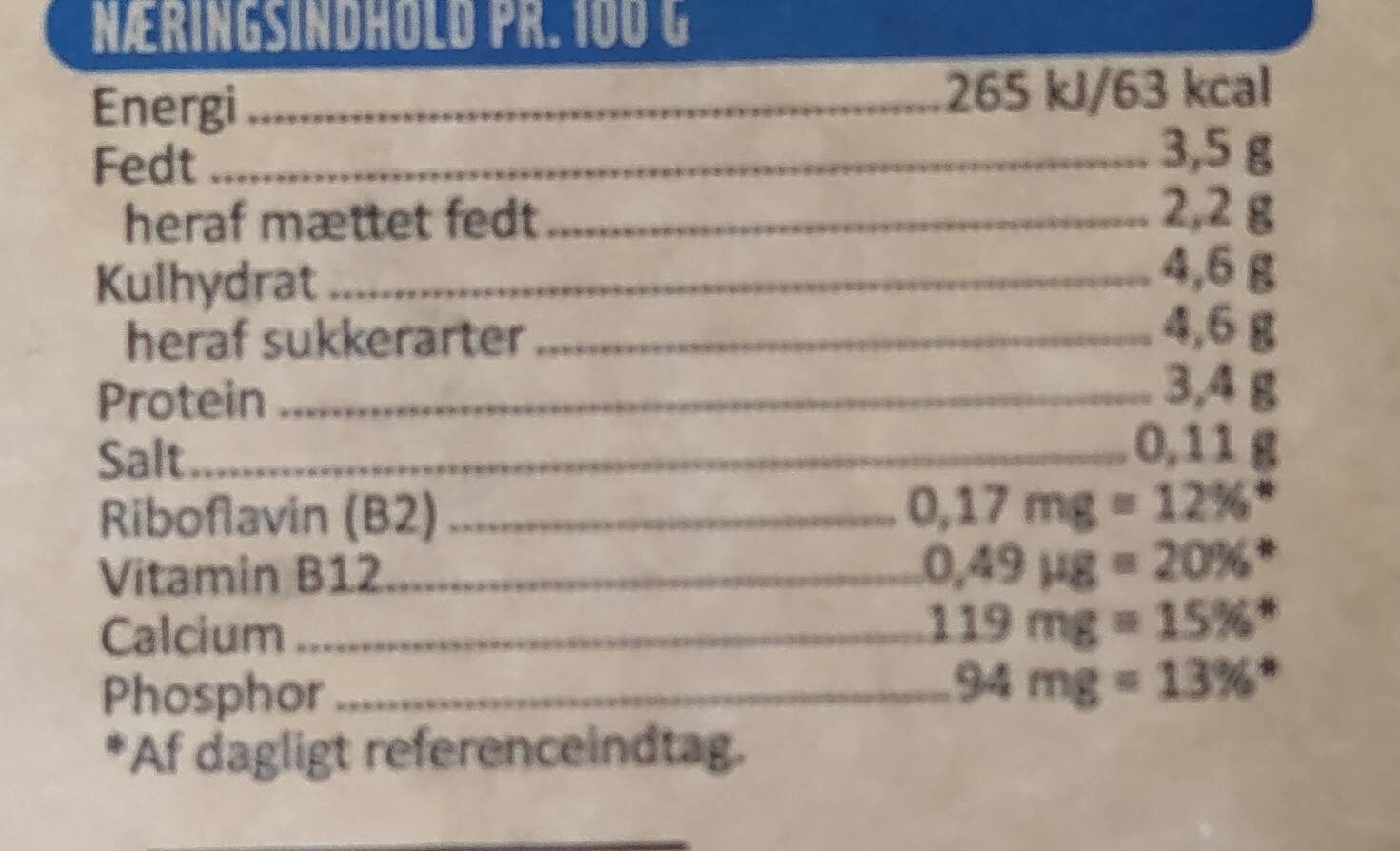
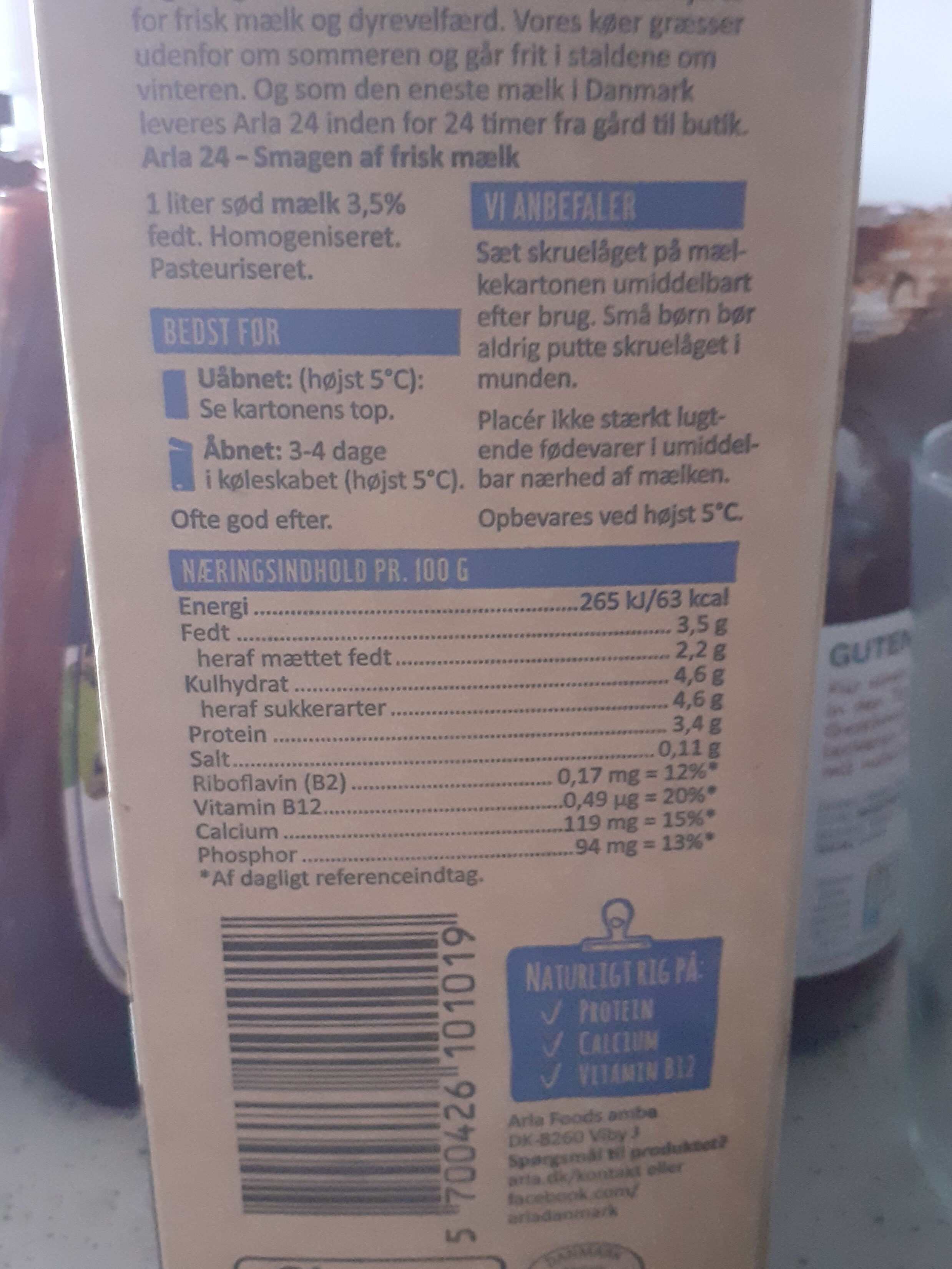
If we look at the milk labels below from Denmark and Spain, the fat is 3.5g out of 100g, therefore it’s easy to transfer this to percentages and realize this whole milk has 3.5% fat. The milk from Spain, which is semi-skimmed milk, has 1.6% fat. All the nutrition elements transfer directly to percentages. Europeans learn in grade school that 1 liter (1L) of water is equal to 1 kilogram of water (1Kg). Although milk has a higher density than water, 1L of milk is equal to 1.035Kg, which is almost the same.

Now let’s compare with two American containers of milk:

American nutrition facts labels’ appear to be driven more by calories than the nutritional values. We can see on both these labels the Calories are in big bold writing and would be the first thing the consumer sees. The first question that comes to mind by looking at these two labels is if the dairy companies are trying to sell these products to help the consumer by telling them how many Calories their milk holds or are they trying to fool the consumer by implying their milk doesn’t have many calories? The next question I would ask: Is the American or the European label more beneficial to the obese and/or diabetic consumer?

American food labels require a calculator to really understand them or a notebook where we can jot down the math. 8g of fat or 11g of sugars for one cup of milk is simply very hard to visualize. 1 cup, 240 ml of milk, is almost the same as 240g of milk. 8g of fat is therefore 3% of fat per cup. 11g of sugars is 4.58% of one cup. The low fat milk bottle does an excellent job in telling us its total contents, promoting those small plastic bottles, but not making the general nutritional facts of skim milk very comprehensible.

Unlike the European labels, which list the total milk amount in the packages on the same side, both these American products post it in a different side of the container. Yes, the whole milk nutrition facts’ label does say 8 servings per container and that one serving is 240 ml but that means multiplying by 8 to know how much there is of everything, or turning the container to the other side. Also if the measurements are in grams and milliliters then why not just use the metric system altogether?

Egg Nutrition Facts

Although the American egg carton does an excellent job in telling you how many calories are in one 50g egg, it doesn’t quite tell you it’s an average weight since not all eggs in a carton weigh the same. The nutrient value once again requires a mental calculation if you want to understand its overall percentage values: 6g = 12% protein, and 5g =10% fat. In addition, 50g is not an easily transferable number to American measuring units. For example, one ounce weighs 28.35 grams, and 1 pound is 453.59 grams; meaning this 50g egg is 1.76 ounces, or 0.11 pounds. Although the European egg carton doesn’t tell you how many Calories one egg has, its nutrient values can always be easily converted to percentages.

Cheddar Cheese Nutrition Facts

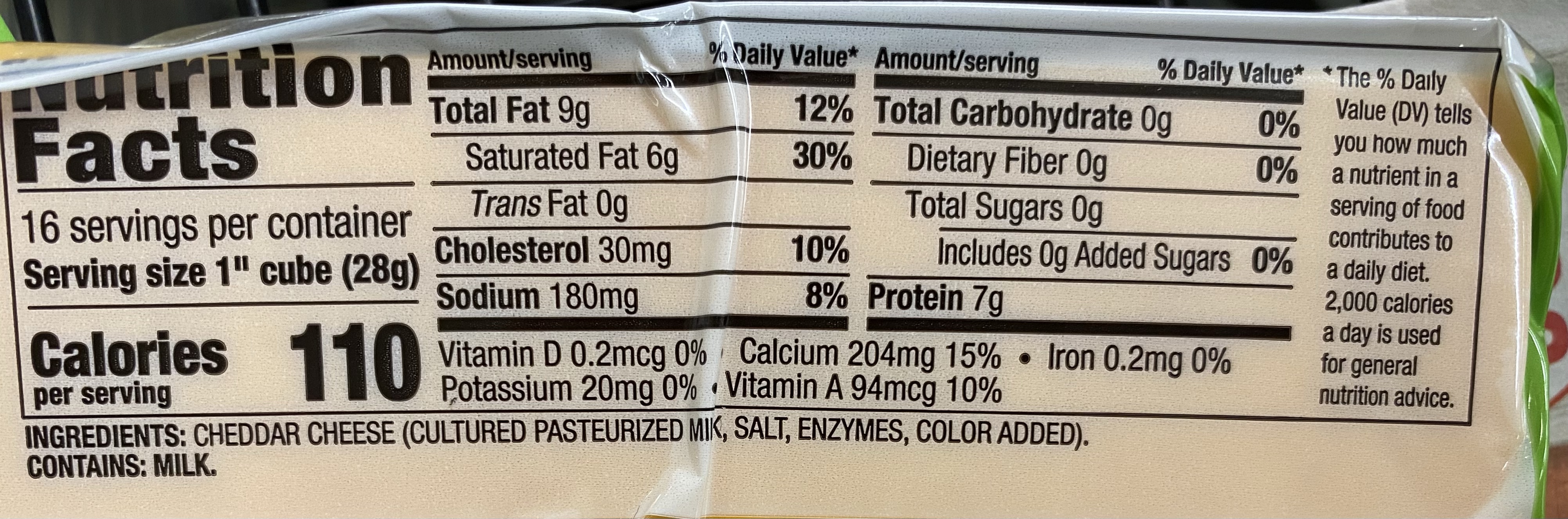
When you eat Cheddar in the U.S. is it immediately apparent that for every piece you eat almost 1/3 of it is pure fat? To figure that out you have to divide 9g by 28g. The protein is easier to calculate: 28g / 7g is 25% but it also requires doing a fraction in your head. With the European label, most grade schoolers can tell you this particular Cheddar has 32% fat, 26% protein and etc.

Jam Nutrition Facts

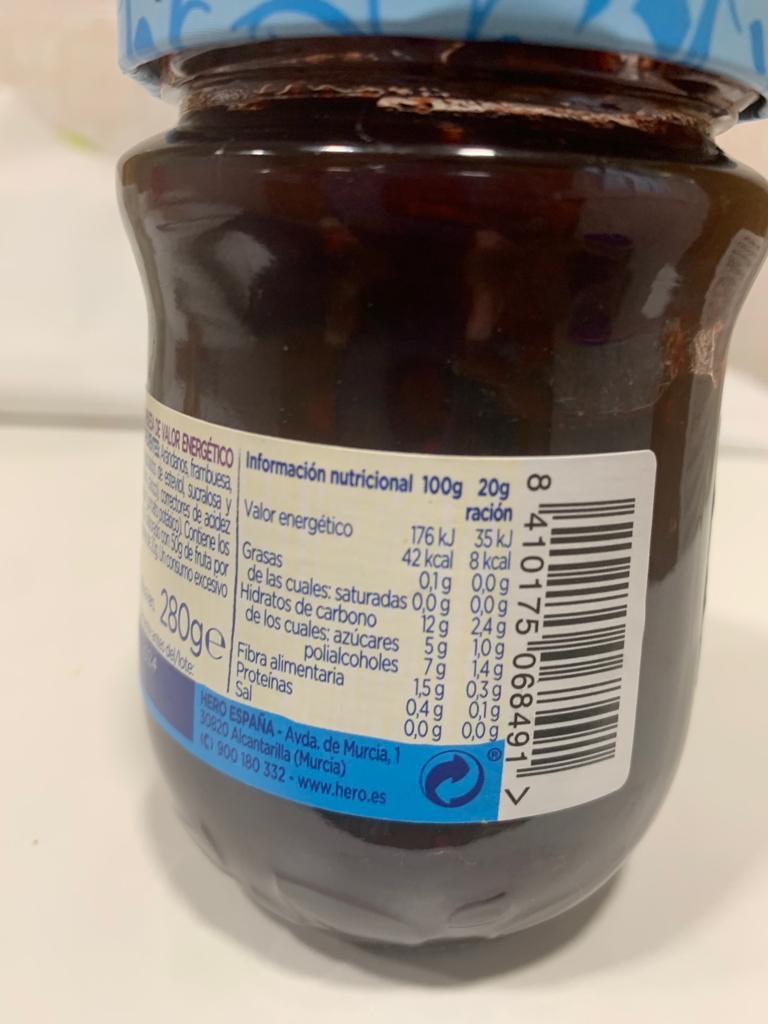
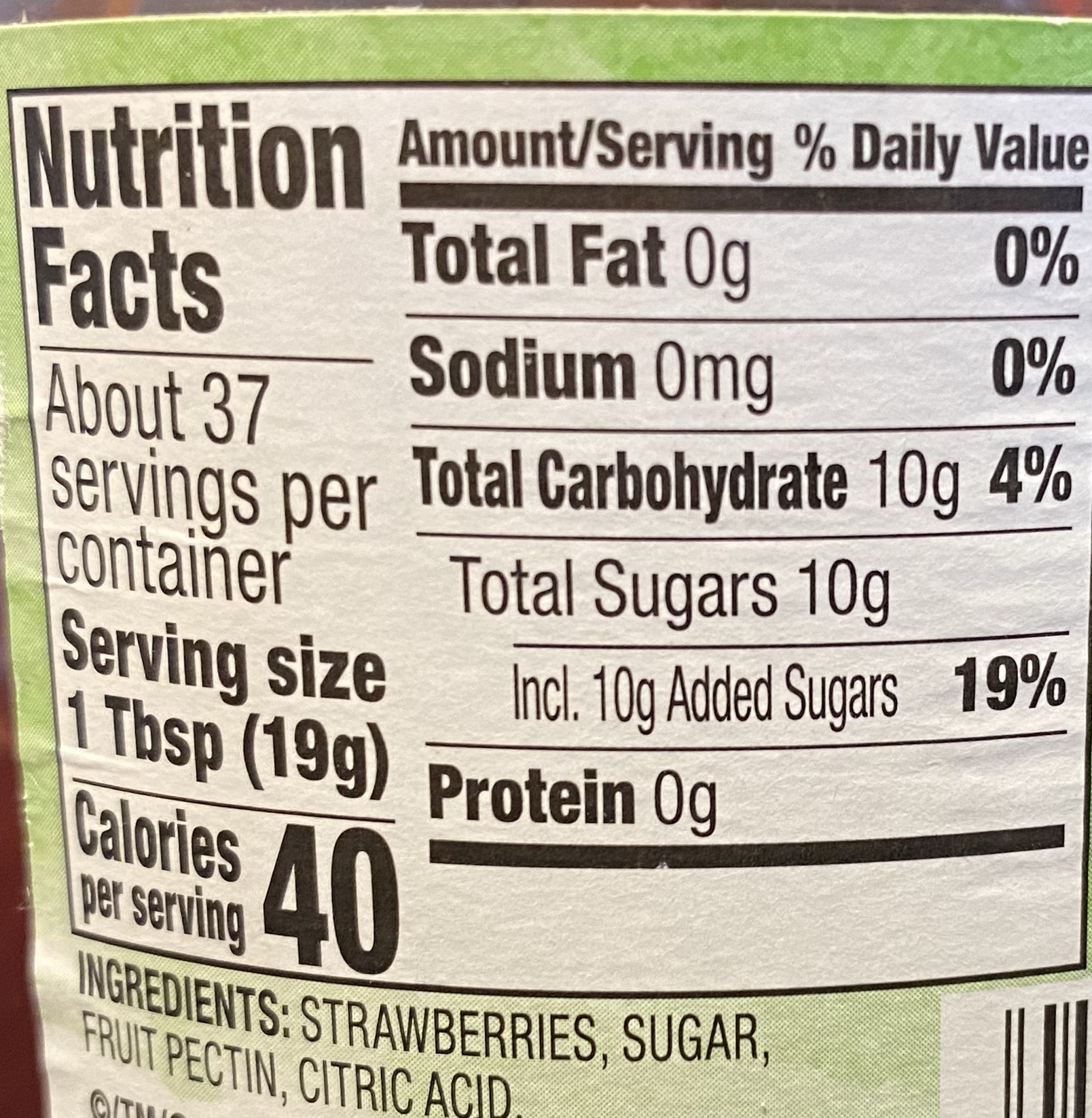
Did you know this American jam contains 52.6% sugar? Fully grasping this does require some math: 10g /19g. The European label is simply more straight forward: The jam from Spain has 12% sugar and the other has 63%, 12g and 63g respectively.

Percentage of Daily Values are referred to in the United Kingdom and the European Union countries as Reference Intakes. They may be listed in a different part of the food packaging as we see in the Tesco Jam label above. Declaring them on a food label in Europe is not mandatory. They are also often based in the 2000 Calories a day concept. Calories in Europe are referred to as kc, or kilocalories.

Obesity and diabetes in the U.S. (almost 42% of the adult population and 11.3% of Americans respectively) cost taxpayers billions of dollars. Nutrition Facts Labels may be the first line of defense against those ailments.

References:

CDC.gov

Europa.eu

food.ec.europa.eu

Google.com

Gov-UK Technical Guidance on Nutritional Labeling

HSN Blog, Nutrición, Salud y Deportes

Ministry of Food, Agriculture and Fisheries, Danish Food Agency

Pewtrusts.org

Renew Bariatrics

World Population Review

https://www.easis.dk/referenceindtag-ri/

https://www.healthline.com/nutrition/kcal-vs-calories#differences

Copyright © 2023 Jorge Luis Carbajosa

Local West African Women’s Organization Holding their Annual Fundraising Gala Dinner March 11th

February 6, 2023

If you would like to experience a Togolese night, with West African music and native dancing, and at the same time support a local charity, reserve the date of Saturday, March 11th 2023.

WO.S.A.T, a Chicagoan Togolese Women’s Association is hoping to raise $20K to fund water works projects in the Village of Danyi Gabi, Togo, and to provide much needed medical and school equipment and supplies.

In 2022 WOSAT funded similar projects in the Villages of Atoeta, Ahepe, Agbetiko and Batoumé, with $12K they received from donations and membership dues. WOSAT also funded projects in Togo in 2017, 2016 and 2014. Many videos and pictures are available here.

WOSAT is celebrating their 15 year anniversary and International Women’s Day at Crystal Band Banquet in Lemont. Ticket information is listed in the video below. Donations are welcome for those who may not be able to attend by Zelle / Paypal / CashApp: wosatready@gmail.com . WOSAT is a nonprofit organization.

Wo.S.A.T. Fundraiser Gala Dinner Party March 11th Promotional Video
School children at the Village of Batoumé in Togo, West Africa, receiving schools supplies from Wo.S.A.T members 2022
School children at the Village of Batoumé in Togo, West Africa with backpacks purchased by Wo.S.A.T. 2022
In 2022 Wo.S.A.T. provided hospital beds for women to give birth like the one we see in the far left to a hospital in Ahepe, Togo.
Village Elders, Ahepe, Togo, West Africa, 2022
In 2022 Wo.S.A.T. purchased school benches and tables for several school in the Villages of Ahepe, Atoeta, Agbetiko and Batomé, in Togo, West Africa.

Copyright © 2023 Jorge Luis Carbajosa

How I Defeated Depression

January 6, 2023

With a gratitude list. It was that simple. In the mornings I would make a mental note of the good and positive things in my life: 1. I am sober. 2. I am alive. 3. I am in college. 4. I have my future. 5. I am single. 6. I have a place to live. 7. I have food on the table, etc. If I didn’t make this list, I couldn’t get out of bed.

This was what my psychologist recommended and it worked like a charm. The list automatically gave me encouragement, willingness and hope. After this mind exercise in the morning, my depression ceased and I could get on with my day.

Photo by Jill Wellington on Pexels.com

I was 24 years old when I became seriously depressed. I was going through a difficult break up and I found myself alone for the first time after I had quit drinking 8 months before. I think I didn’t know how to deal with my emotions being sober. I also know I felt hopeless many times when I drank heavily.

My main depression symptom was that I found it very hard to do anything at all. All tasks were overwhelming and I could find no willingness inside of me. It was almost as if the limbs in my body had become too heavy and any kind of movement was too burdensome.
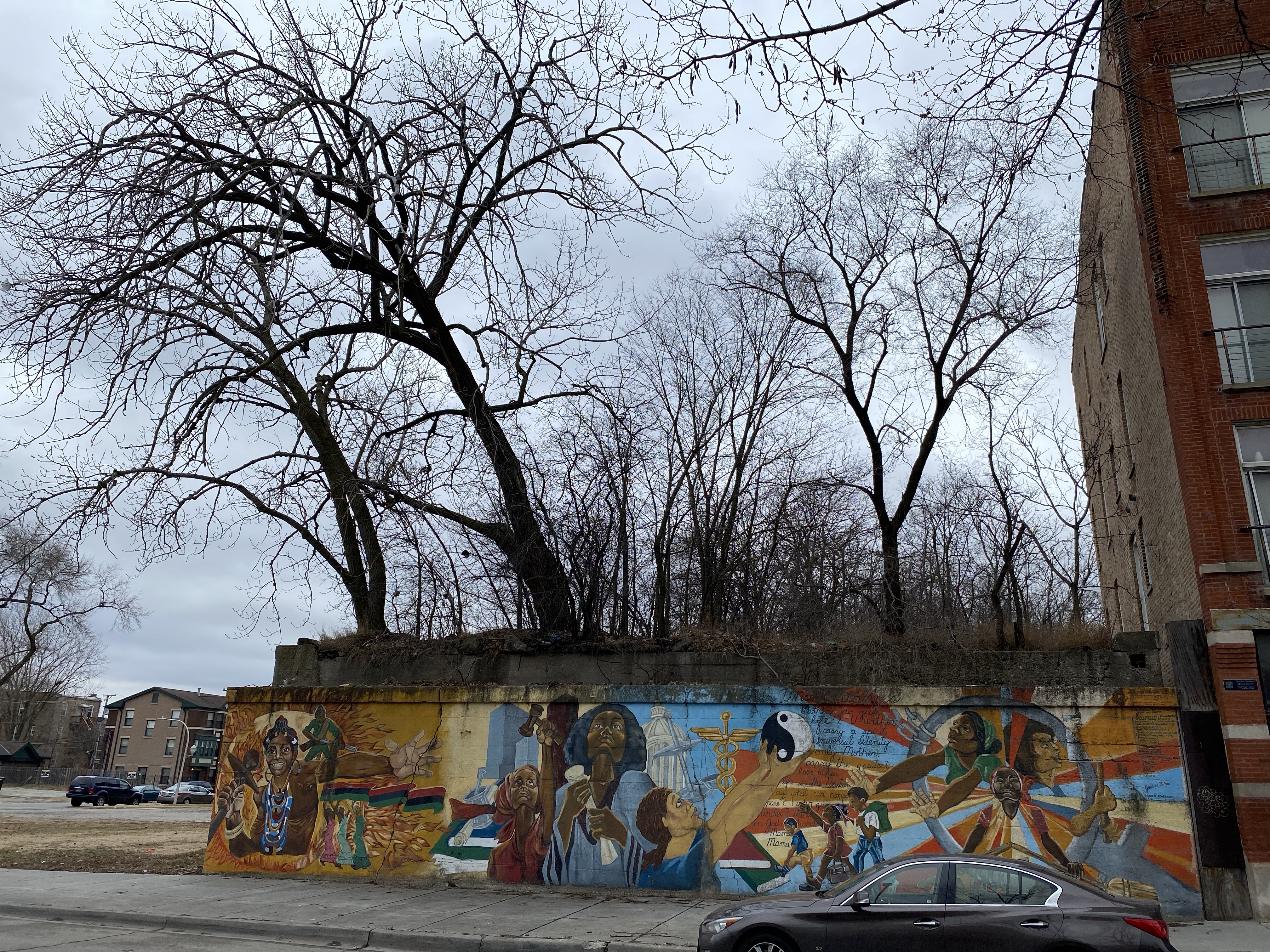
Photo by Lucas Pezeta on Pexels.com

I was not eating, not showering and not taking care of myself properly. I also had lost my ability to concentrate or focus. I was in college at the time and during lectures, whatever the teachers said didn’t register in my mind. When I tried to read the class textbooks, the words made no sense. I would read the same paragraphs several times, not knowing what I was reading.

What was saving me before I learnt about the gratitude list were the AA meetings, and I was going to as many as three every day. Sometimes on my way to the AA clubhouse my head was in such turmoil and unrest that all I could think about was the movements of my legs: Right step, now a left step, another right step. I had to focus and watch my legs or I felt I wouldn’t get there. The clubhouse became my safehouse, my shelter and my mental hospital. At the meetings I spoke to whoever was willing to listen. One night amidst my depression, I had a dream in which my AA friends were carrying me in their arms.

My brother also came to visit and stay with me that summer of 1992 when I was going through all this. He was taking a graduate class at the same university where I studied. His companionship and being able to talk to someone were of tremendous help. I’ve heard people say at AA meetings that “just talking about it” solves 50% of the problem.

Besides the depression, many of the very difficult feelings I was having were due to the break up. The emotions played in my head incessantly like a merry-go-round. And then when it was all over and my girl friend had completely left me, the pure depression truly set in.

I continue to do the gratitude list some mornings when I’m not feeling too emotionally well. It still works like a charm.

Every cloud has a silver lining my father would say. If one door closes, another one opens. Life is full of opportunity. The Higher Power gave us life to live and experience it.

Copyright © 2023 Jorge Luis Carbajosa

Photo by Pixabay on Pexels.com

The Chicago Junction Railway Embankment: Cottage Grove Ave Mural, and West to 41st Street

December 27, 2022

This part of the abandoned embankment is located between 41st Street and Bowen Ave and runs northwest from Cottage Grove.

Google aerial view between Cottage Grove Ave & 41st Street. The embankment is under the continuous forest of trees we see above. It is about 415 feel long (127 meters).

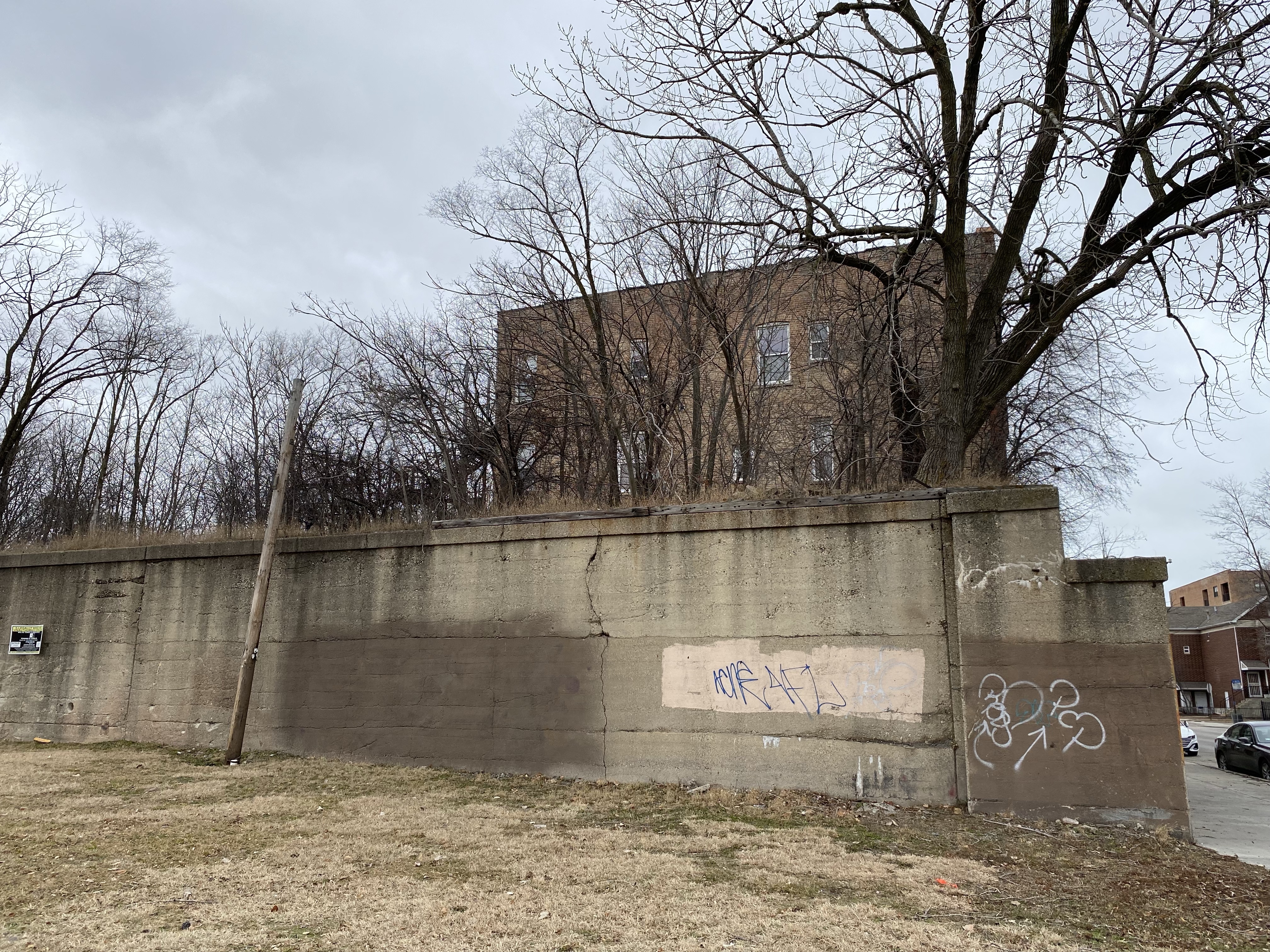
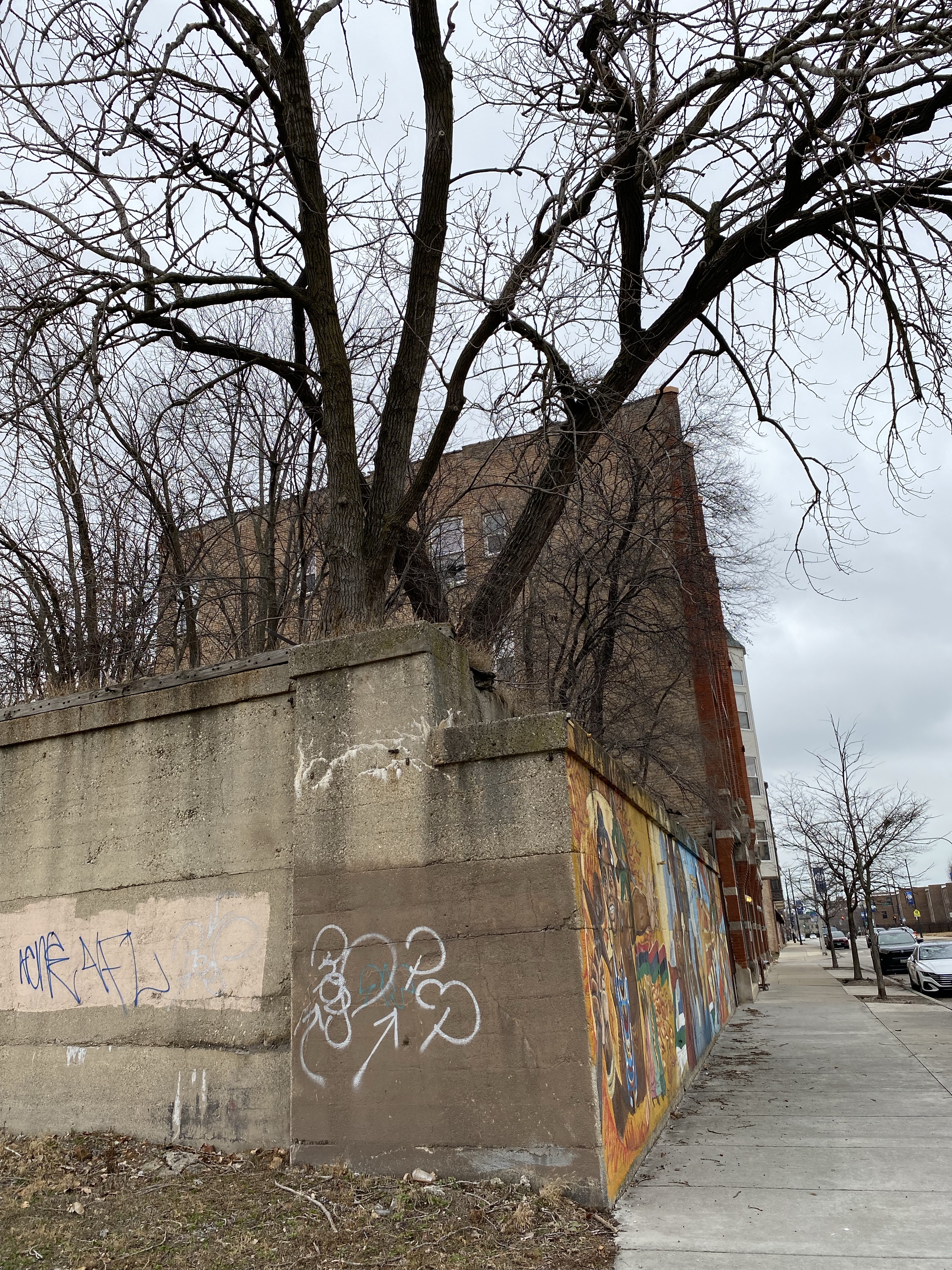
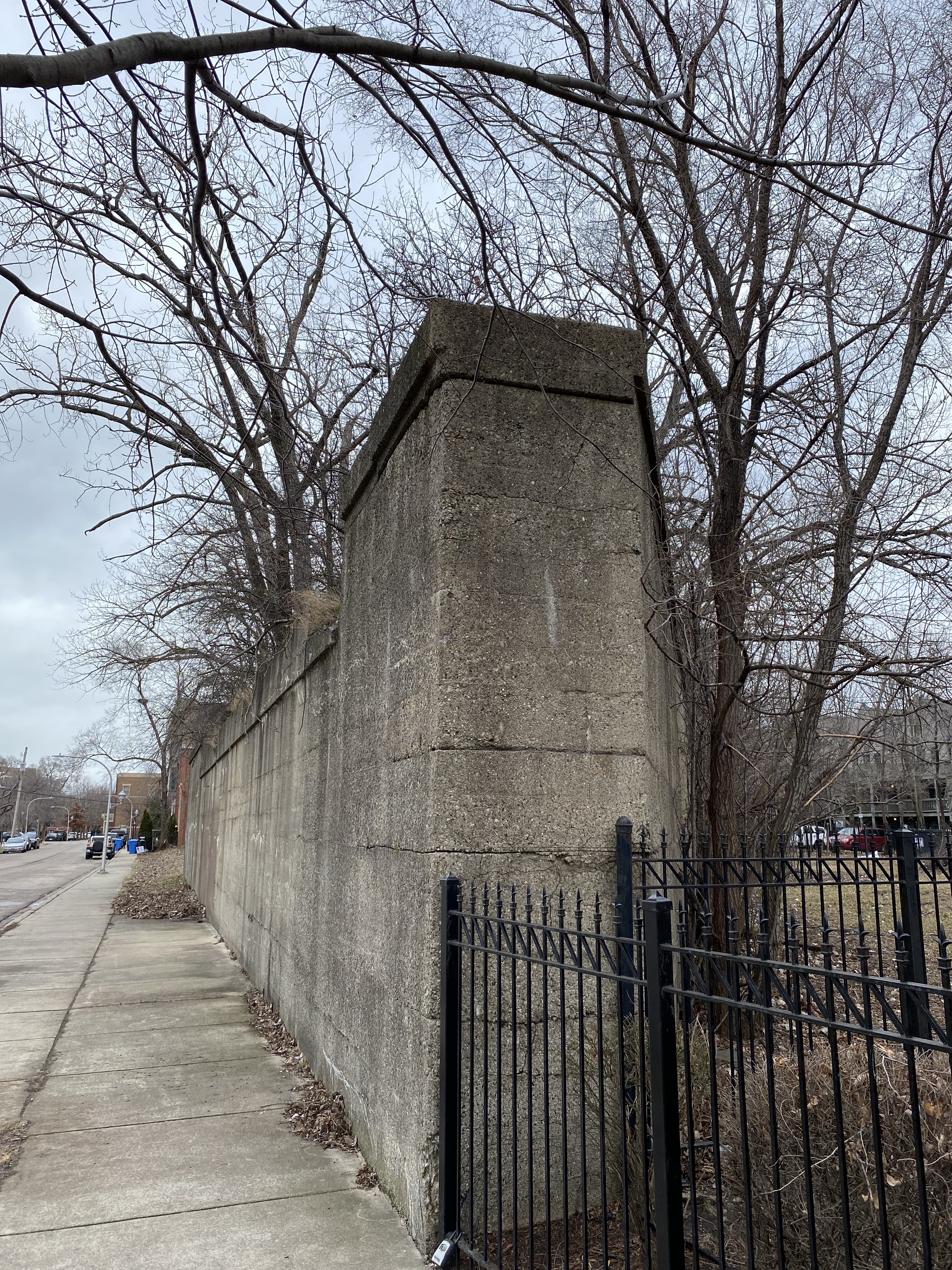
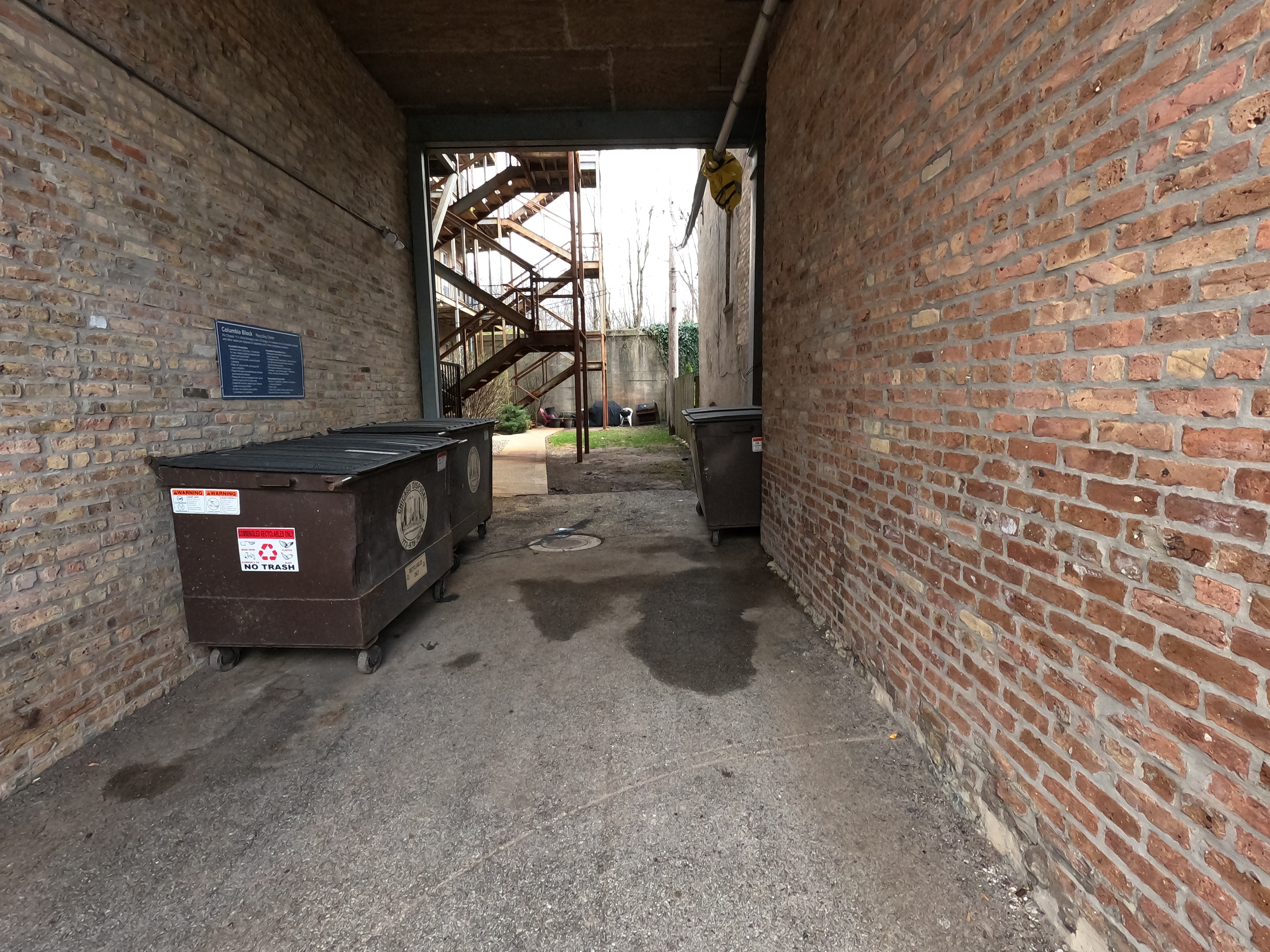
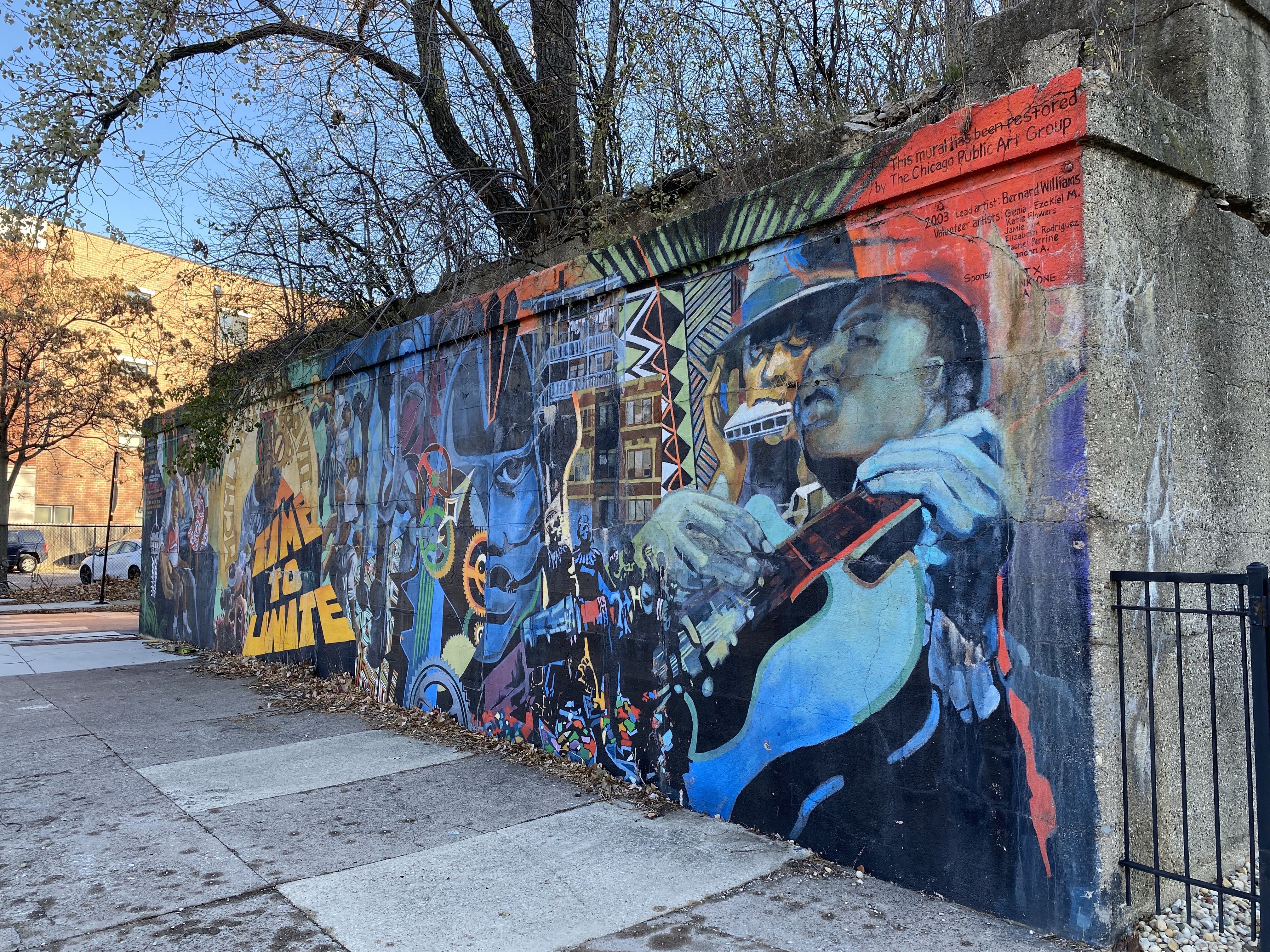
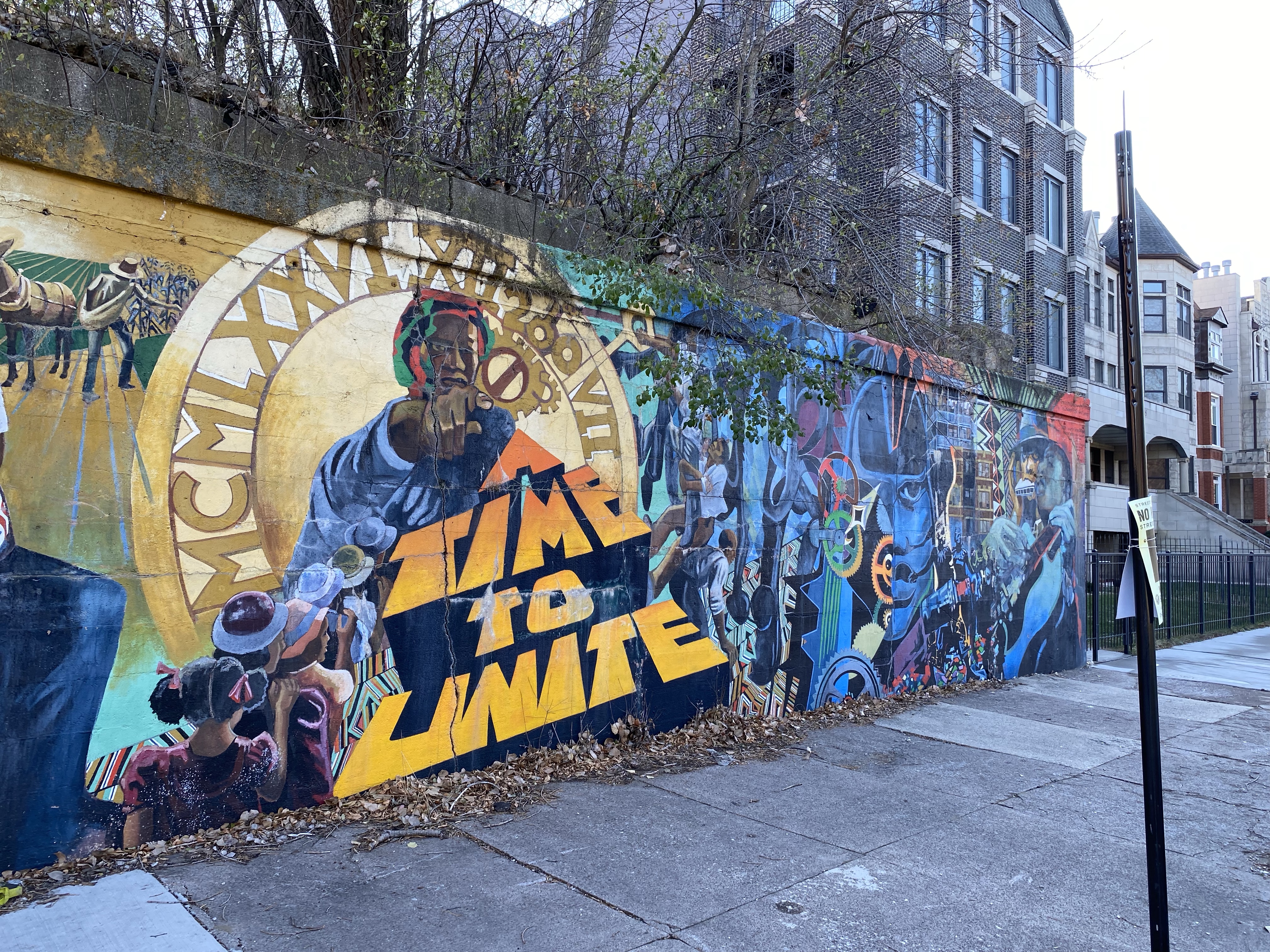
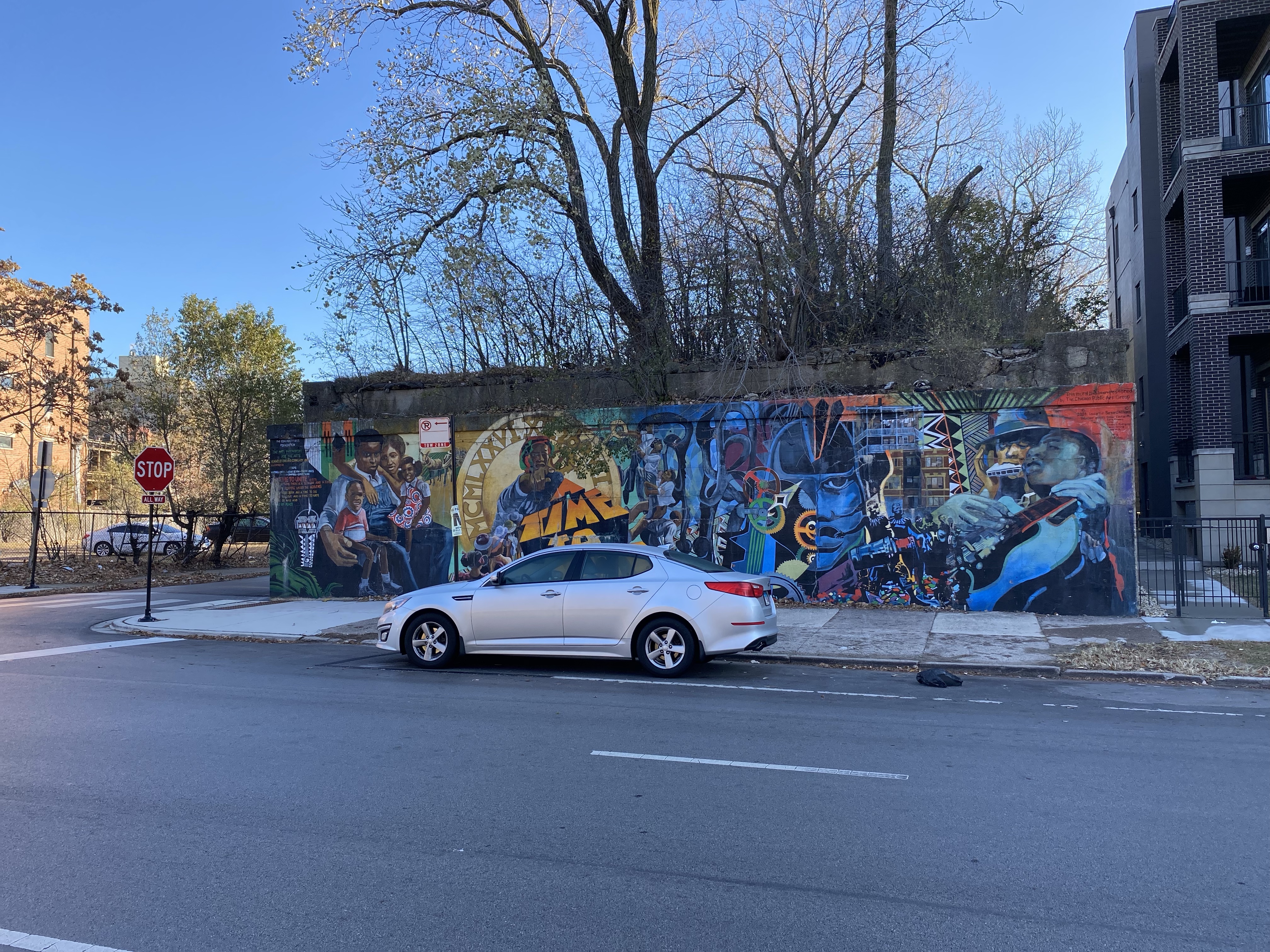
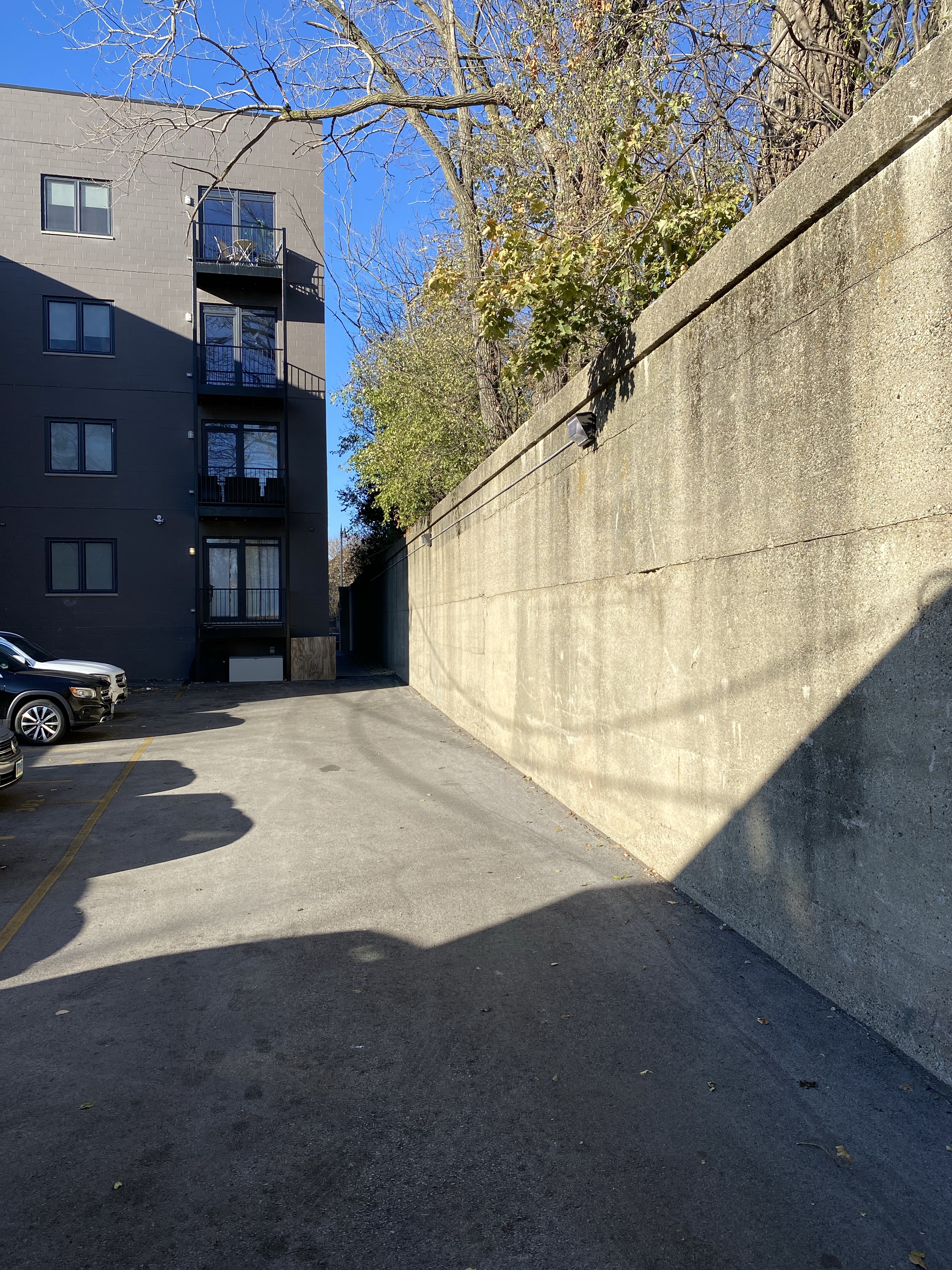
On 41st Street, between Cottage Grove Ave and Langley Ave, it has large walls on both the south and north side of the street. It also has a mural on Cottage Grove Avenue. Its south wall is visible from both Bowen Ave and in the alley behind a row of houses on the east half of the East 700 block of Bowen Ave. Its north wall is visible in the back of some apartment buildings located on East 41st Street that reach 41st St and West of the apartment buildings. The mural is about 13′ tall and almost 53′ wide, the lead artist is Bernard Williams and it was painted in 2003.

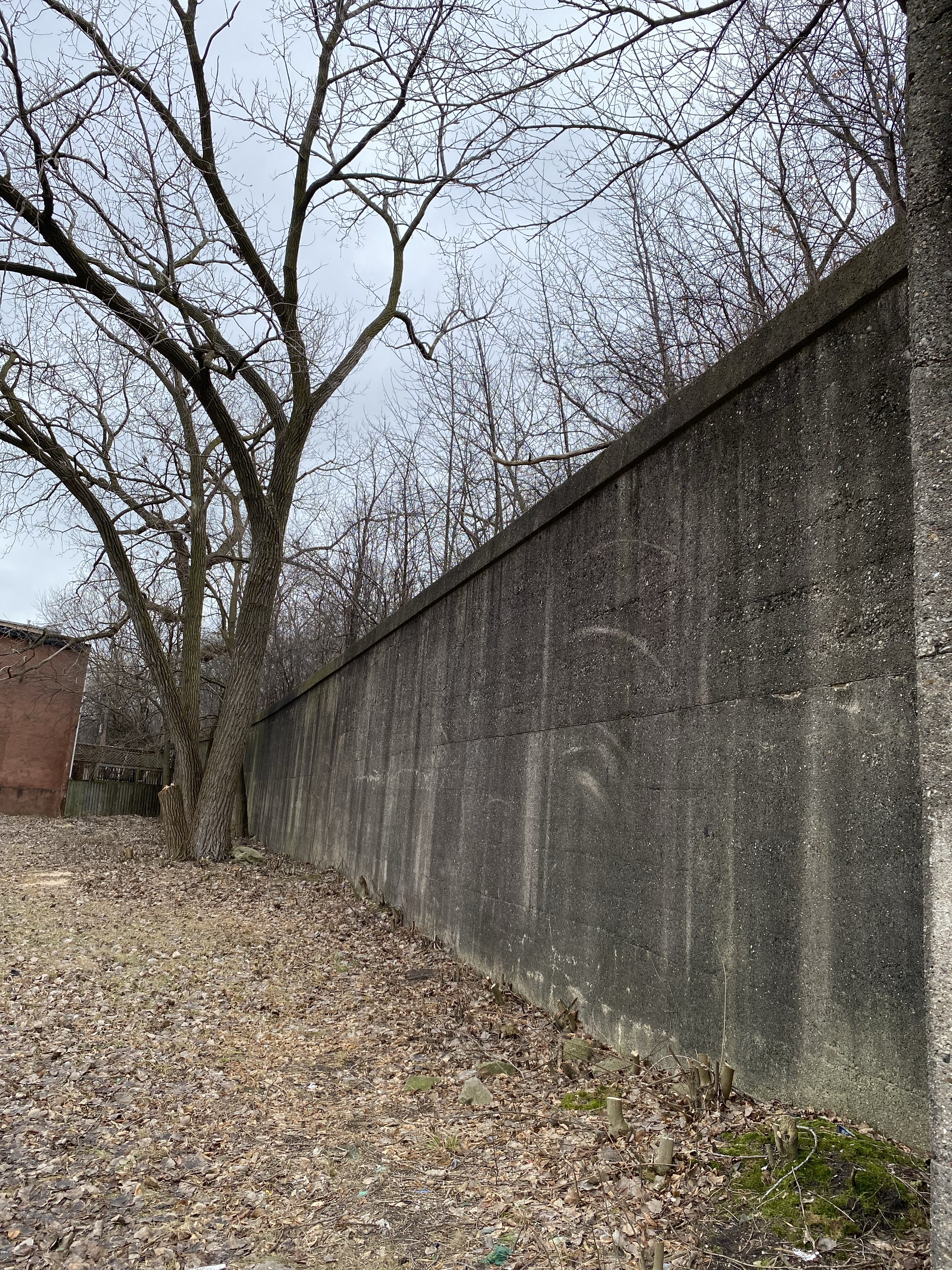
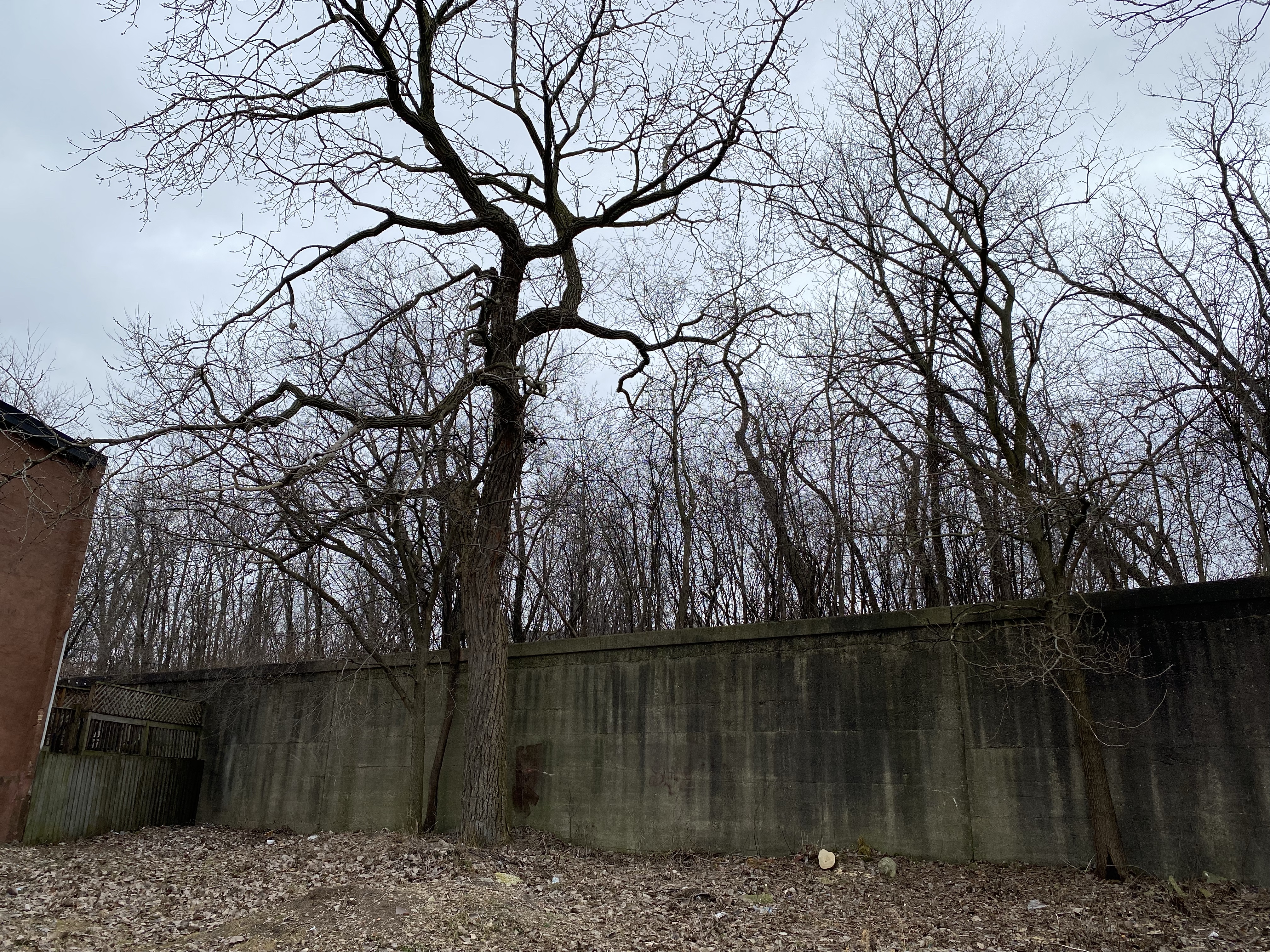
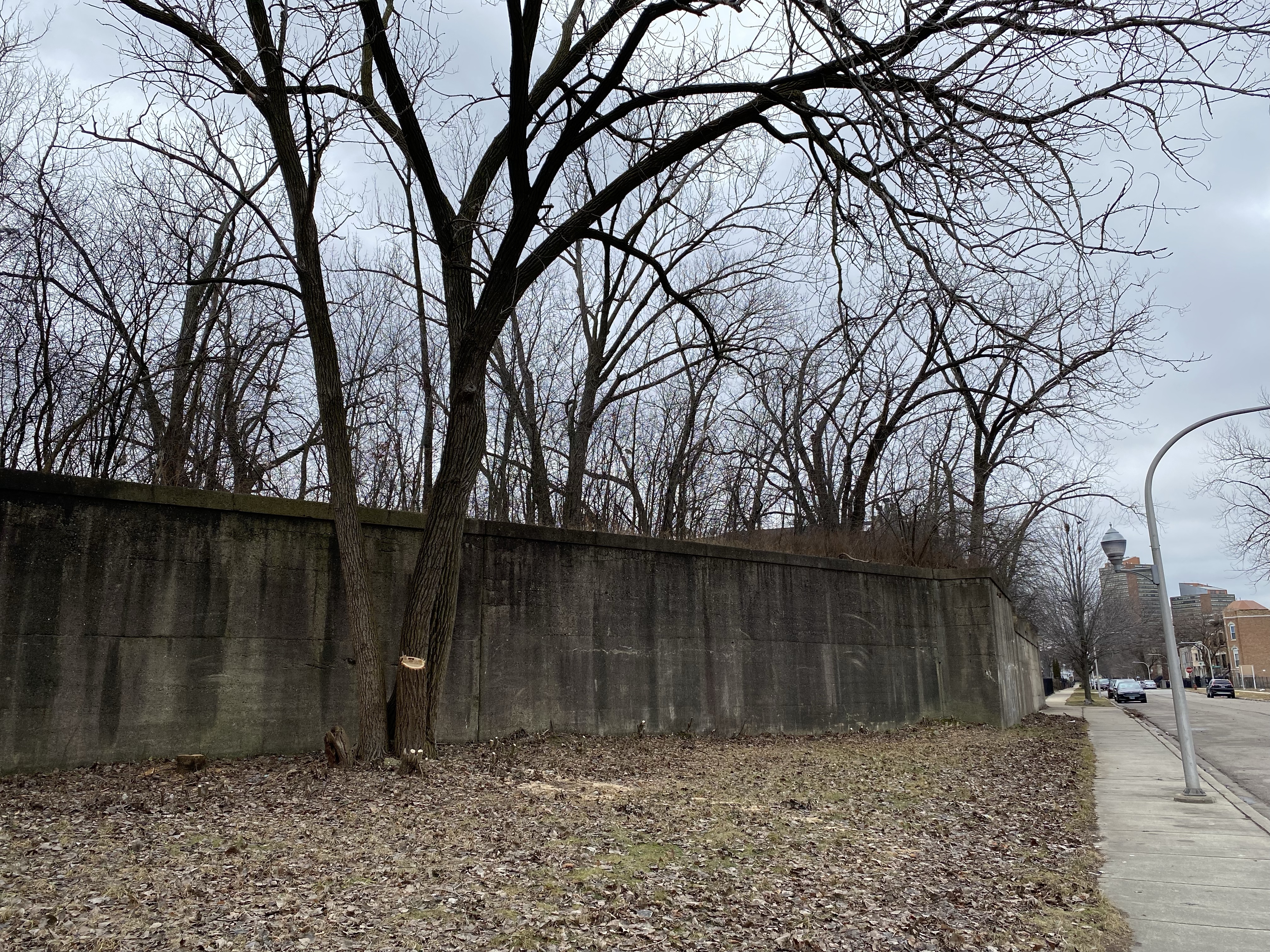
South Wall along Bowen Avenue to Cottage Grove, of the Chicago Junction Railway Embankment, winter 2023
South wall of the Chicago Junction Railway Embankment, Summer 2020 approx
Video of the North Wall of the CJR Embankment on 41st Street

The Ellis and Lake Park Station

The Chicago Junction Railway Embankment: Ellis Ave to Drexel Blvd and Mural

Cottage Grove Ave Mural, and West to 41st St

North of 41st St to South Langley Ave and 40th St

South Langley Ave and north of 40th St to the Abandoned Vincennes Station

Vincennes Ave to MLK, along south side of E Oakwood Blvd, north of Paul G Stewart Apartments

The South Parkway Train Station on Martin Luther King Drive

The mural on the West side of Martin Luther King Drive

West of MLK Drive to Calumet Ave

West of South Prairie Ave to S Indiana Ave

Indiana Train station

South Michigan Ave to South Wabash Ave

West South Wabash to East South State street

West of South State St to S Dearborn St

References:

https://www.chicago-l.org

https://en.wikipedia.org/wiki/Kenwood_branch

7 CTA train lines you never knew existed

The Morton Arboretum

The “L”, The Development of Chicago’s Rapid Transit System 1888-1932 by Bruce G. Moffat, 1995

Copyright © 2023 Jorge Luis Carbajosa

The Chicago Junction Railway Embankment: Ellis Ave to Drexel Blvd and Mural

November 25, 2022

About 13′ tall, 52′ wide, and 430′ in length, its area being approximately 22,360 square feet, this part of the embankment is between Drexel Blvd and Ellis Ave. Its north wall faces 41st St and its south wall, an alley and an apartment building on Drexel Blvd. There is a mural on its Eastern Wall of Drexel Blvd.

According to https://www.chicago-l.org/operations/lines/kenwood.html the Chicago Transit Authority closed the embankment for public use (Kenwood Branch) in 1957 but the Chicago Junction Railway continued using it for commercial purposes until the 1960s.

The CJRE is about one mile long and it is located in the Kenwood neighborhood of Chicago’s south side. It is visible mostly along 41st Street, running from South Lake Park Ave, which is close to Lake Michigan, to highway 90/94. Some sections of it no longer exist and a forest has grown on top of it. Below is a video of this section of the CJRE and some photographs.

Aerial view from Google maps of the Chicago Junction Railway Embankment from Lake Park Ave to Drexel Blvd
MINUTE 2:55 is where you can see the section of the CJRE between Ellis Ave and Drexel Blvd
West wall on Ellis Ave
South west wall, Ellis Ave
Close up, upper west wall, Ellis Ave
Upper part south wall 41st St alley, north of 42nd Pl
South wall alley

The Ellis and Lake Park Station

The Chicago Junction Railway Embankment: Ellis Ave to Drexel Blvd and Mural

Cottage Grove Ave Mural, and West to 41st St

North of 41st St to South Langley Ave and 40th St

South Langley Ave and north of 40th St to the Abandoned Vincennes Station

Vincennes Ave to MLK, along south side of E Oakwood Blvd, north of Paul G Stewart Apartments

The South Parkway Train Station on Martin Luther King Drive

The mural on the West side of Martin Luther King Drive

West of MLK Drive to Calumet Ave

West of South Prairie Ave to S Indiana Ave

Indiana Train station

South Michigan Ave to South Wabash Ave

West South Wabash to East South State street

West of South State St to S Dearborn St

References:

https://www.chicago-l.org

https://en.wikipedia.org/wiki/Kenwood_branch

7 CTA train lines you never knew existed

The “L”, The Development of Chicago’s Rapid Transit System 1888-1932 by Bruce G. Moffat, 1995

Copyright © 2022 Jorge Luis Carbajosa

The Chicago Junction Railway Embankment: The Abandoned Ellis and Lake Park Station

October 19, 2022

About 400′ long, 52′ wide, (20,800 sq. feet approx) and 13′ high, the abandoned Ellis & Lake Park Station is located between 41st Pl and 41st St, and between Lake Park Ave and Ellis Ave, and it is about a third of mile from Lake Michigan. The entrances on both Lake Park and Ellis are sealed. The 42nd Place station, which can be seen on the map below, and which was the closest to Lake Michigan no longer exists. You can see a 1955 photo of the station here.

1940 map of the Kenwood Branch, from Chicago Public Library
The Ellis & Lake Park Station, Lake Park Avenue Entrance
Aerial Google map of the Ellis & Lake Park elevated train station between South Lake Park Ave & S Ellis Ave. Many of the buildings have a view of the top of the embankment
The abandoned Ellis & Lake Park Station, Lake Park entrance, corner of 41st St, west side of Lake Park Ave
The abandoned Ellis & Lake Park Station, Ellis Ave entrance, west side of Ellis Ave, just south of 41st Street
Walled up door of Ellis & Park Ave Station
South wall, between 41st street and 41st place
Ellis and Lake Park Station South Wall, 41st Street alley

The Ellis and Lake Park Station

The Chicago Junction Railway Embankment: Ellis Ave to Drexel Blvd and Mural

Cottage Grove Ave Mural, and West to 41st St

North of 41st St to South Langley Ave and 40th St

South Langley Ave and north of 40th St to the Abandoned Vincennes Station

Vincennes Ave to MLK, along south side of E Oakwood Blvd, north of Paul G Stewart Apartments

The South Parkway Train Station on Martin Luther King Drive

The mural on the West side of Martin Luther King Drive

West of MLK Drive to Calumet Ave

West of South Prairie Ave to S Indiana Ave

Indiana Train station

South Michigan Ave to South Wabash Ave

West South Wabash to East South State street

West of South State St to S Dearborn St

References:

https://www.chicago-l.org

https://en.wikipedia.org/wiki/Kenwood_branch

7 CTA train lines you never knew existed

The Morton Arboretum

The “L”, The Development of Chicago’s Rapid Transit System 1888-1932 by Bruce G. Moffat, 1995

Copyright © 2022 Jorge Luis Carbajosa

The Abandoned Chicago Junction Railway Embankment in Chicago’s South Side

October 15, 2022

The Chicago Junction Railway Embankment (CJRE) is in the Bronzeville and Kenwood neighborhoods. It used to be part of the elevated train system and it was closed to the public in 1957. The CJR Kenwood branch had six train stations of which only three exist today. It is about 1 mile long from Lake Park avenue to the Dan Ryan highway. There’s a small section of it that heads north and descends to ground level, from 40th Street to Pershing Road, and is West of Federal street. Some sections of the embankment, along with its train bridges, are still visible on the west side of the Dan Ryan, all the way to South Normal Avenue.

The Chicago Junction Railway Embankment on Google Maps, outlined in yellow

According to the city of Chicago, the embankment is owned by the Cook County Land Bank Authority. I contacted them several times by phone and email with many questions, for example, what their plans are for the embankment, if any part of it is for sale, if they do any maintenance and if I can get a permit to walk on it and take pictures, but I have not received a response.

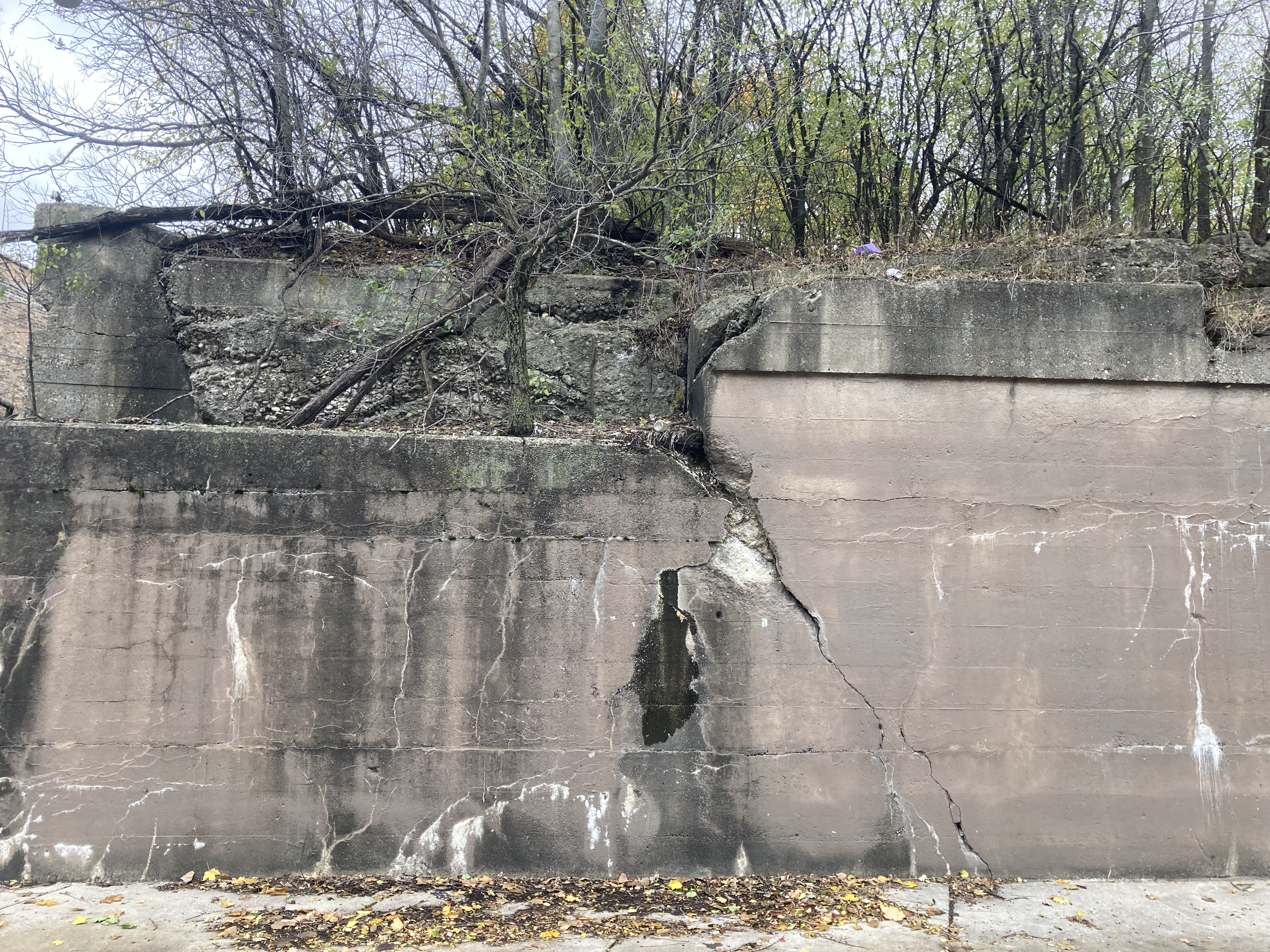
I love the majestic walls of the Embankment and the thick forest with several hundreds, if not thousands, of trees and shrubs that have grown on it. I find it fascinating how these trees and shrubs have grown on their own, although this is not uncommon in Chicago, due to our rich soil and abundance of water.

According to Ms. Lydia Scott, Director of the Morton Arboretum Chicago Region Trees Initiative, “Trees are very important for urban areas.” Ms. Scott directed me to a literature review about the benefits of trees for livable and sustainable communities.

From some of the photographs I sent to the Morton Arboretum, Ms. Julie Janoski, Plant Clinic Manager there, has identified several species present on top of the CJRE to be green and white ash trees, Norway maples, Tree of heaven, Siberian elms and alders.

Ms. Scott added that there’s probably also “mulberry, box elders, honeysuckles and likely other (weedy) species.”

From a layman’s perspective, I know having so many trees in our city reduces carbon dioxide, increases oxygen, and preserves some biodiversity in our city. Trees are of course also relaxing and beautiful to look at.

If you would like to see some videos of the CJRE, you can do so at my YouTube Channel.

In the near future, I will be publishing many descriptions, photos and videos of the CJRE in this blog. Here’s an index that will be linked with hypertext:

The Ellis and Lake Park Station

The Chicago Junction Railway Embankment: Ellis Ave to Drexel Blvd and Mural

Cottage Grove Ave Mural, and West to 41st St

North of 41st St to South Langley Ave and 40th St

South Langley Ave and north of 40th St to the Abandoned Vincennes Station

Vincennes Ave to MLK, along south side of E Oakwood Blvd, north of Paul G Stewart Apartments

The South Parkway Train Station on Martin Luther King Drive

The mural on the West side of Martin Luther King Drive

West of MLK Drive to Calumet Ave

West of South Prairie Ave to S Indiana Ave

Indiana Train station

South Michigan Ave to South Wabash Ave

West South Wabash to East South State street

West of South State St to S Dearborn St

References:

https://www.chicago-l.org

https://en.wikipedia.org/wiki/Kenwood_branch

7 CTA train lines you never knew existed

The Morton Arboretum

The “L”, The Development of Chicago’s Rapid Transit System 1888-1932 by Bruce G. Moffat, 1995

Copyright © 2022 Jorge Luis Carbajosa