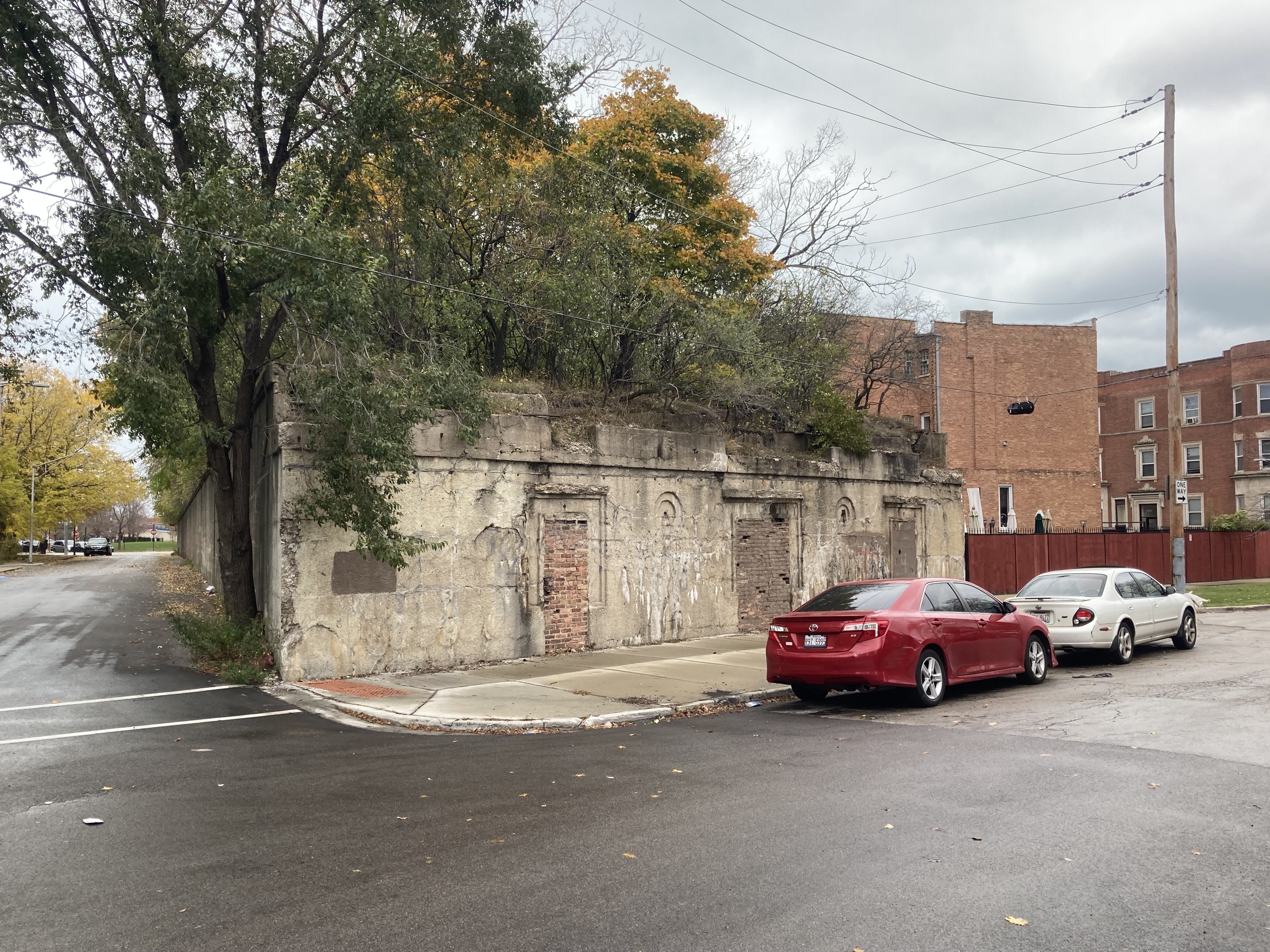
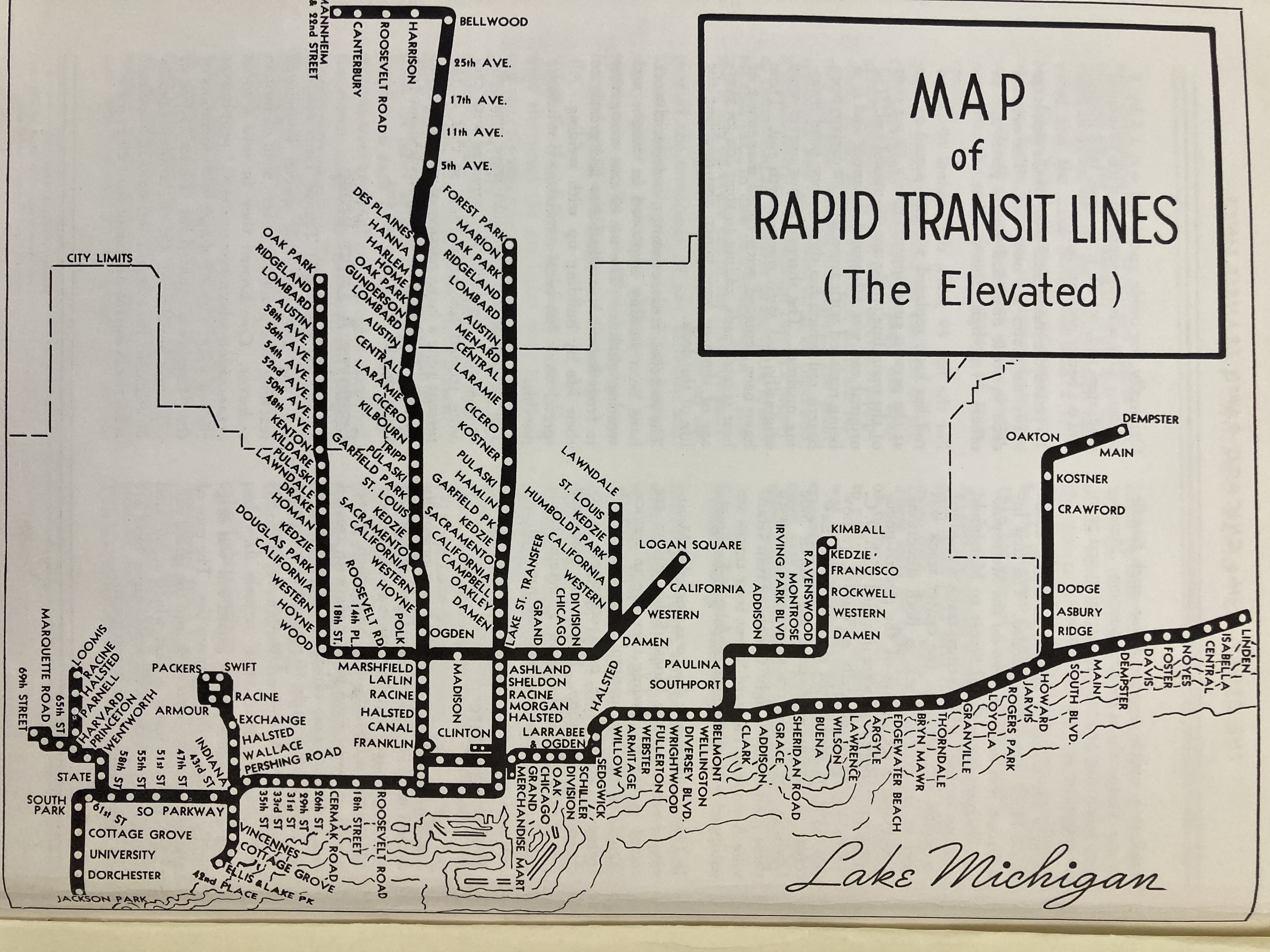
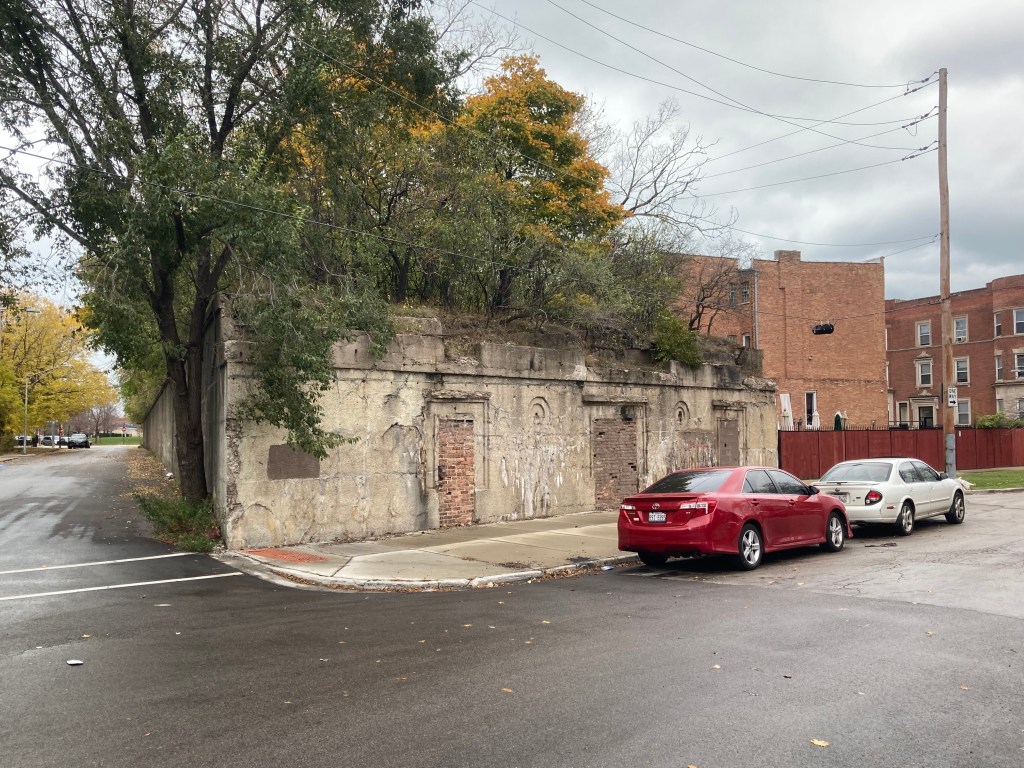
About 400′ long, 52′ wide, (20,800 sq. feet approx) and 13′ high, the abandoned Ellis & Lake Park Station is located between 41st Pl and 41st St, and between Lake Park Ave and Ellis Ave, and it is about a third of mile from Lake Michigan. The entrances on both Lake Park and Ellis are sealed. The 42nd Place station, which can be seen on the map below, and which was the closest to Lake Michigan no longer exists. You can see a 1955 photo of the station here.
1940 map of the Kenwood Branch, from Chicago Public Library
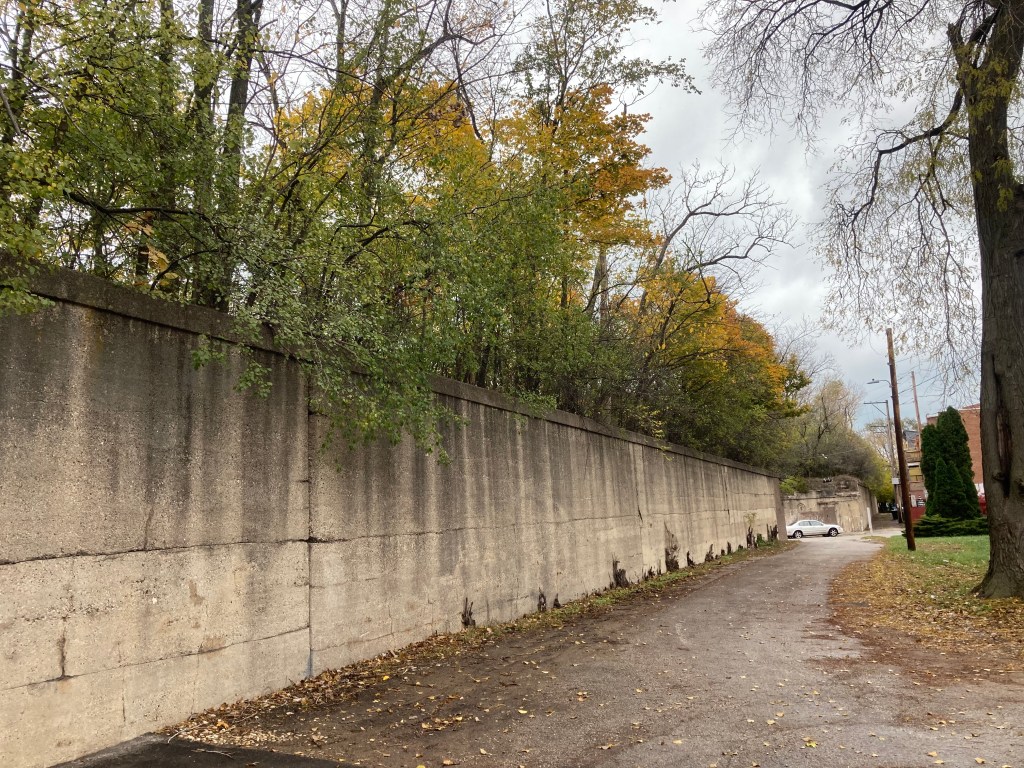
The Ellis & Lake Park Station, Lake Park Avenue EntranceAerial Google map of the Ellis & Lake Park elevated train station between South Lake Park Ave & S Ellis Ave. Many of the buildings have a view of the top of the embankmentThe abandoned Ellis & Lake Park Station, Lake Park entrance, corner of 41st St, west side of Lake Park AveThe abandoned Ellis & Lake Park Station, Ellis Ave entrance, west side of Ellis Ave, just south of 41st StreetWalled up door of Ellis & Park Ave StationSouth wall, between 41st street and 41st place
Ellis and Lake Park Station South Wall, 41st Street alley
The Chicago Junction Railway Embankment (CJRE) is in the Bronzeville and Kenwood neighborhoods. It used to be part of the elevated train system and it was closed to the public in 1957. The CJR Kenwood branch had six train stations of which only three exist today. It is about 1 mile long from Lake Park avenue to the Dan Ryan highway. There’s a small section of it that heads north and descends to ground level, from 40th Street to Pershing Road, and is West of Federal street. Some sections of the embankment, along with its train bridges, are still visible on the west side of the Dan Ryan, all the way to South Normal Avenue.
The Chicago Junction Railway Embankment on Google Maps, outlined in yellow
According to the city of Chicago, the embankment is owned by the Cook County Land Bank Authority. I contacted them several times by phone and email with many questions, for example, what their plans are for the embankment, if any part of it is for sale, if they do any maintenance and if I can get a permit to walk on it and take pictures, but I have not received a response.
1940 Elevated Public Transportation train map Chicago from Chicago Public Library1940 map of the Kenwood Branch, from Chicago Public Library
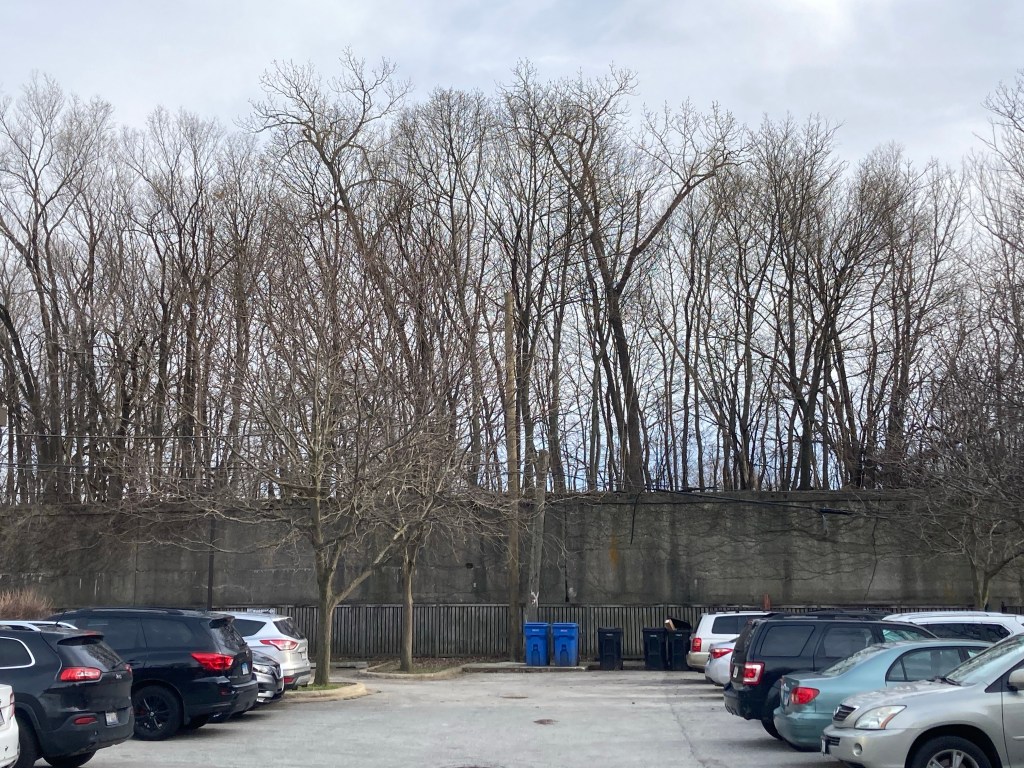
I love the majestic walls of the Embankment and the thick forest with several hundreds, if not thousands, of trees and shrubs that have grown on it. I find it fascinating how these trees and shrubs have grown on their own, although this is not uncommon in Chicago, due to our rich soil and abundance of water.
From some of the photographs I sent to the Morton Arboretum, Ms. Julie Janoski, Plant Clinic Manager there, has identified several species present on top of the CJRE to be green and white ash trees, Norway maples, Tree of heaven, Siberian elms and alders.
A south wall section of the Chicago Junction Railway Embankment, west of Ellis Ave. Part of the Ellis & Lake Park train station entrance is visible where the car is parked
The Ellis and Lake Park Station on Lake Park Avenue & 41st Street
Old bridges over Federal Street
Mural on Cottage Grove, between 41st & Bowen Ave
Our Lady of Africa Church parking lot on Oakwood Blvd
Ms. Scott added that there’s probably also “mulberry, box elders, honeysuckles and likely other (weedy) species.”
From a layman’s perspective, I know having so many trees in our city reduces carbon dioxide, increases oxygen, and preserves some biodiversity in our city. Trees are of course also relaxing and beautiful to look at.
If you would like to see some videos of the CJRE, you can do so at my YouTube Channel.
In the near future, I will be publishing many descriptions, photos and videos of the CJRE in this blog. Here’s an index that will be linked with hypertext:
My dear mother: An international woman in a globalizing 20th Century (español)
She was born in Madrid’s San Antonio neighborhood. Her mother was very young so she grew up with her maternal grandparents until she became a teenager and she went to live to Lisbon for some years with her parents, who never married, and who had immigrated to Portugal during the Spanish civil war.
In Portugal she was unable to attend school because of problems with her visa, but she did learn to speak Portuguese fluently. She often had to help her mother, who was a single woman and she quickly learnt to do things on her own and get around Lisbon. After some years she returned to Madrid to live with her paternal grandparents. She was very interested in foreign languages and she enrolled in Spain’s Official Language School, where she met my father and studied German, Russian, English and French. She graduated in French and English. She also became a licensed stenographer and she kept her stenography machine all her life.
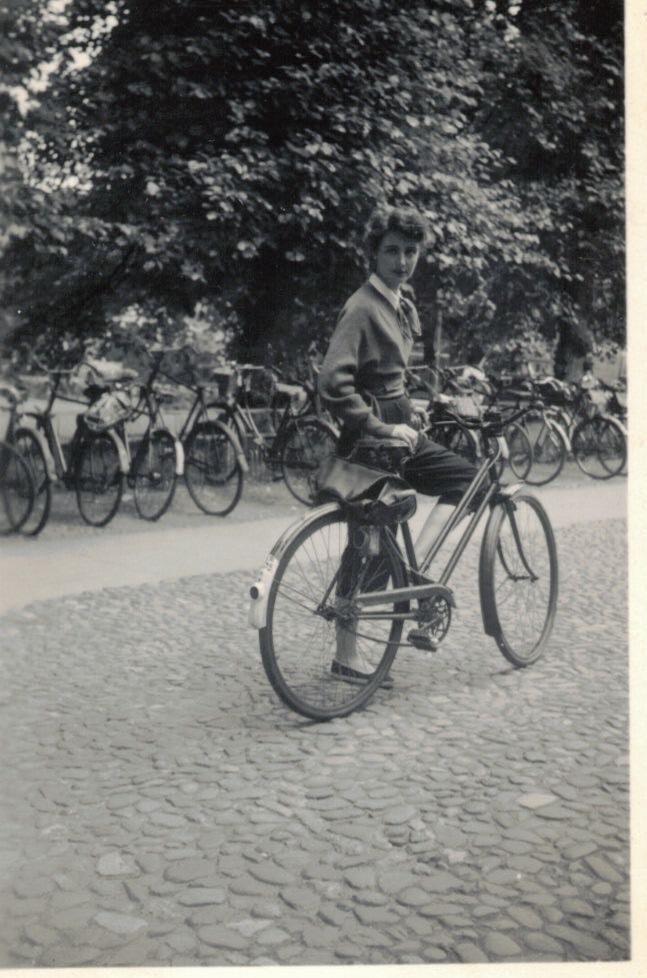
In the 50s after she graduated, she worked as an assistant teacher at Spain’s Official Language School. In 1954, Madrid’s British Council awarded her with a scholarship to study a graduate course at Cambridge University. Upon returning she started working as a bilingual secretary for the U.S. Air Force at Torrejón de Ardoz’s U.S. Air Base, where due to the dollar exchange rate she made more money than high ranking civil servants in Spain.
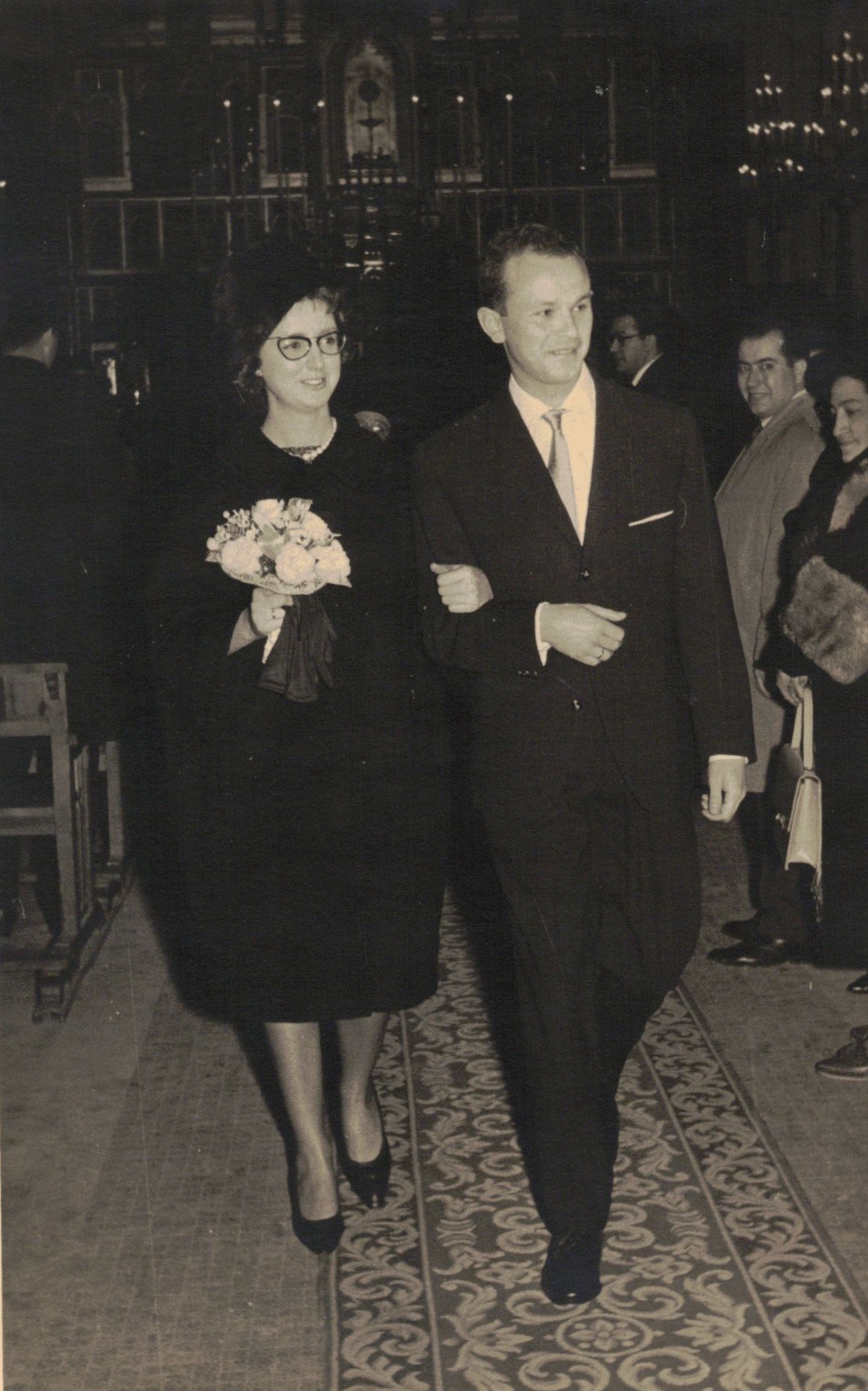
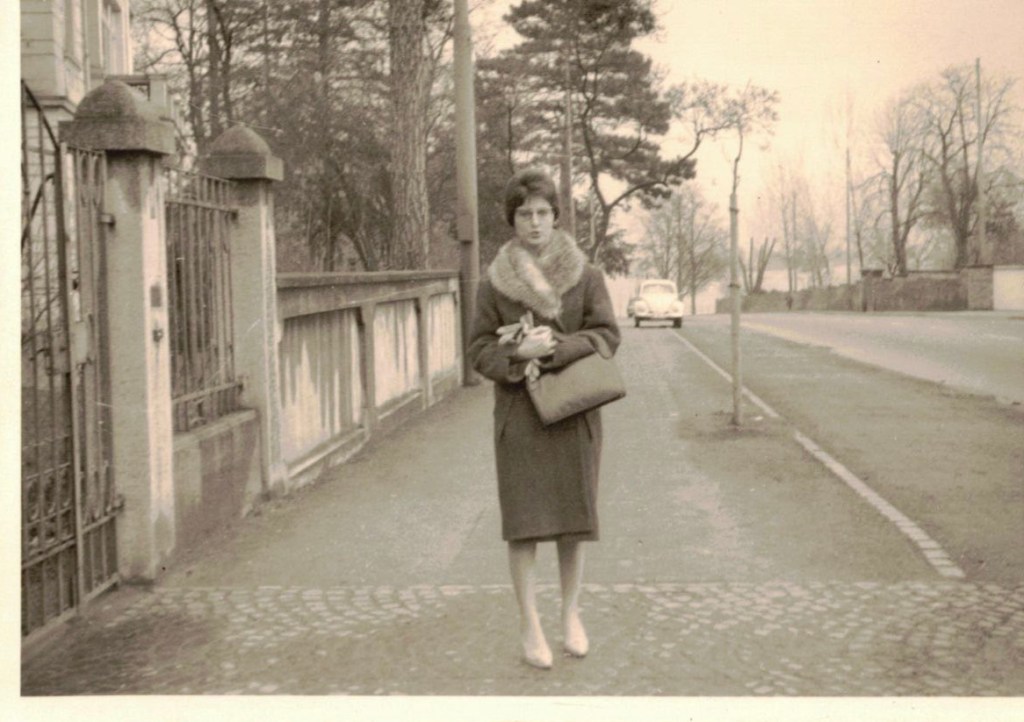
After almost 10 years of being with my father, she broke up with him and moved to Wiesbaden, Germany to work at a different U.S air base. She was there for almost a year but she returned to Spain and ended up marrying my father. She wore a black wedding dress because she was mourning her paternal grandfather whom she loved and admired deeply.
During my mother’s travels in Europe in the 60s she often encountered Spanish immigrants who only spoke Spanish and she helped them by being their interpreter.
After my parent’s marriage, my father was offered a job at the United Nations and they moved to Geneva, Switzerland, where they lived for two years. My mother was quickly able to find work at the U.N. International Labour Office as an International Civil Servant. In 1963, however, she was terminated for being pregnant with my oldest brother. To no avail, she appealed the decision to the U.N. but it does appear, however, that she was the last woman to be fired at the ILO for carrying a child.
My parents returned to Madrid and my mother gave birth to my oldest brother, José Ramón. She convinced and almost made my father apply for a job in New York city at Spain’s equivalent of the Department of Commerce. My father was hesitant because it involved taking a difficult English test but he passed it. Shortly after they moved to Manhattan. My mother was already a devote homemaker and in NY she gave birth to two more boys, my brother Eduardo and I.
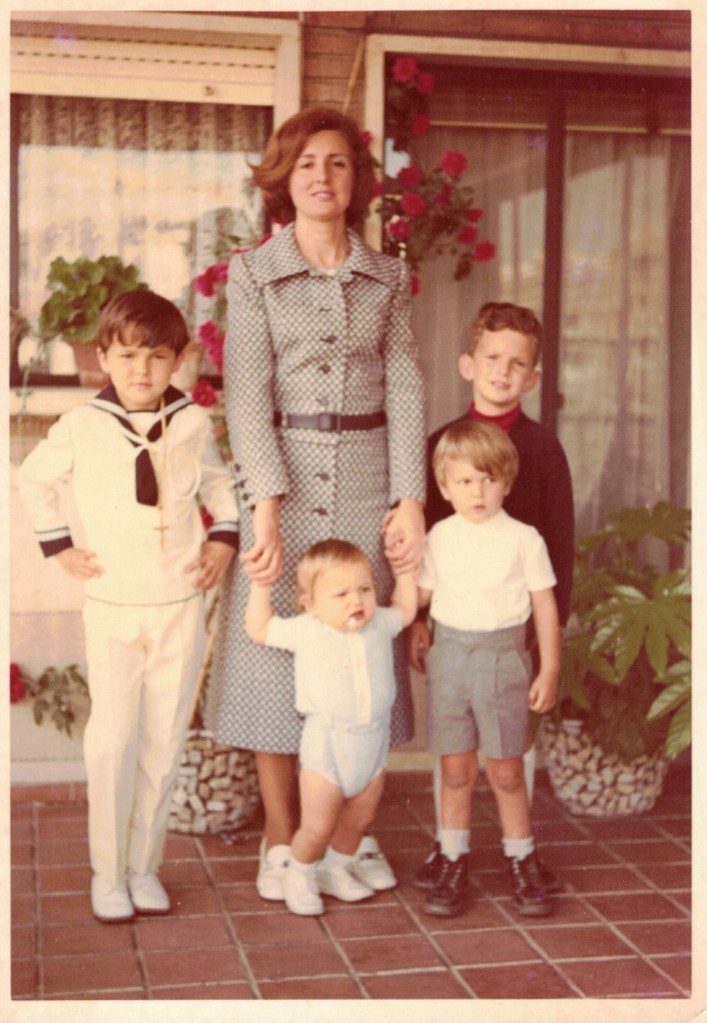
In 1968 my mother went to Lisbon to spend some time with her mother while my father finalized his work in the Great Apple. They returned to Spain and my youngest brother Victor was born in 1970. Here is where my first memories of my mother begin. I remember she spent a lot of time cleaning the house and feeding us. My father always had a meal ready when he came home from work. During those years my mother worked on weekends at a hotel as a front desk attendant, since my father worked Monday through Friday.
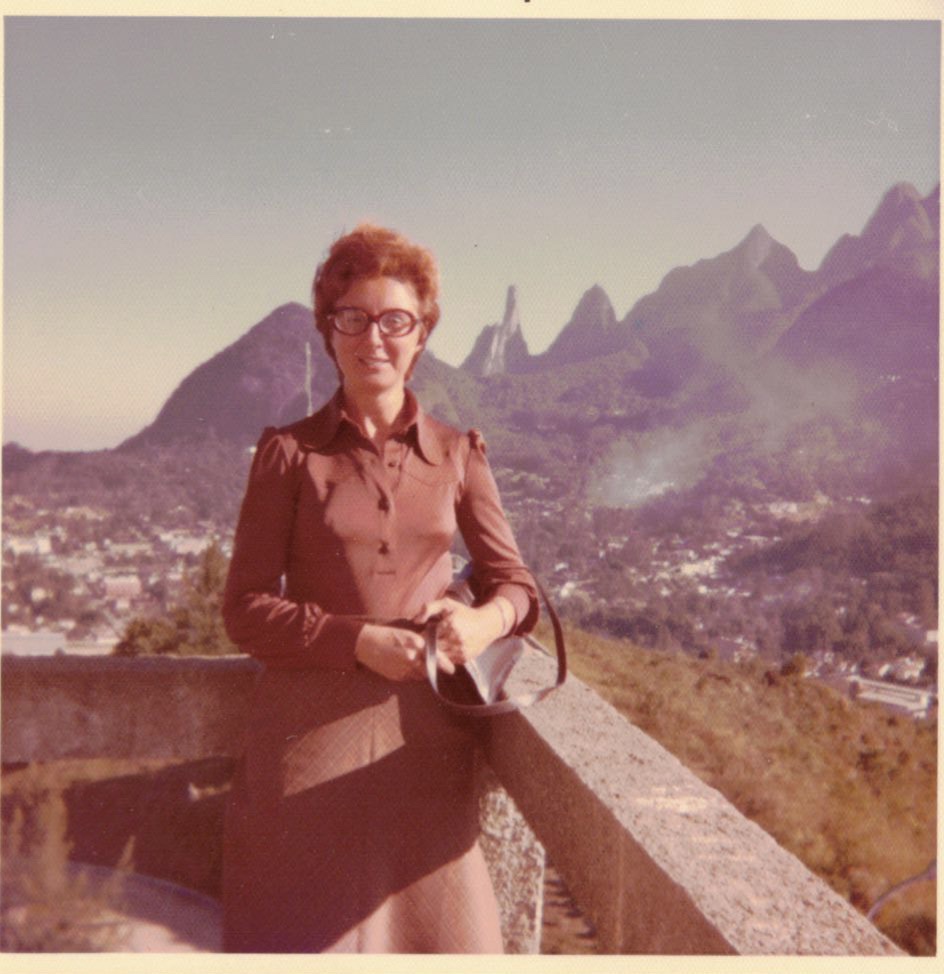
In 1974 my father was transferred to Rio de Janeiro and there we lived right in front of Copacabana beach. My mother managed the apartment we lived in, the expenses and the two employees we had, a cook and a nanny. I remember she would sometimes clean the living room windows and it would scare us to death because she would lean out the window, sticking half of her body outside, and we lived in the sixth floor of a high-rise. She wasn’t one to be scared and she also didn’t fear death later in life when she realized her days were counted. In Brazil, I also remember many women coming to our home to do aerobics or yoga.
Two years later we moved to Copenhagen, Denmark. My mother said it would make us sad to leave Brazil, which I didn’t understand then but later I realized my parents were very happy in Rio.
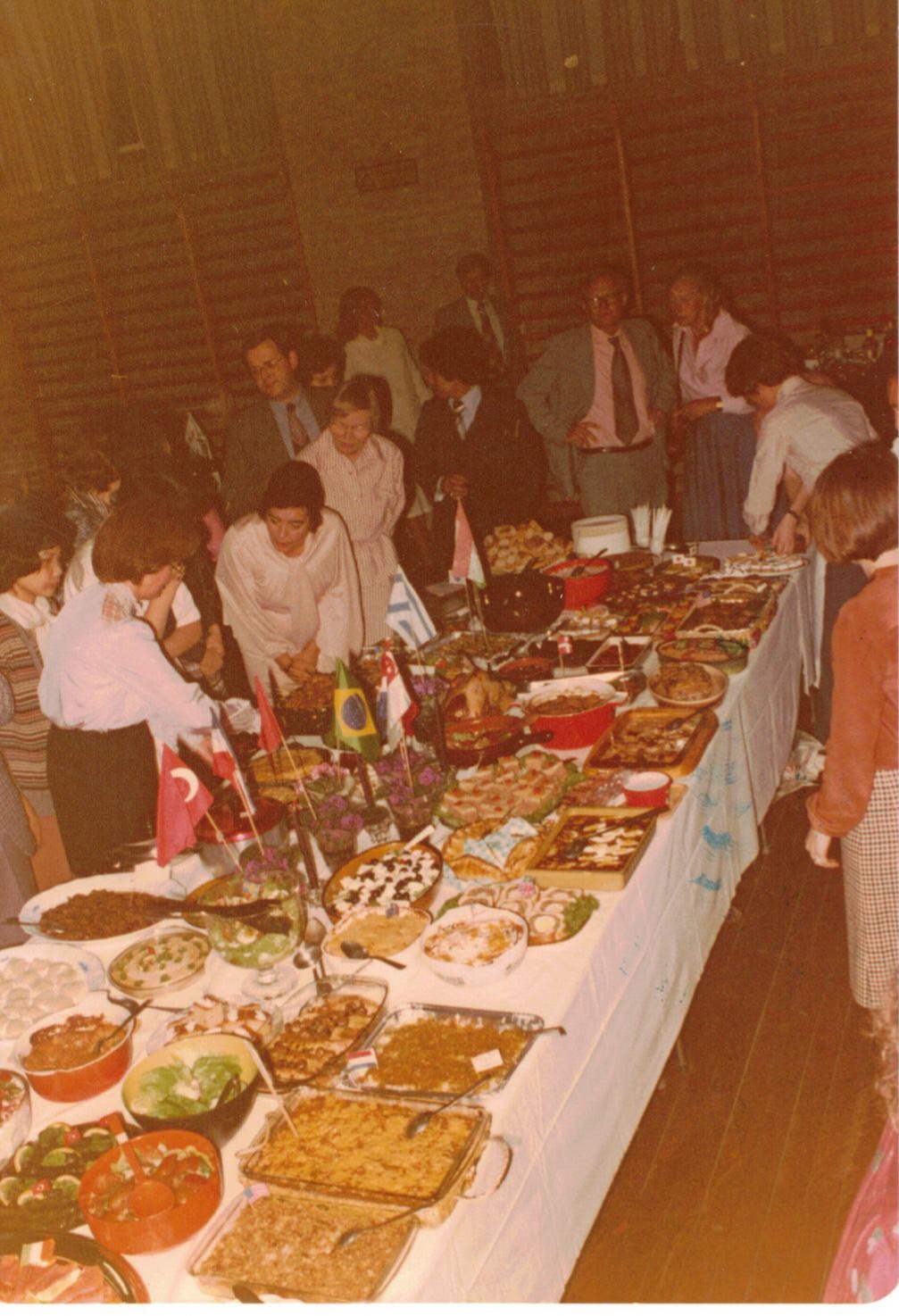
In Denmark my mother quickly joined both the International and American Women’s Club where she was not only very active but very much loved. She had a passion for international cuisine and she perfected her cooking skills in those clubs, learning how to cook like a real chef. Sometimes she would host dinners for embassadors at home and she’d hire a cook and a waitress to make sure her meals came out the way she wanted. All this while being a full time homemaker, meaning cooking all the meals, making all of our school lunches, washing and ironing all of our clothes and managing the several fruit trees we had in our garden, never getting tired of making apple preserve. She was our right hand woman.
During the 80s the King and Queen of Spain visited Denmark and my mother helped my father organize an international reception for them for which the King awarded my father the Knight’s Cross of Spain.
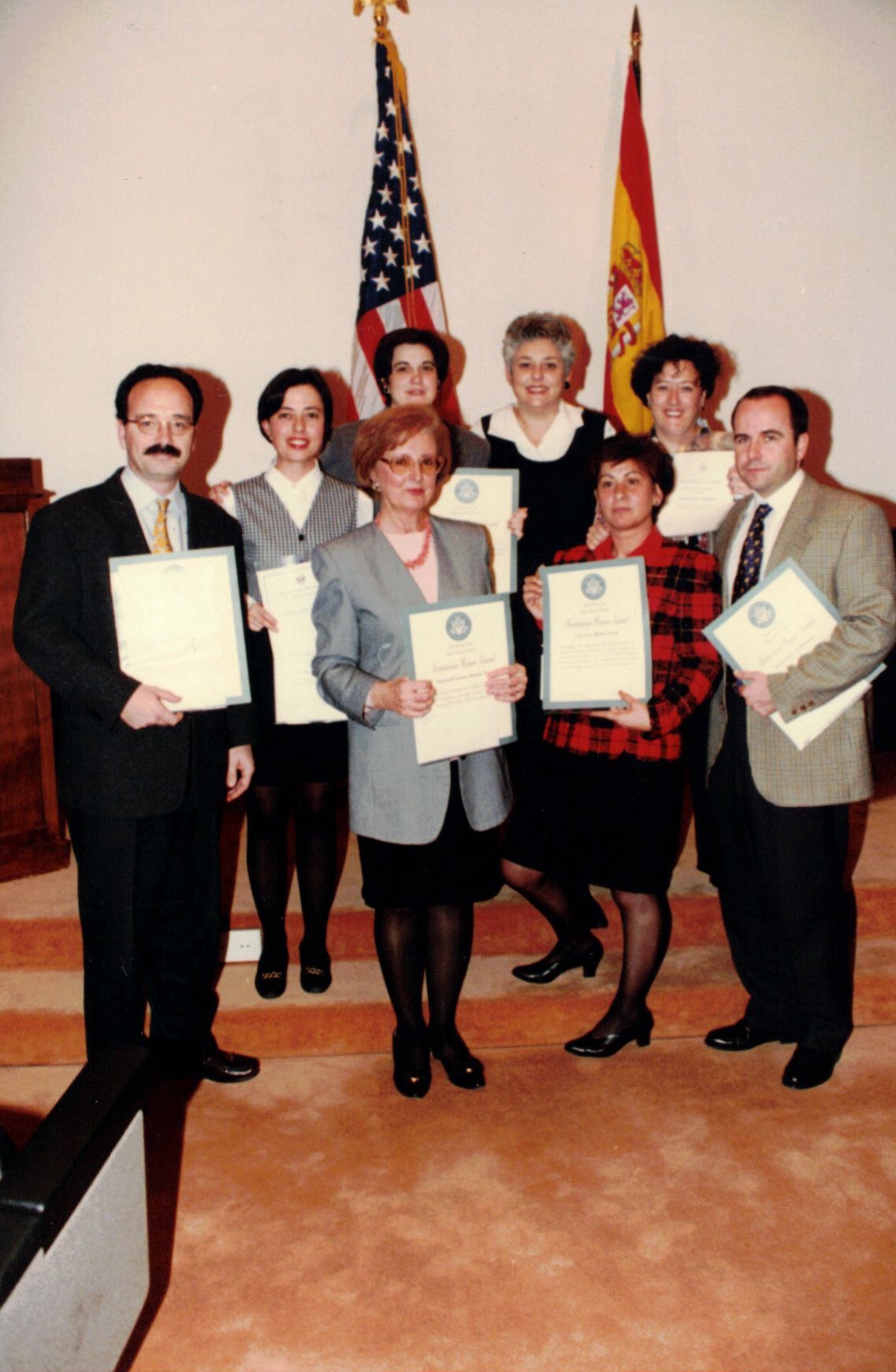
In 1984 we returned to Madrid and since we, her children, were already older, my mother went back to work for the U.S. government, this time at the U.S. Embassy in Madrid. There she received various awards, among others the Meritorious Honor Award.
One story I like to tell about my mother is that she once told me she couldn’t understand why when men abandoned their wives, the women would always keep the children. “Women are dumb. If your father left me, you and your brothers will go live with him. I’m going to enjoy my life.” It shows she was both a modern woman and a feminist.
My mother was never depressed and she was a tireless, selfless woman who never complained. She was an altruist, always kind, very proper and considerate towards others. She would do everything she could to help you if she could. Many people loved and valued her.
When my father died in 2009, my mother became my best friend. She was the only person I could call at any time and talk to her about everything.
I will miss you a lot mother. Thank you for all the support, the help and the life you gave me. You were always there for me, a tremendous support. I love you and I hope that I will see you in the next world and that we can remember this life, smile and laugh together.
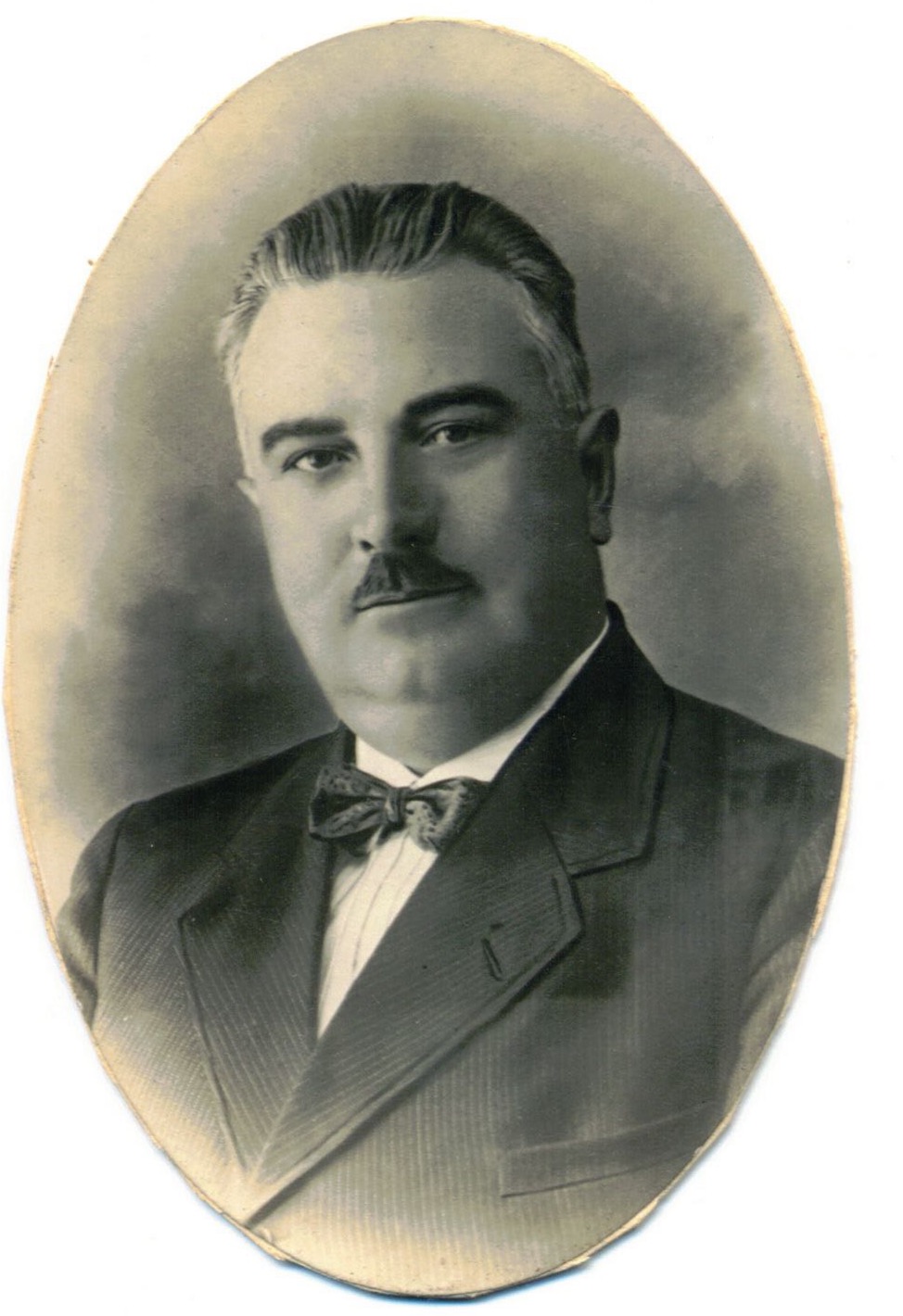
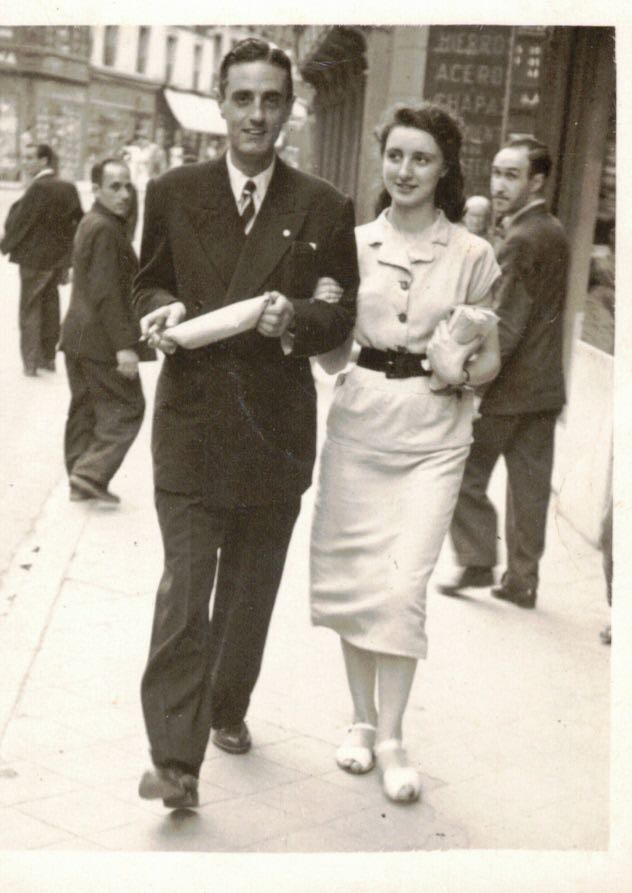
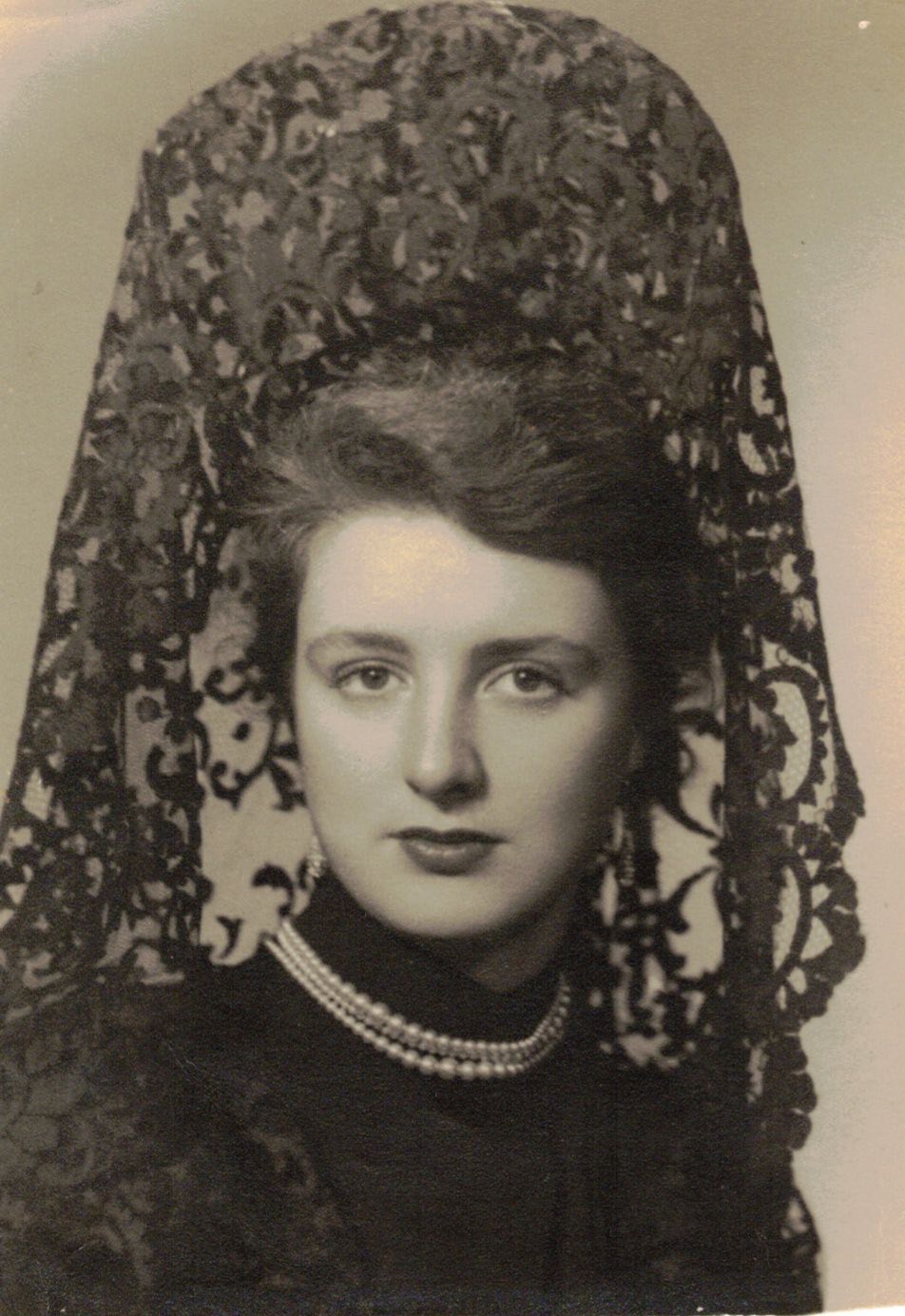
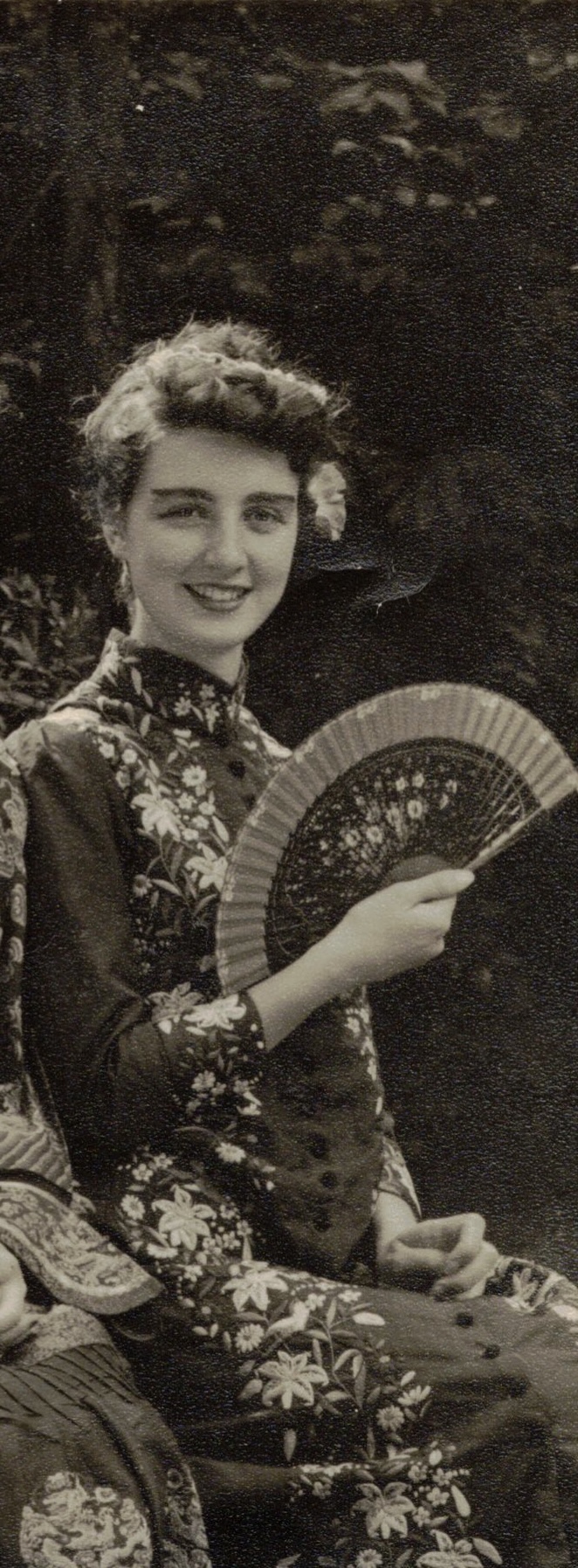
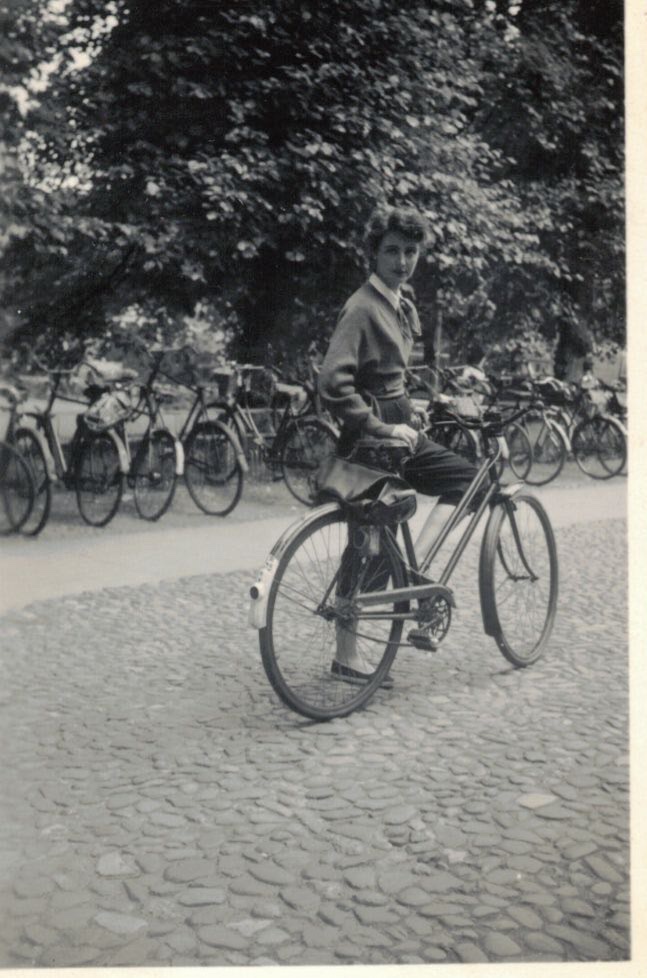
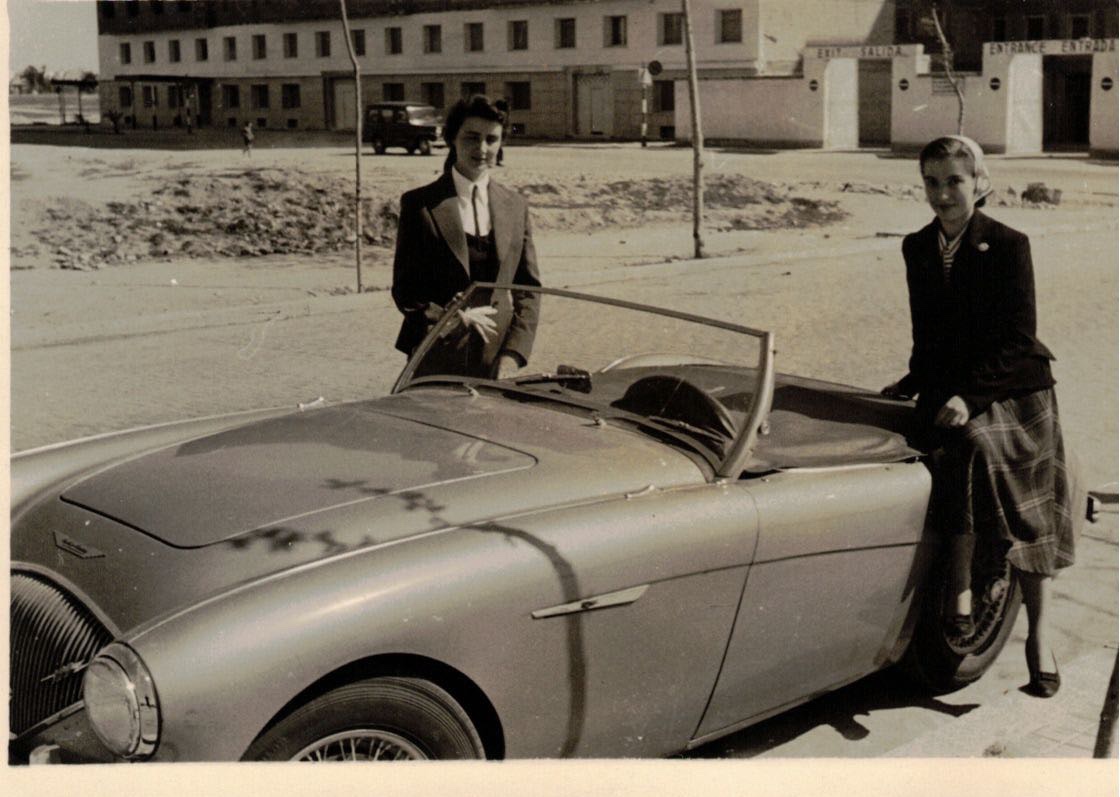
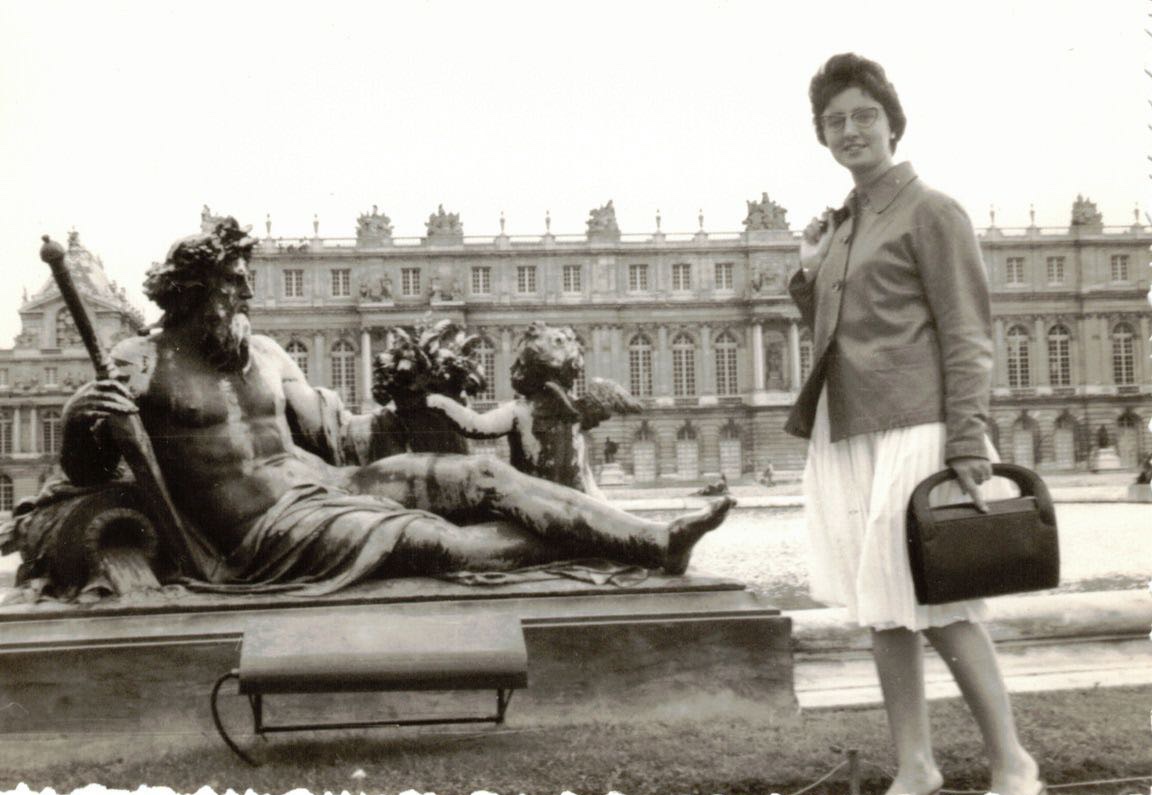
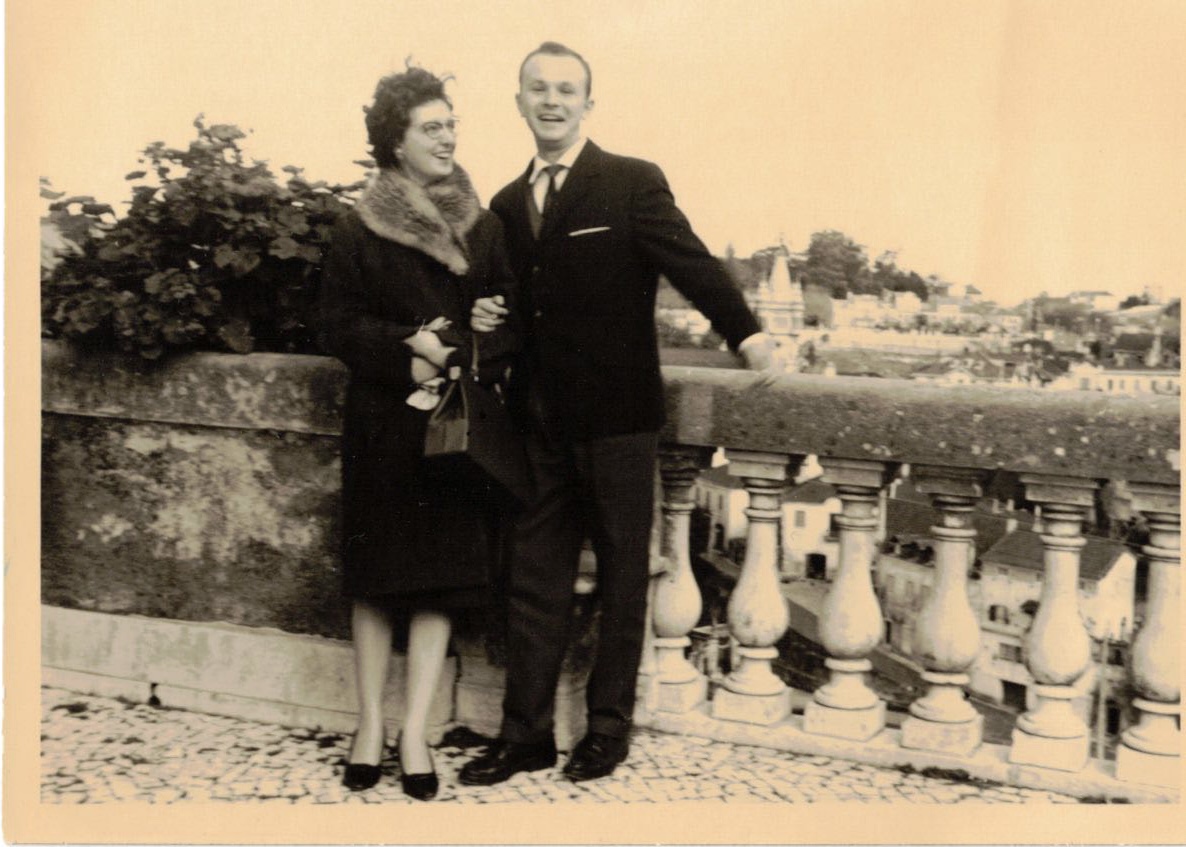
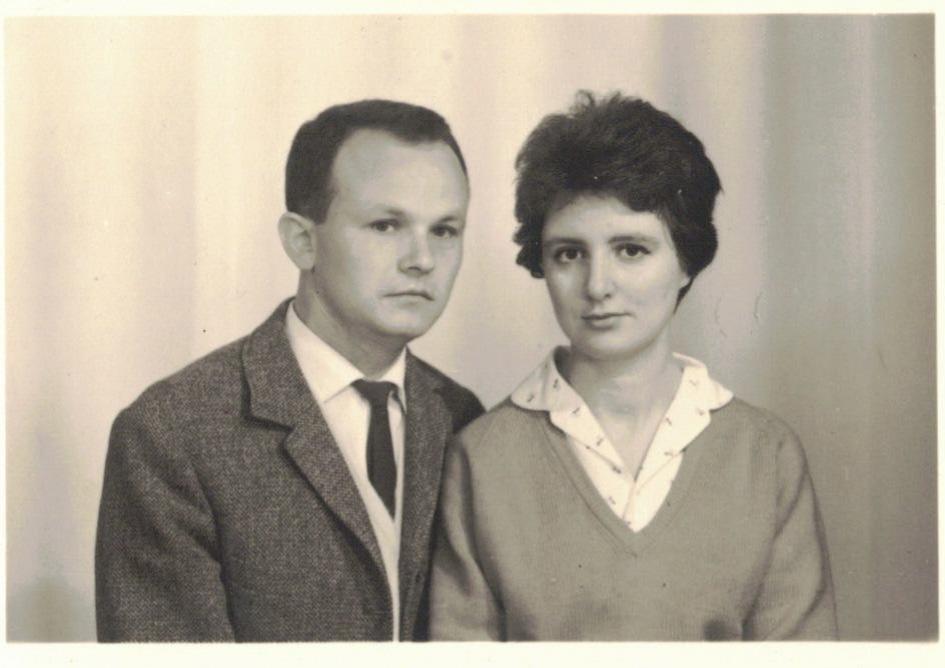
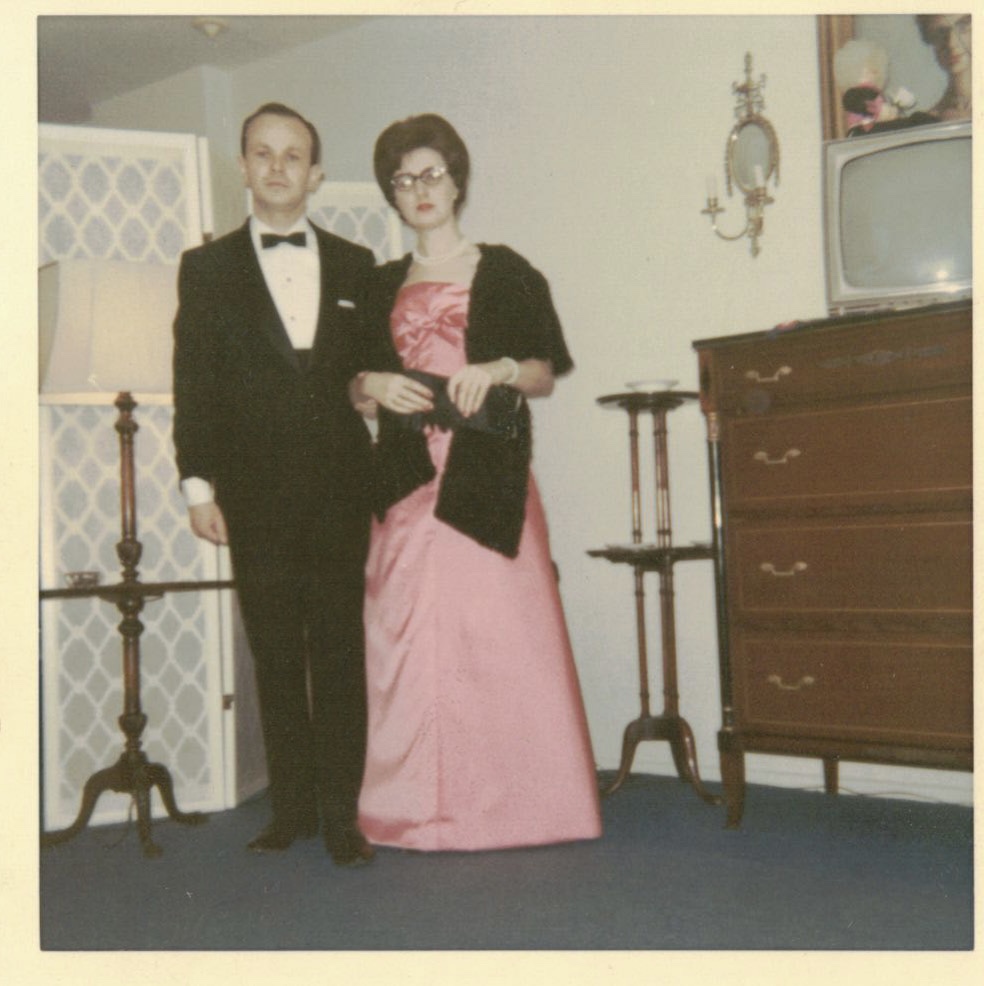
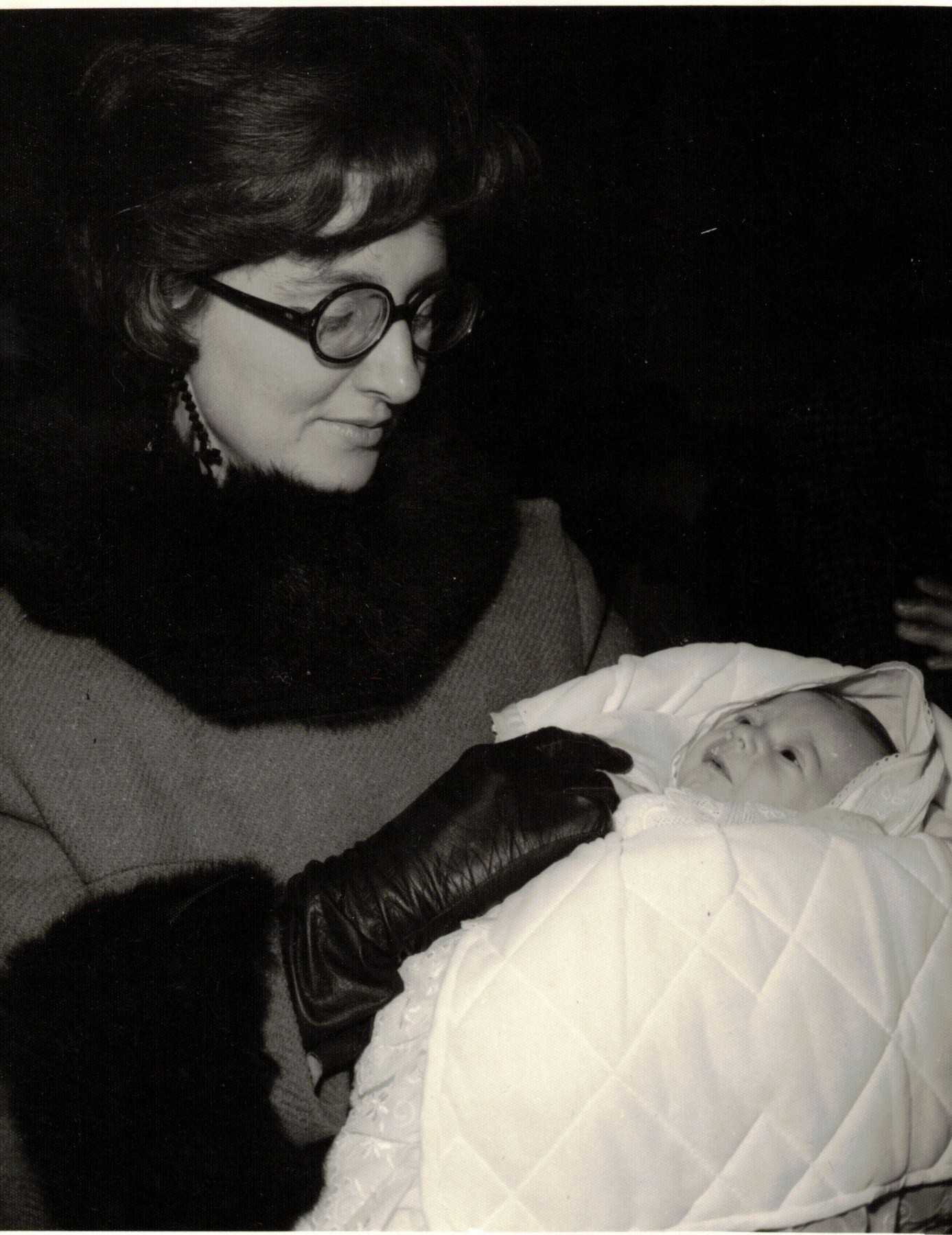
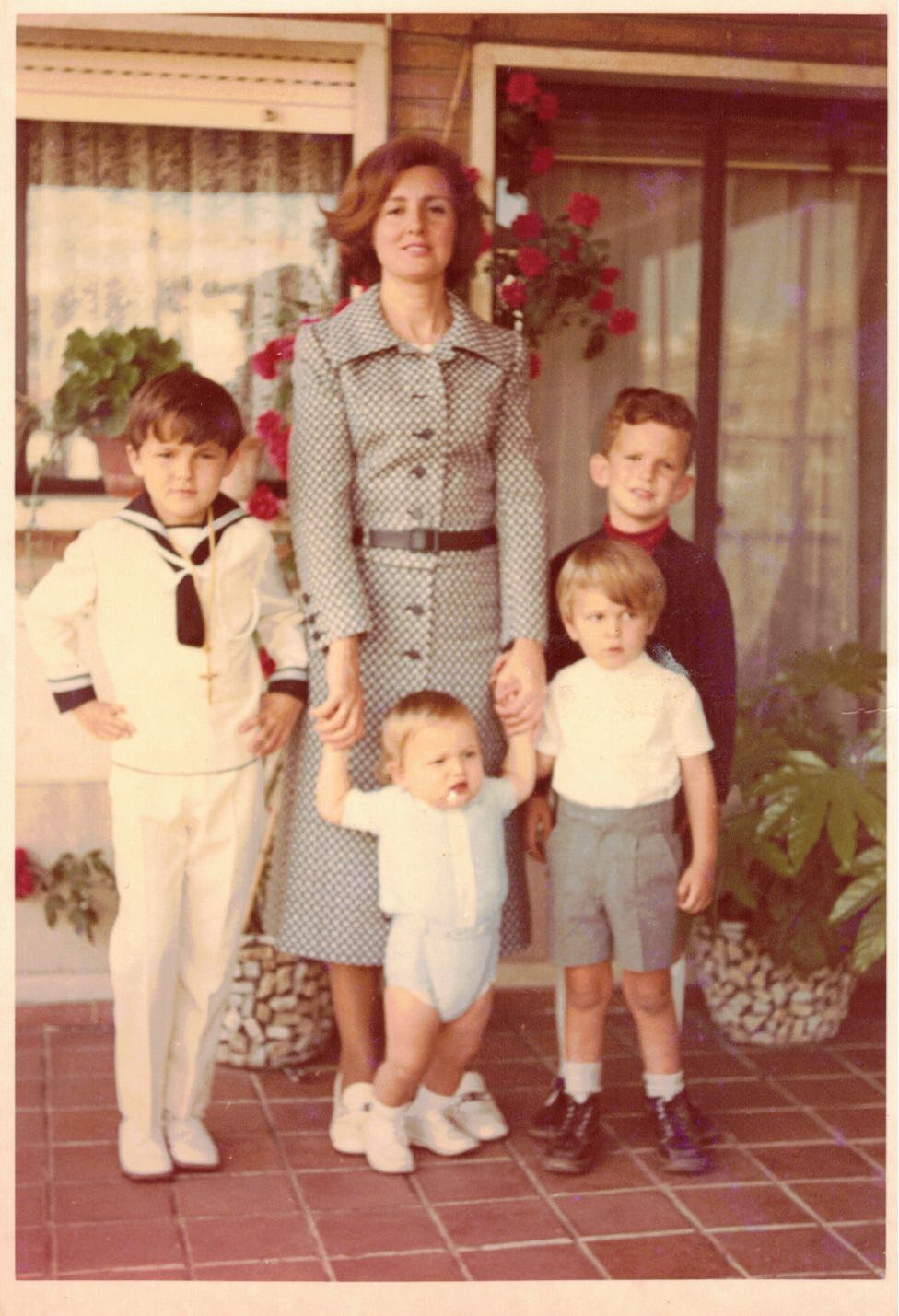
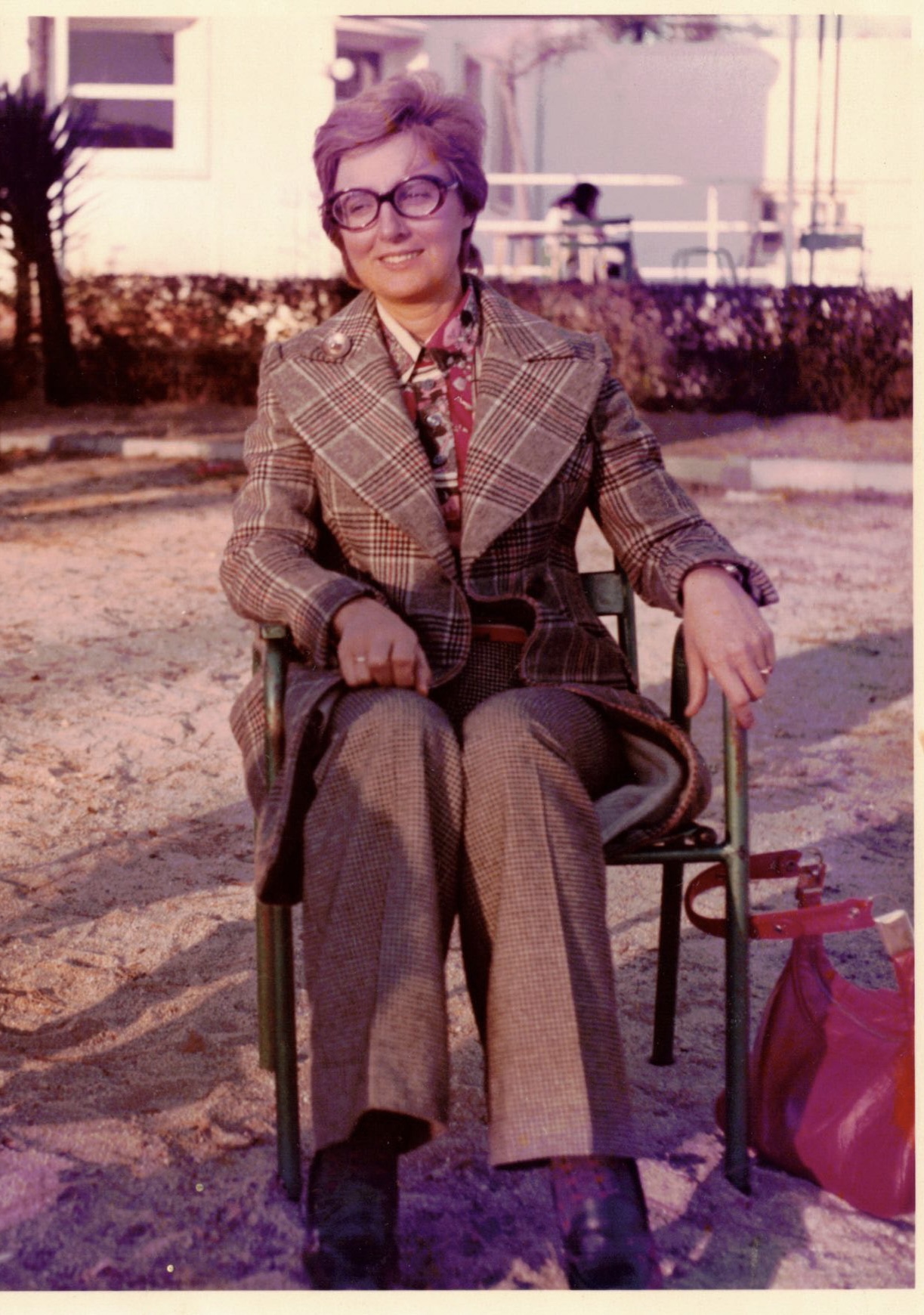
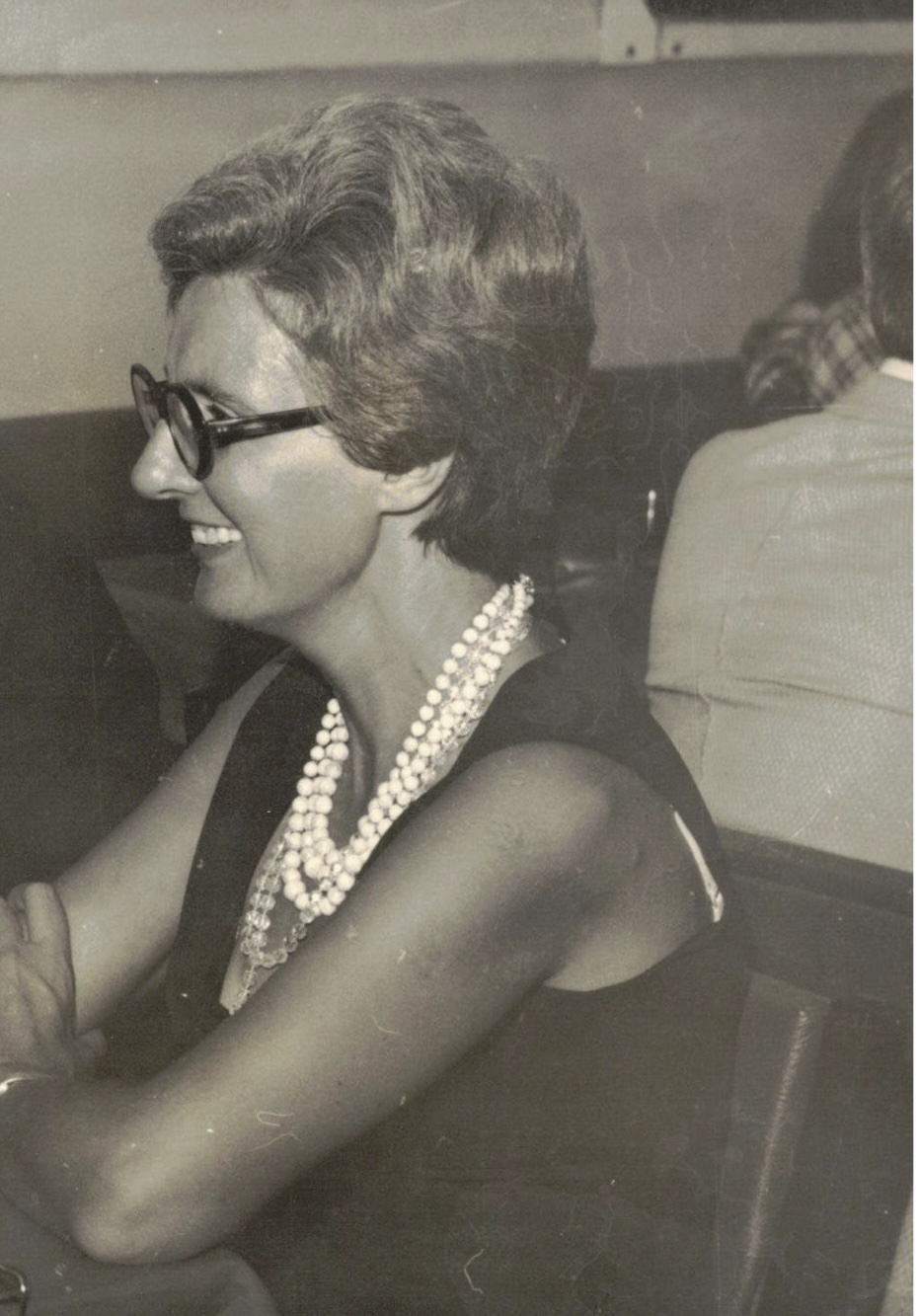
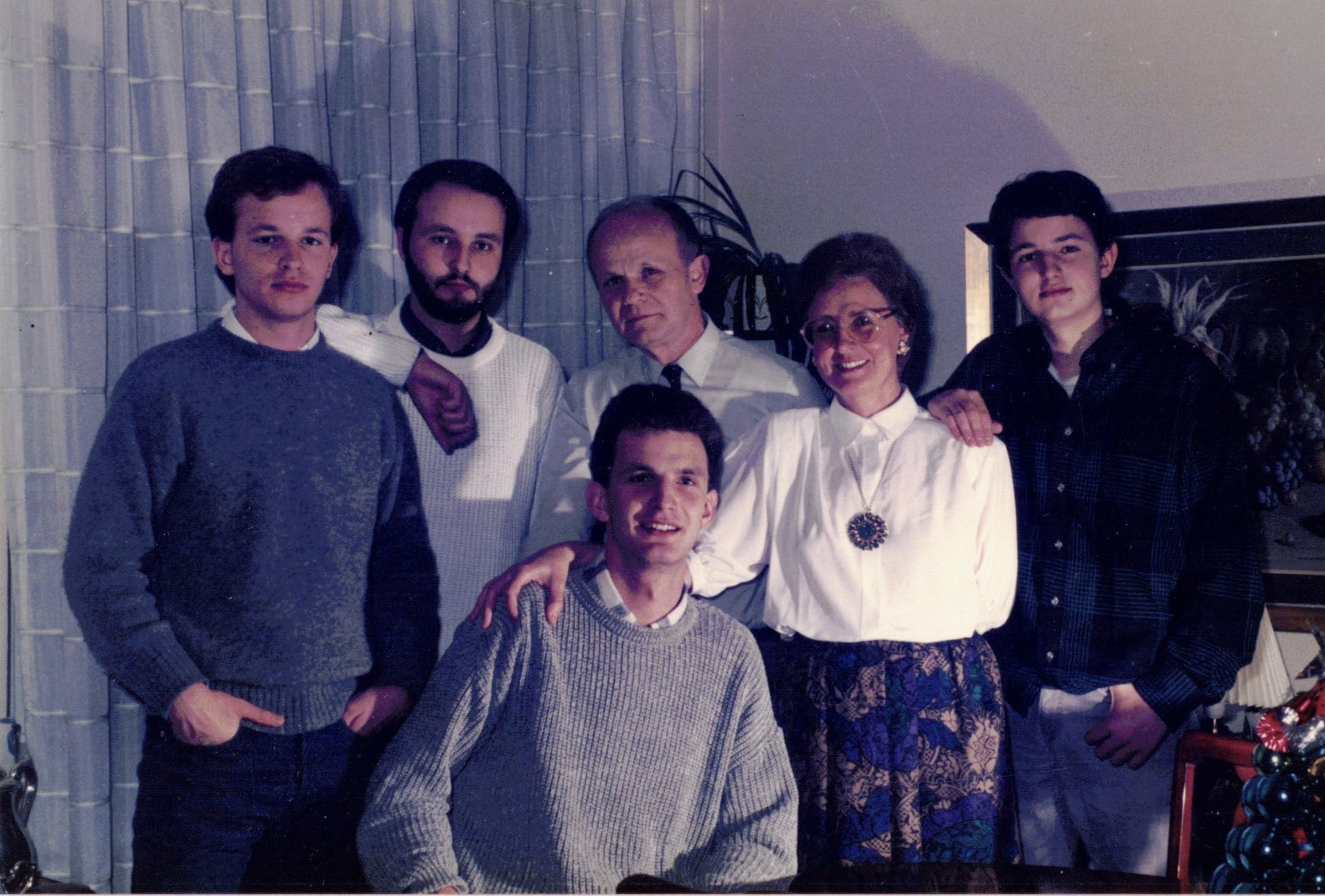
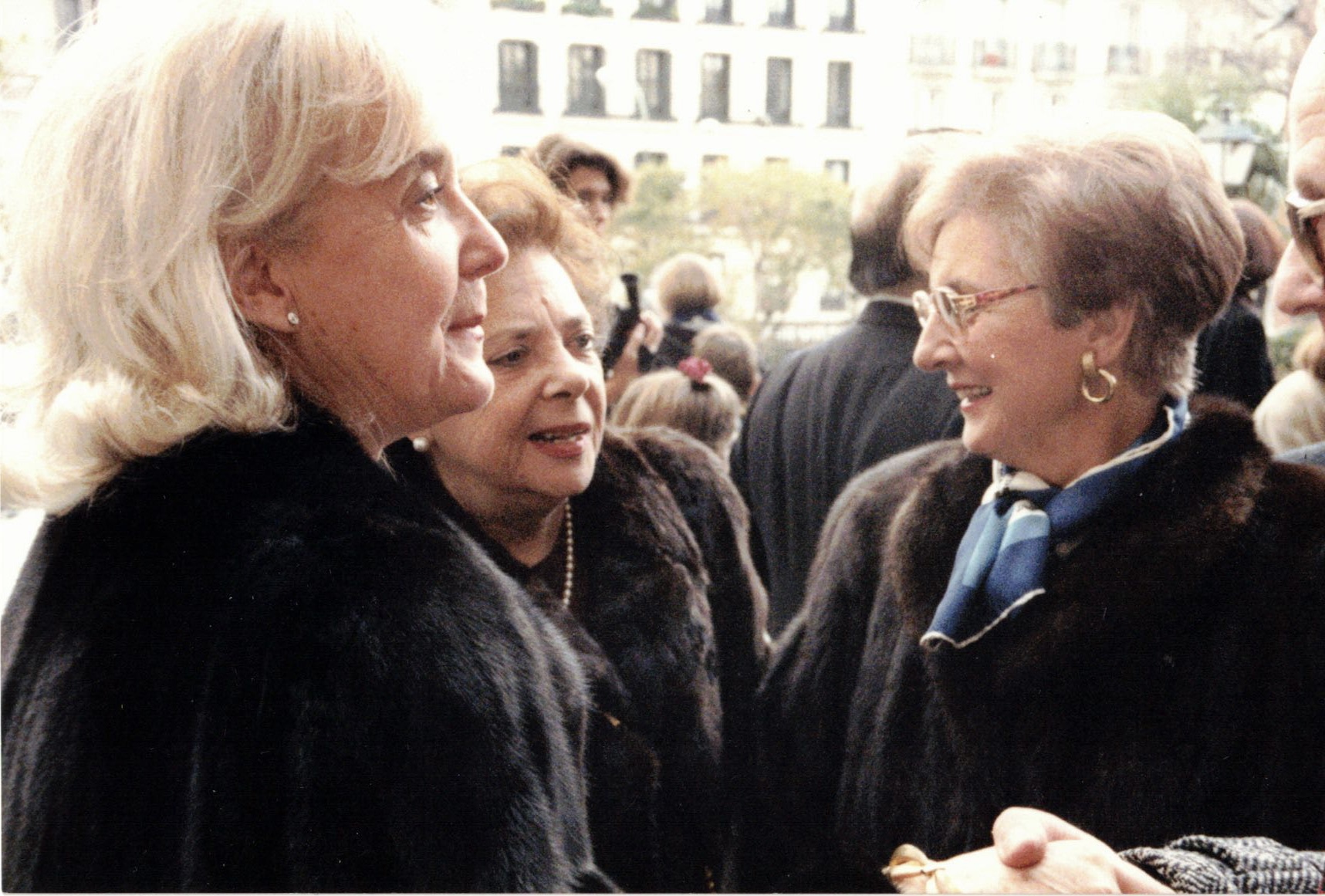
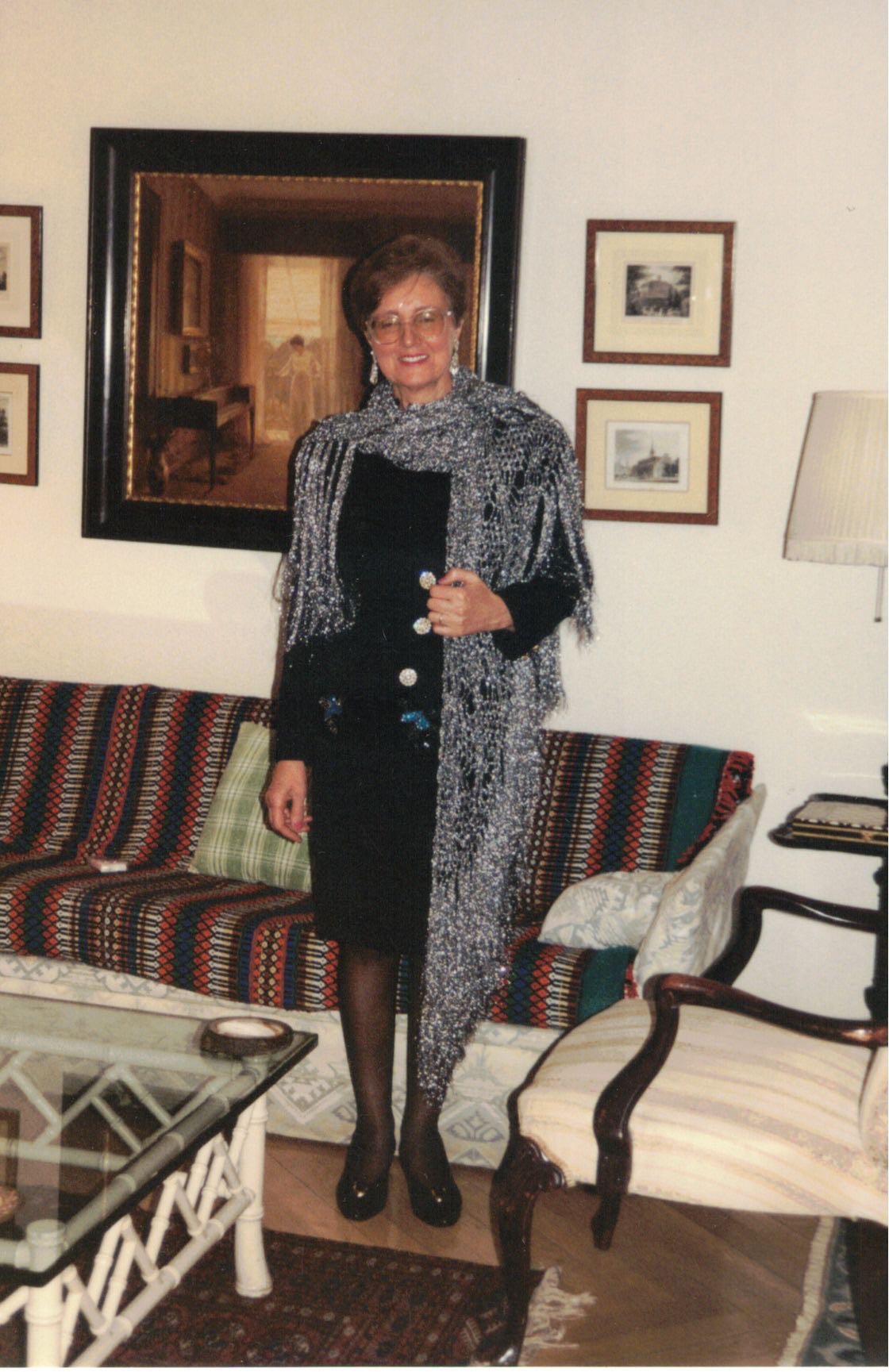
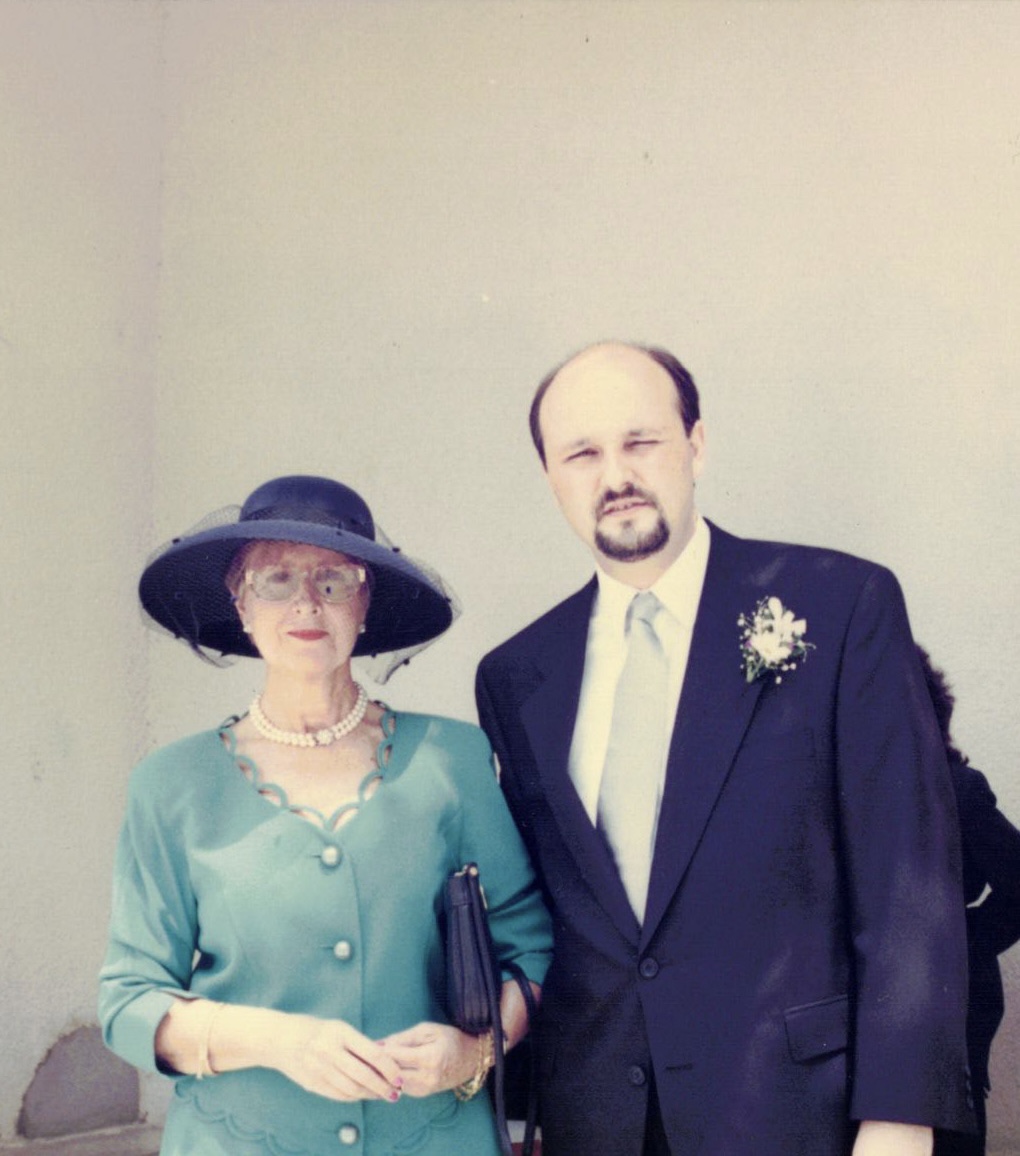
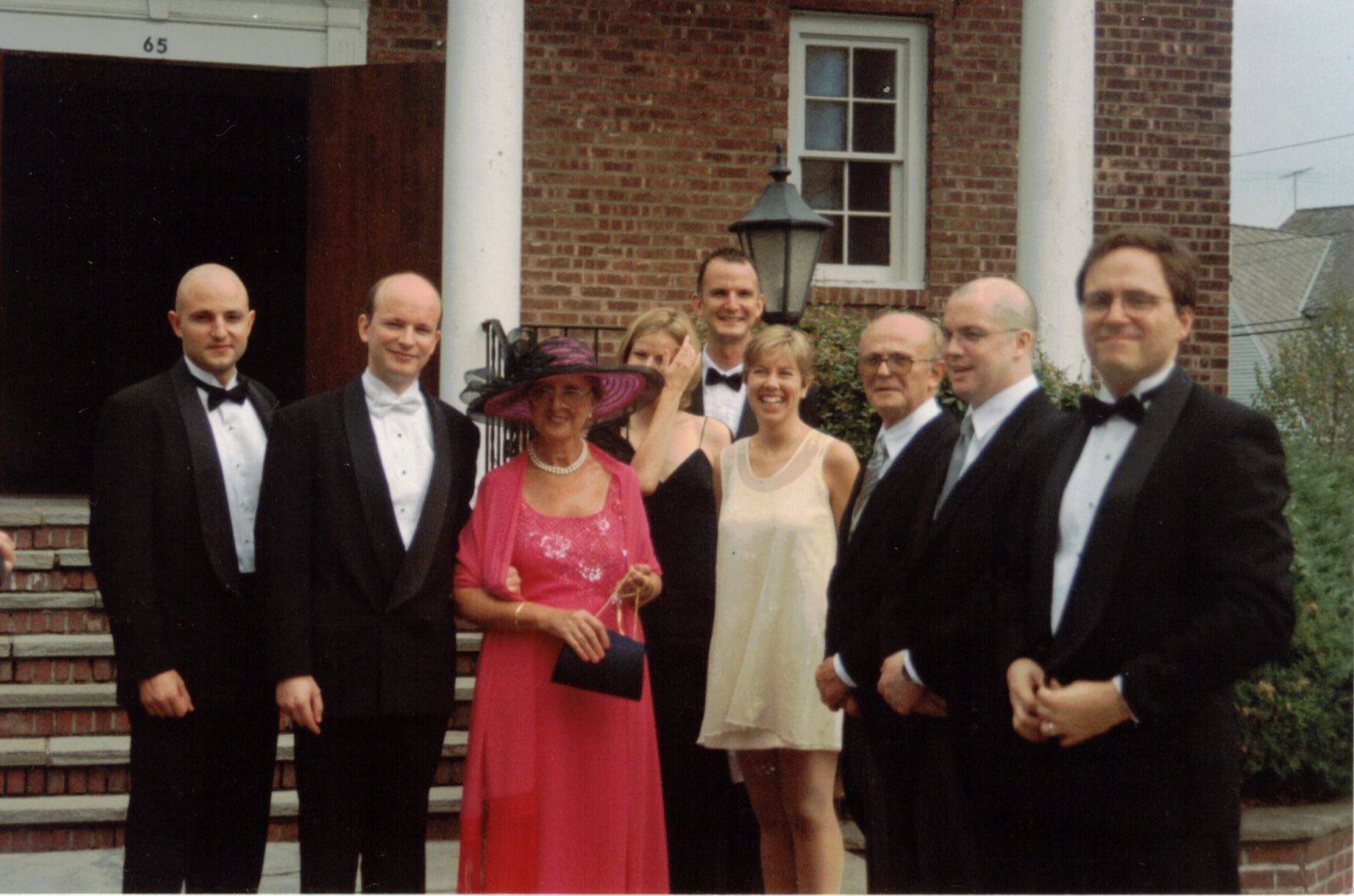
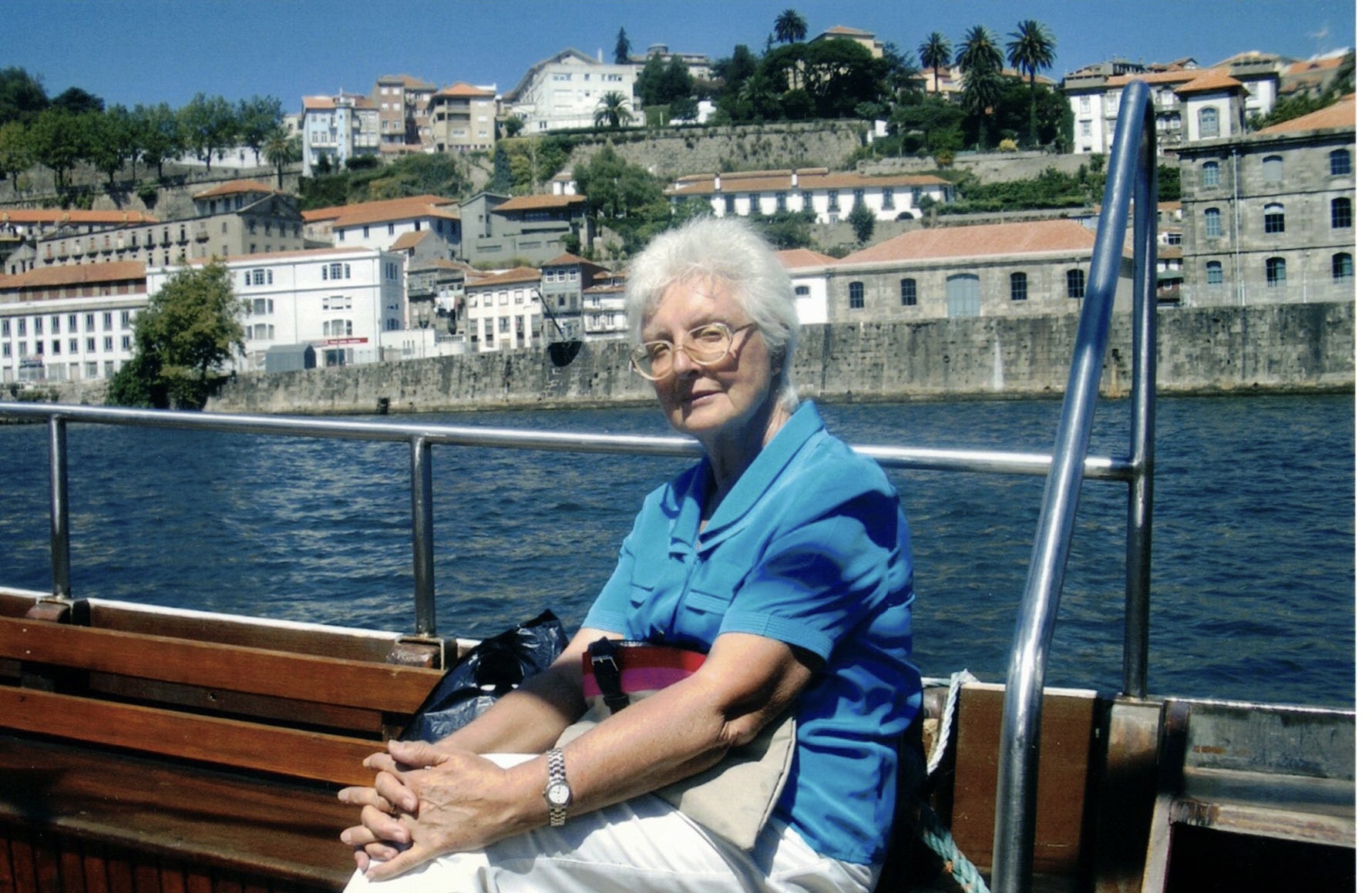
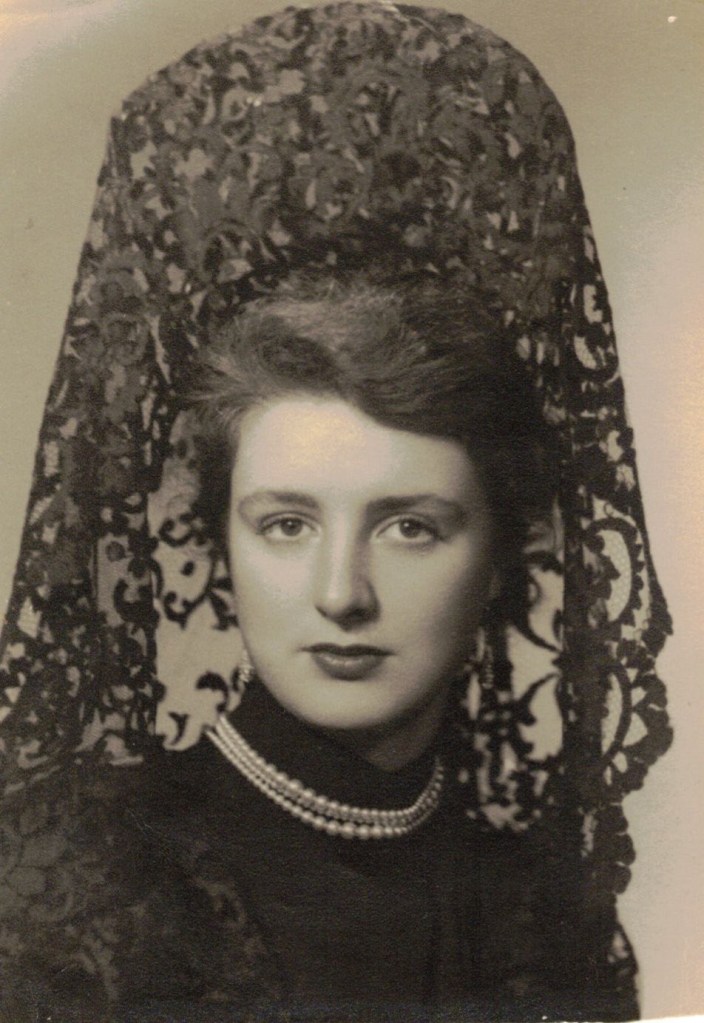
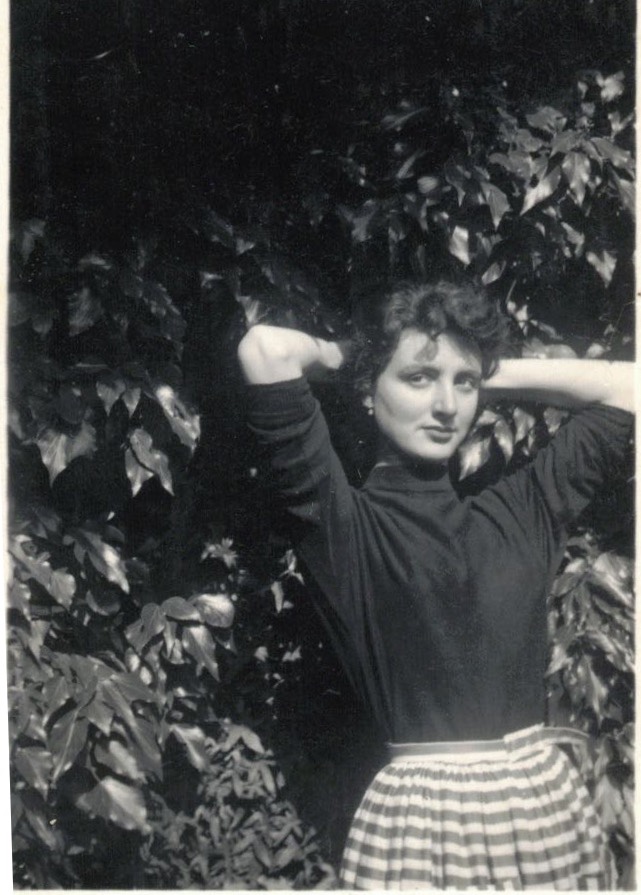
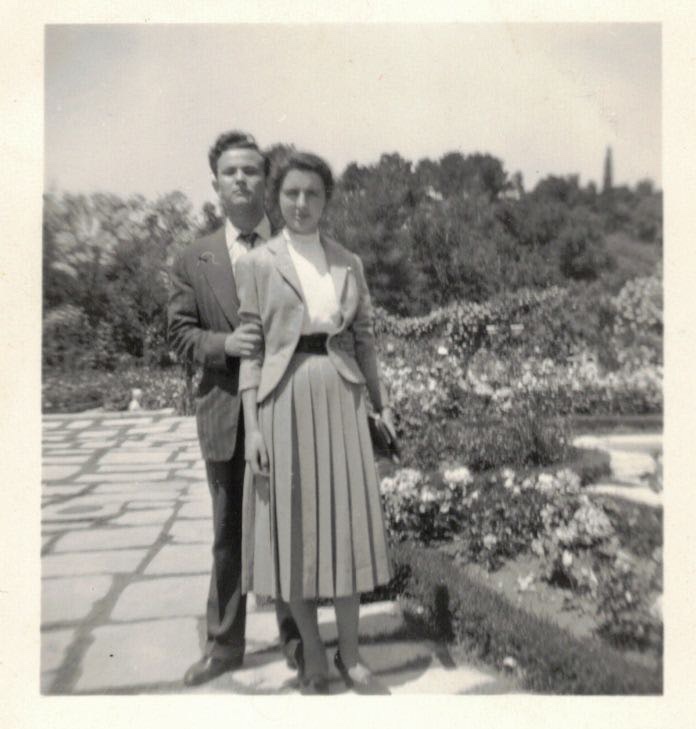
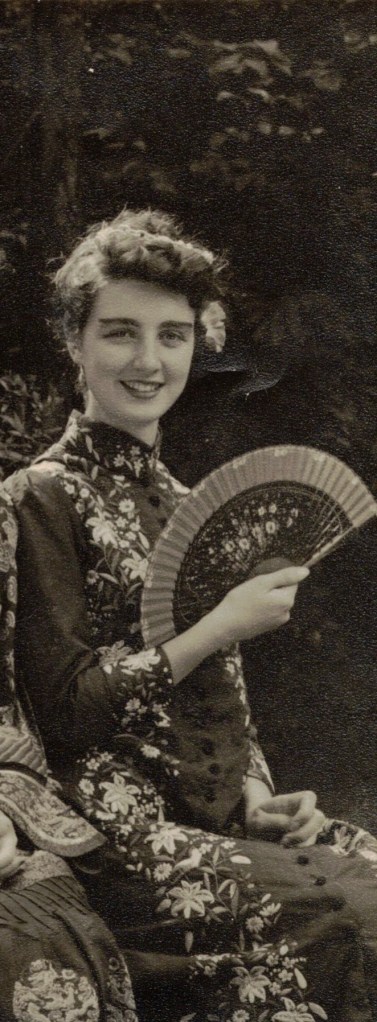
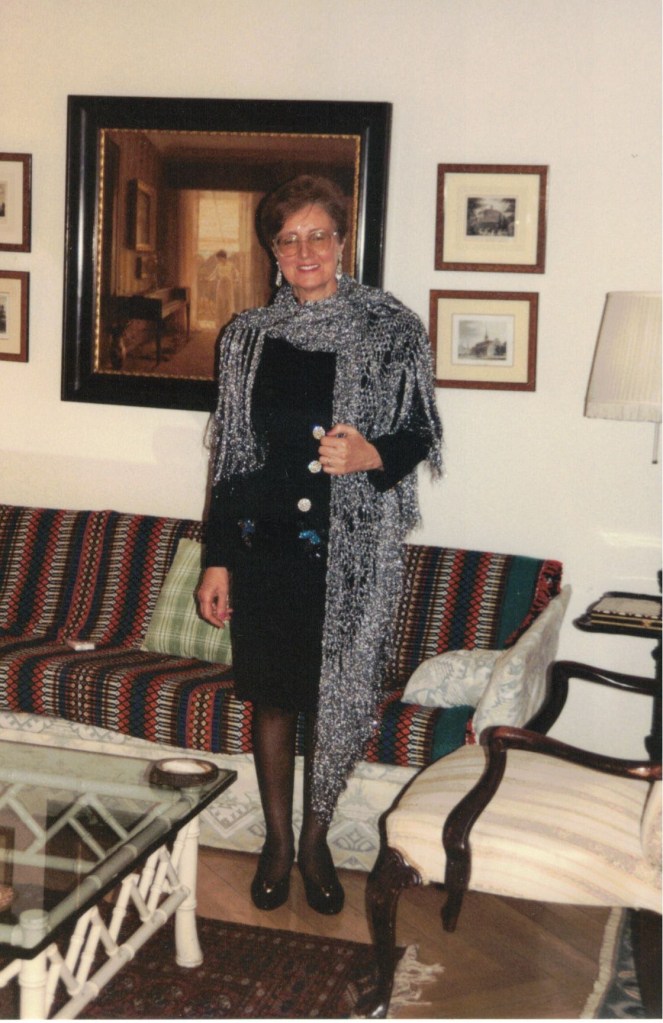
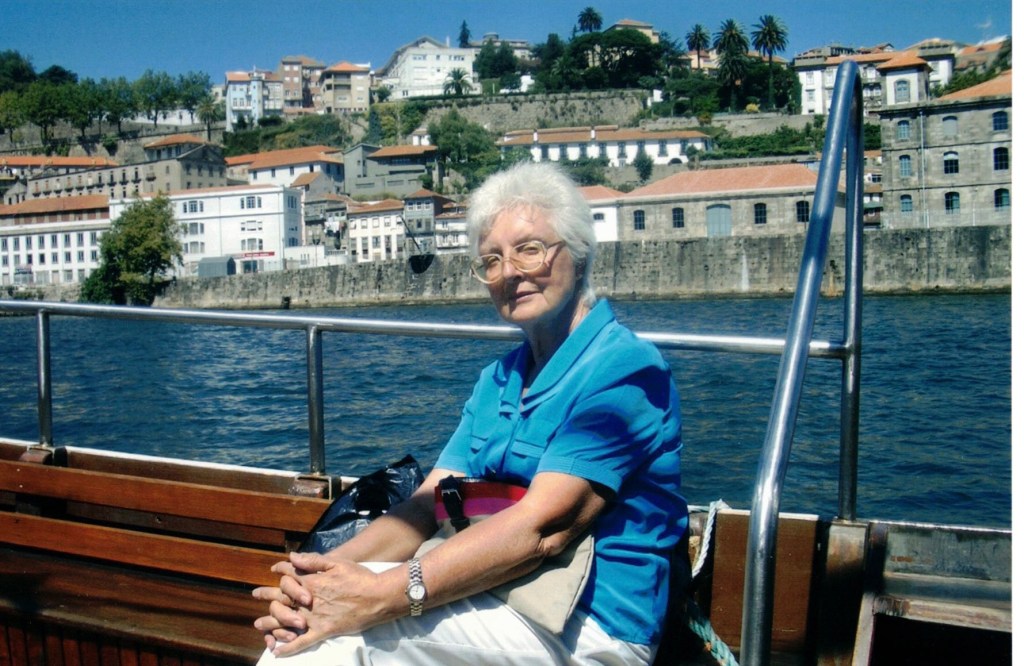
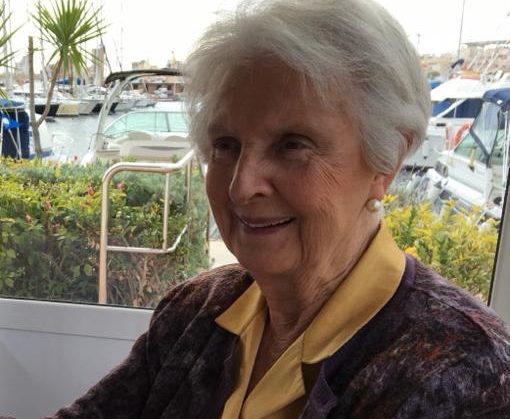
My mother, age 1 (25-II-1934). She grew up with her grandparents. Top right: Her maternal grandparents, Mariana Dulce Gómez and Federico Hain Villalba; bottom right: Antonio Morales Maza de Lizana and Concepción Hernández-CarrilloMy mother’s paternal grandfather, whom she loved and admired, Antonio Morales Maza de Lizana, a prominent and well known lawyer in MadridAge 7, 1940Age 12, 1945Age 16, approx.With her father, Antonio Morales Hernández-Carrillo, Madrid, probably late 40s Age 19, May 19521950sMy parents met in 1951 and married in 1961. They were together until 2010 when my father passed away. Madrid, 28-VIII-1954. Dressed Asian style a photo my mother dedicated to my father “With love from Hong Kong.”Cambridge, 21-VI-1955With her best friend forever, Josefina 1955Paris, 1960Wiesbaden, Germany 1960My parent’s marriage, Madrid 9-XII-1961. My mother’s wedding dress was black because she was mourning her paternal grandfather. Honeymoon, Portugal 1961Geneva, Switzerland, circa 1962Switzerland circa 1962 New York City mid 1960sNiagara Falls 1964Manhattan 1965, with her sons José and EduardoWith her mother María del Carmen Hain Dulce and her step father Vasco Ribeiro CarvalhoMy brother Victor’s baptism, Madrid 1970Madrid circa 19711970sRio de Janeiro circa 1975Brasilia 1975Denmark late 70sRygårds International school, Copenhagen circa 1979. On the table, we can see a Spanish potato omelette cooked by my motherMadrid 1987My mother with her mink coat. When I was a child and asked her to buy me something too expensive she would say “I’ll buy it for you the day I buy myself a mink coat.”Madrid 1990s1995 with my oldest brotherHempstead, NY, 1999, from left to right: Victor Carbajosa, my mom and I, Lucinda Brickler, Eduardo Carbajosa, Mercedes Carballo, Ramón Carbajosa, Andoni Viggo Petersen, William Paul NortonMy parents late 90sAt the US Embassy, Madrid 90sWith her grandchild Julien Chicago, 2004With her best friend forever who studied with her at Spain’s Official Language School and worked with her at the US embassy in MadridClub Náutico El Campello Spain 2019
Mi querida madre, una mujer internacional en un mundo que comenzaba a globalizarse en el siglo XX(English)
Nació en Madrid en el barrio de San Antonio. Debido a que su madre era muy joven, se crió con sus abuelos maternos hasta que fue adolescente y se fue a vivir a Lisboa unos años con sus padres, que nunca se casaron, y que allí habían inmigrado por la guerra civil española.
En Portugal por temas del visado, no pudo estudiar en la escuela, pero sí aprendió a hablar el portugués con soltura. En Lisboa tuvo que ayudar mucho a su madre que era soltera y aprendió rápidamente a hacer cosas sola y desenvolverse por esa ciudad. Unos años después volvió a Madrid y vivió con sus abuelos paternos. Le interesaban mucho las lenguas extranjeras y se matriculó en la Escuela Oficial de Idiomas. Allí conoció a mi padre. Estudio alemán, ruso, inglés y francés titulándose de los dos últimos. También se graduó de taquigrafía y conservó su máquina de estenografía hasta sus últimos años.
Al acabar sus estudios, en los años 50, se colocó de profesora auxiliar en la Escuela Oficial de Idiomas. En 1954, recibió una beca del Instituto Británico de Madrid para hacer un curso superior en Cambridge. Después comenzó a trabajar de secretaria bilingüe en las Fuerzas Aéreas americanas en Torrejón de Ardoz donde ganaba más dinero que altos funcionarios españoles por el cambio del dólar.
Después de casi 10 años de noviazgo con mi padre, se separó de él y se fue a Wiesbaden, Alemania a trabajar en otra base aérea estadounidense. Allá estuvo casi un año pero regresó a España y acabaron casándose. Se vistió de negro en su boda porque había muerto su abuelo paterno a quien tanto estimaba y admiraba.
Mi madre me comentaba que cuando viajaba por Europa en el comienzo de los años 60 que siempre ayudaba de intérprete a los españoles que inmigraban, con los que se encontraba y que sólo hablaban castellano.
Poco después de casarse, mi padre se colocó en las Naciones Unidas y se fueron a vivir a Ginebra, Suiza, dos años y allí con facilidad encontró trabajo de Funcionaria Internacional en la Oficina Internacional de Trabajo. A comienzos del 63 mi madre se quedó embarazada de mi hermano mayor y fue despedida. Mi madre recurrió esa decisión y parece ser fue la última mujer de ser despedida en esa organización por estar embarazada.
Volvieron a Madrid y mi madre dio a luz a mi hermano mayor, José Ramón. Convenció y casi obligó a mi padre que se examinara de inglés en el ministerio para una plaza en Nueva York. Mi padre con muchas dudas se presentó y aprobó. En 1963 se fueron a la Gran Manzana. Mi madre ya era una devota ama de casa y allí tuvo dos hijos más, mi hermano Eduardo y yo.
En el 1968, con sus tres hijos, mientras mi padre finalizaba su trabajo en los EEUU, fue a pasar una temporada con su madre en Lisboa. Volvieron a España y nació mi hermano pequeño Víctor en 1970. Aquí empiezan mis primeras memorias de mi madre. Me acuerdo que dedicaba mucho tiempo a la limpieza de la casa y a alimentarnos. A mi padre nunca le faltó la comida ya hecha cuando a casa llegaba. Durante esos años mi madre trabajaba los fines de semana en un hotel de recepcionista, pues los días de diario nos cuidaba.
En 1974 a mi padre lo trasladaron a Río de Janeiro, Brasil y allá vivimos en frente de la playa Copacabana. Mi madre administraba la casa, los gastos y dos empleadas que teníamos, una cocinera y una niñera. Algunos recuerdos que tengo son los de mi madre limpiando el exterior de las ventanas del salón en las que nos asustábamos muchísimo pues vivíamos en un sexto piso y sacaba la mitad de su cuerpo afuera. Miedo no tenía; tampoco la tuvo a la muerte cuando sabía que se estaba muriendo. También me acuerdo venían otras mujeres a casa y hacían aerobics o yoga. Dos años después fuimos a vivir a Copenhague, Dinamarca. Me acuerdo mi madre dijo que nos entristecería irnos. No lo entendí pero ahora me doy cuenta que mis padres eran muy felices en la ciudad carioca.
En Copenhague mi madre rápidamente se unió al club de mujeres internacionales y al club de mujeres estadounidenses. En ambos fue una mujer muy querida. En esos clubes debido a su interés en la cocina internacional perfeccionó sus habilidades culinarias y se convirtió en una verdadera chef. A veces organizaba cenas en casa en las que venían embajadores y contrataba a un jefe de cocina y una camarera para asegurarse que sus platos salieran como ella quería. A la vez era ama de casa, pues se encargaba de todas nuestras comidas, los sandwiches que llevábamos al colegio, toda nuestra ropa, lavarla, plancharla. También del jardín, de varios árboles de fruta que teníamos, de la que no se cansaba de hacer compota. Fue nuestra mano derecha siempre.
En los años 80 vinieron los reyes de España a Copenhague y mi madre ayudó a mi padre a organizar una recepción internacional por la que mi padre el rey le otorgó la Cruz de Caballero.
Volvimos a Madrid en el 84 y ya siendo nosotros, sus hijos, mayores, volvió a trabajar para los americanos, esta vez en la embajada hasta jubilarse. Allí recibió varios premios entre otros el Meritorious Honor Award.
Una de las anécdotas que me gusta contar de mi madre es que una vez me comentó que no entendía porqué cuando un hombre abandonaba a su esposa, por qué se quedaba la mujer con sus hijos. <<Las mujeres son tontas>>, decía, <<si tu padre se fuera, os vais a vivir con él, yo voy a disfrutar de mi vida>>. Demuestra que fue una mujer moderna y feminista.
Mi madre nunca se deprimió en su vida y era una persona incansable que no se quejaba de nada. Fue una persona altruista, siempre amable, muy correcta y considerada con todos. Hacía todo lo posible para ayudar al prójimo. Mucha gente la quería y la estimaba.
Cuando mi padre falleció en el 2009 mi madre se convirtió en mi mejor amiga. Era la única persona a la que le podía contar todo y llamar en cualquier momento.
Te voy a extrañar mucho madre. Gracias por todo el apoyo, la ayuda y por la vida que me diste. Siempre estuviste presente y fuiste un gran respaldo para mi. Te quiero mucho mamá ojalá nos veamos en el siguiente mundo y nos podamos recordar de esta vida, sonreír y reírnos juntos.
Mi madre cuando tenía un añito (25-2-1934). Se crió con sus abuelos, a la derecha, parte superior: Sus abuelos maternos, Mariana Dulce Gómez y Federico Hain Villalba. Parte inferior: Antonio Morales Maza de Lizana y Concepción Hernández-CarrilloEl abuelo paterno de mi madre, Antonio Morales Maza de Lizana que tanto estimaba, fue un abogado importante y conocido en MadridCon 7 años, aprox. 1940con 12 años, 1945Con unos 16 añosMi madre con su padre, Antonio Morales Hernández-Carrillo, MadridCon 19 años, mayo 1952Años 50Mis padres de novios. Lo fueron 10 años, se casaron en 1961. Estuvieron juntos hasta el 2010, cuando falleció mi padre.Madrid, 28-8-1954. Vestida de asiática. Una foto que le dedicó a mi padre <<en Hong Kong>>Cambridge 21-6-1955Con su mejor amiga de toda la vida, Josefina Macía 1955París 1960Wiesbaden, Alemania 1960Mis padres el día de su boda 9 diciembre 1961. Se casó de negro por la muerte de su abuelo paternoLuna de Miel Portugal 1961Ginebra 1962 aprox.Suiza 1962 aprox.De gala en Nueva York años 60Niagara Falls, aprox. 1964Nueva York 1965 con sus hijos José y EduardoCon su madre, Carmen Hain Dulce y su padrastro Vasco Ribeiro CarvalhoBautizo de mi hermano Víctor 1970Años 70Madrid, 1971 aprox.Brasil aprox. 1975Brasilia 1975Dinamarca finales años 70En la escuela británica Rygaards, Copenhague, aprox. 1979, podemos ver una tortilla española cocinada por mi madreMadrid, 1987Con su abrigo de visón, Madrid años 90. De pequeño, cuando le pedía algún capricho me decía <<te lo compro cuando tenga un abrigo de visón>>Años 901995, con mi hermano mayorHempstead, Nueva York 1999 de izq. a der: Víctor Manuel Carbajosa Morales, yo con mi madre, Lucinda Brickler, Eduardo Antonio Carbajosa Morales, Mercedes Carballo, Ramón Carbajosa Segura, Andoni Viggo Pedersen, W.P. Nortonaños 90, con mi padreAños 90 Embajada Americana, MadridCon su amiga de toda la vida, Josefina Macía, con quién estudió en la EOI y trabajó en la embajada EEUUCon su nieto Julien, Chicago 2004Club Náutico, El Campello, 2019
In essence we are carrying millions of years of Life in our genes. We were born from the Tree of Life in the Universe and we’ve evolved into millions of different Beings, freely roaming the world but we are from the same Tree. This Tree’s seeds and fruits, so to speak, perish and transform, but we continue to be part of the Tree.
The coast off the Avepozo neighborhood in Lomé, East of the Hotel Madiba
This year, in the month of June, some of my family members and friends traveled to Togo from the United States, Germany and France. Many of us had planned to travel in April 2020 but were not able to because of the pandemic. Some members of the group stayed for a month in Lomé and others, like my wife and I, stayed for 15 days.
Although some of us in the U.S. traveled from Newark to Lomé nonstop, my wife and I took a flight from Chicago to Brussels, Brussels to Accra, Ghana; and then to Lomé (total trip time 19h and 10 min). We booked the flight in April 2021 with Brussels Airlines through a third party website and we paid a little less than $1200 each.
Like many people who travel to non-industrialized countries, our suitcases were completely packed and some weighed more than 45 pounds. A very patient and slim lady at the American Airlines counter helped us reweigh our luggage after we had removed some of the items and put them in our carry on luggage. It was surprising to see such a thin person lift our very heavy luggage and put it on the belt. We did purposefully take an extra suitcase and we paid $200 to check it in.
American airlines handled the flight from Chicago to Belgium and Brussels Airlines the rest of the way. Our experience with the latter is also very positive because last year they refunded our 2020 trip without much of a problem. I also found their staff to be extremely helpful since they were able to retrieve a hand luggage in Brussels which we had been asked to check in in Chicago at the gate, right before boarding. The hand luggage contained important medication my wife needed from the last stretch of the trip, which we later realized we needed.
Togo Tourist Visa
Unlike in my last trip to Togo, instead of getting the one week entrance visa at the Lomé airport, I applied for it through the Togolese embassy in the U.S. Although it is much more expensive to do it this way, the visa is good for 3 months, which means not having to apply for an extension in the town of Agoé, an ordeal I describe in my last trip. I didn’t get credit for the three month visa I obtained for 2020, which I never used due to the pandemic. I believe the visa cost about $150. If you want to apply for the visa, download the forms from the Togolese embassy.
COVID testing
To enter Togo we were required to fill out an on-line questionnaire and pay a fee of 40,000 CFA for a mandatory COVID test everyone had to take to enter Togo. After filling it out, I was issued a scannable bar code sent to my email address, which I was required to present in the Lomé aiport. Once at the airport, however, I noticed my code was not scanned and instead my information was taken by hand at 2 different places and then, like everyone else, I took the COVID PCR test. I believe I signed a form indicating if I tested positive I would voluntarily quarantine. The result was sent to me via email some days later and I tested negative.
To return to the U.S. the Togolese authorities required we take the PCR Covid test again at the airport. When we showed up for the test, we were informed we could preregister online so we wouldn’t have to stand and wait. The test price had decreased to 25,000 CFA. I took the test on July 10th, Saturday, two days before my departure and received the results on Sunday afternoon. Although my wife tested negative, I tested “probable,” meaning it was probable I had the virus, but technically the result was inconclusive. The instructions on the form I received by email were to wait 72 hours before retaking it. I couldn’t have taken the test again on that Sunday anyway because the airport testing site was only open for 4 hours on weekend mornings. However, some of my wife’s relatives said nothing prevented me from taking it again on Monday, July 12th at seven in the morning at the Institut National d’Hygiene and pay the rush fee, which ended up being 20,000 CFA. The Institut said the results would take 18 hours but a couple of in-laws who knew some people were able to get the results by six pm the same day so I was able to leave on my scheduled flight at eight pm on that Monday.
Some of my in-laws said I did not test negative or positive because I am white and the government just wanted to make money from me. However, I’m not so sure because there doesn’t seem to be any connection between the people at the Institut National d’Hygiene and the airport. I called the U.S. embassy on Monday morning and they said they had never heard of a “probable” test result and they could place a call on my behalf to see if they could get more information. I told them it wasn’t necessary but I would call them again on Tuesday if my new PCR test did not come out negative. Luckily I never had to call the U.S. Embassy again.
Needless to say my last Sunday afternoon in Lomé was ruined and I had to wake up at 6:00 am the next day, the same day of my return flight to the US, to catch a taxi on the N2 from the Baguida neigborhood to the city center. We were on the N2 at about 6:45 am and I was surprised to see a lot of traffic of many hundreds of people traveling on motorbikes and cars to undoubtedly go to work. I enjoyed seeing so many young people early in the morning. We also waited for some time outside and inside the Institut National d’Hygiene. It is in an interesting neighborhood. There are several pleasant outdoor restaurants. My wife had some Akasan, a corn type drink, and botokoin, a type of African donut hole, for breakfast. The latter are also referred to as bofrot in Ghana and Burkina Faso and there are plenty of recipes on youtube.
Quartier Baguida
In this trip we rented a house for a month in the Baguida neighborhood in Lomé. The house was quite spacious, having 5 bedrooms and 4 bathrooms, with outside servant’s quarters consisting of an additional room with a full bathroom. But the house was not clean and overall in bad condition. Many of the window screens were either broken or had holes, and the refrigerator did not work well for the first 9 days. There were several broken appliances in the backyard along with dog poop. The front yard had one broken sink up against a hedge, another sign which showed a complete lack of care from the owner. Unfortunately we rented the house through a relative, and not through one of the house rental websites, so we could not write up a review. The house was located in a gated area about, half a block from the N2, not far from the Hotel Porte Baguida.
A dirt road off the N2 in Lomé’s Baguida Neighborhood. There’s a lack of sidewalks and they’re often blocked. The observable ditches on the road become filled with water when it rains making it very difficult to walk and drive.
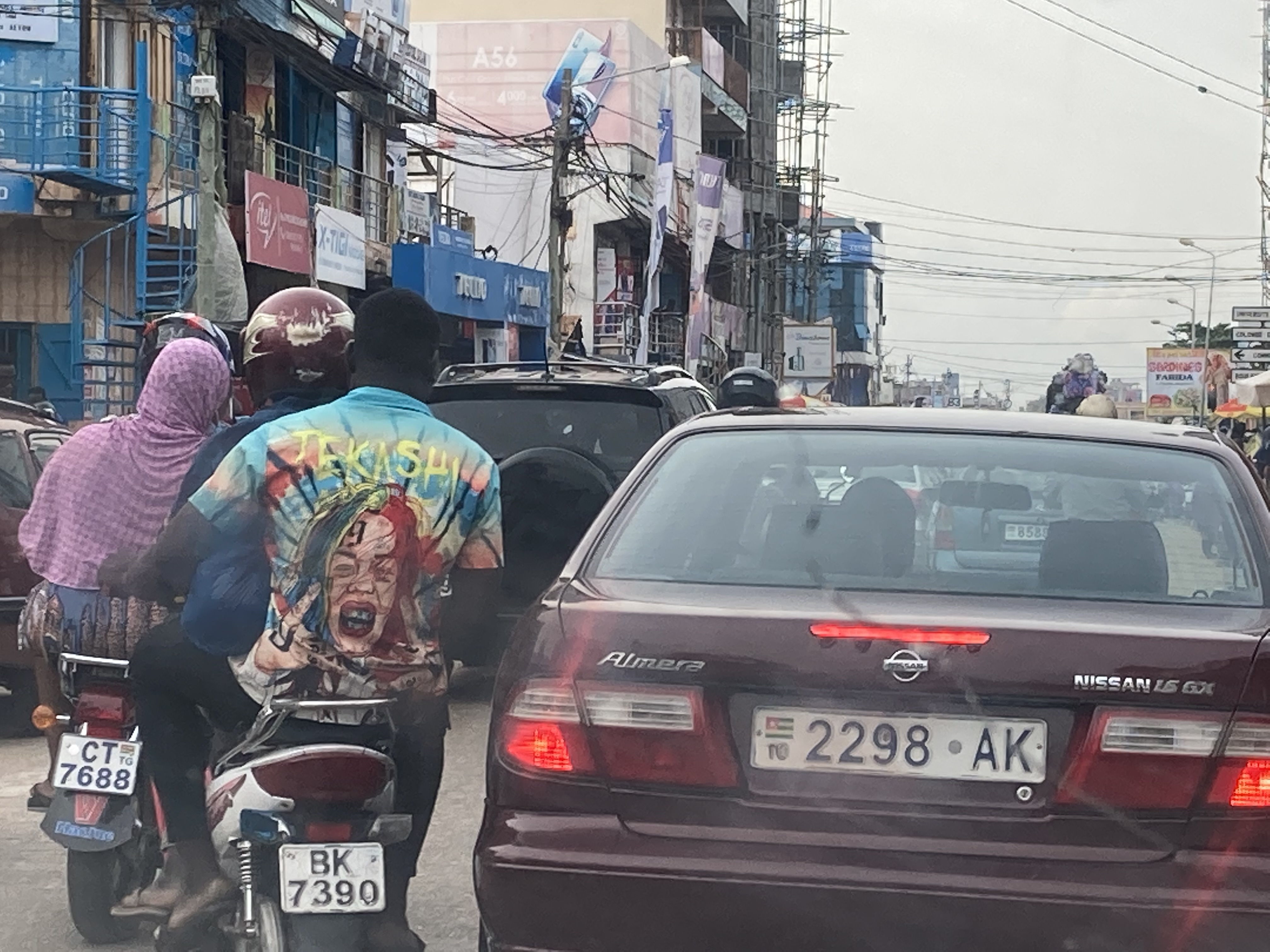
Outside of the gated area there were no sidewalks and no traffic lights so taking a walk or going to buy something at the local stores by foot was very uncomfortable. In addition, summer in Togo is the rainy season and the dirt road in front of our gated community often had huge puddles so at times there was only one foot of dry space to walk on, which we had to share with the cars and incessant motorbikes.
Other people in our group who rented a house or apartment had a much better experience. I think being a large party in a house makes it harder to manage the living conditions. Next time my wife and I will rent a place by ourselves.
Back in 2017, we stayed for two weeks at a relative’s house in the Avepozo quartier, or neighborhood. This year 2021, I found Avepozo to have grown, have a good nightlife, more variety of shops and better sidewalks. It’s also, unlike Baguida, at a walking distance from the beach.
Zemidjansand traffic
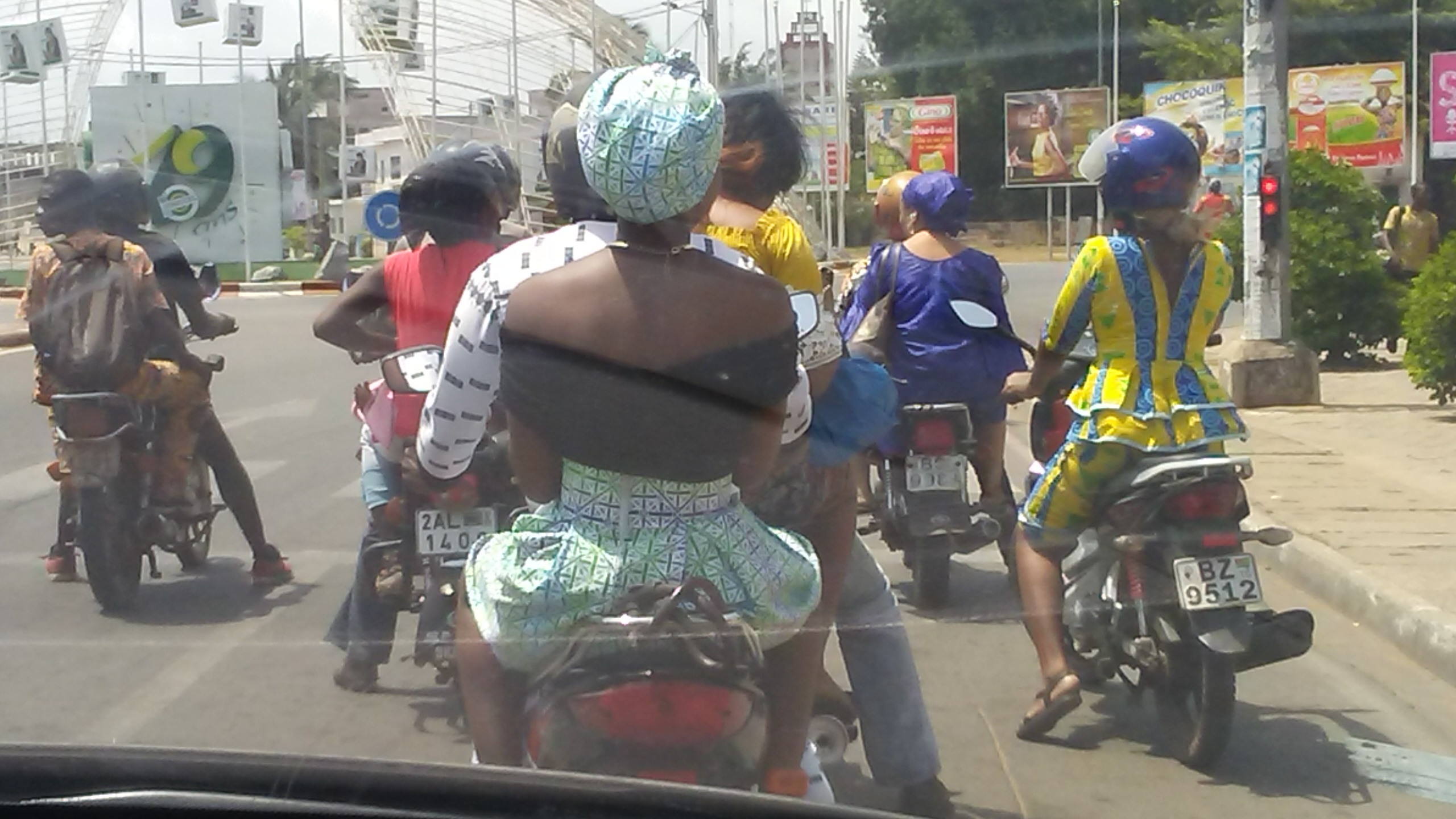
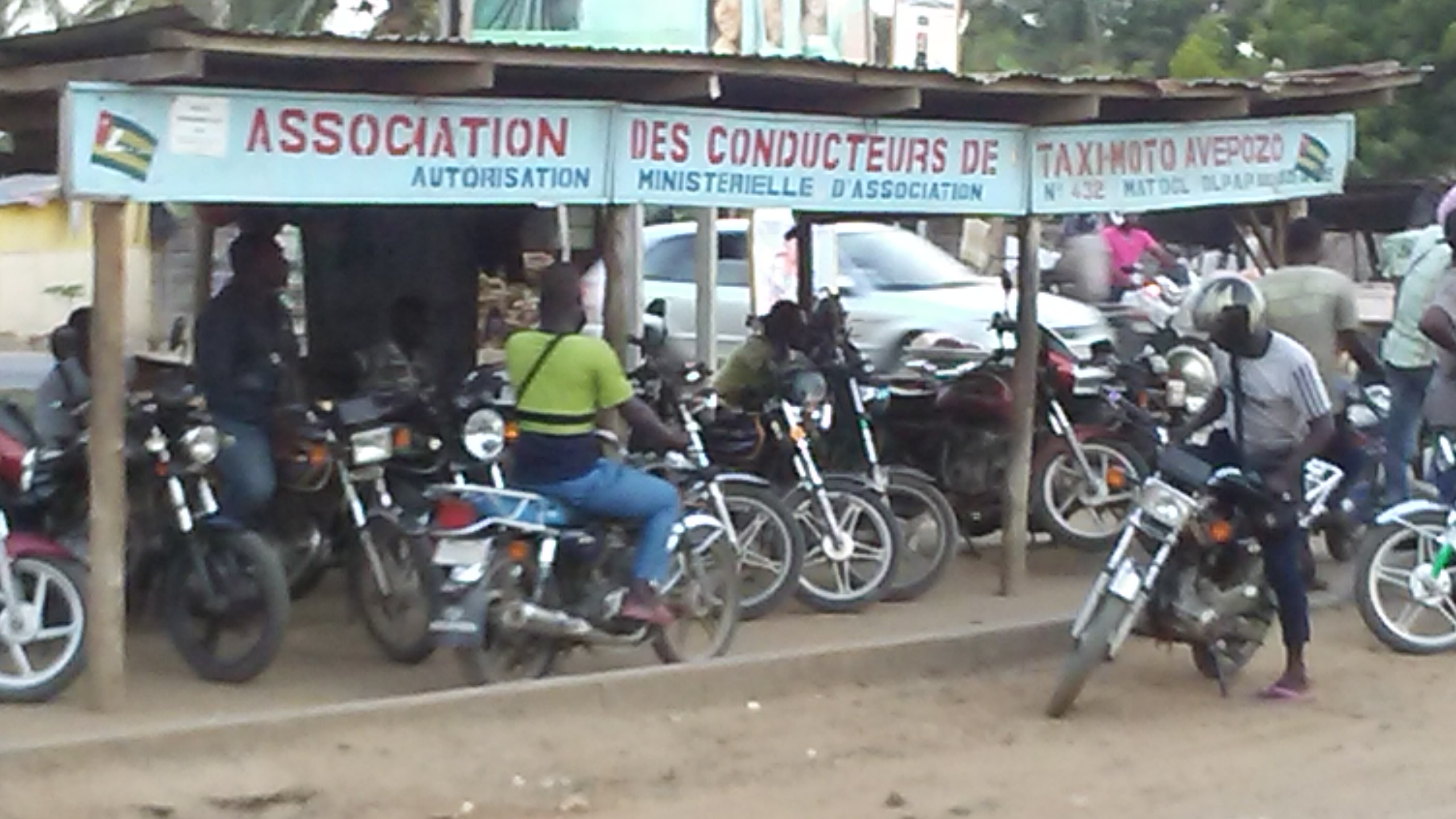
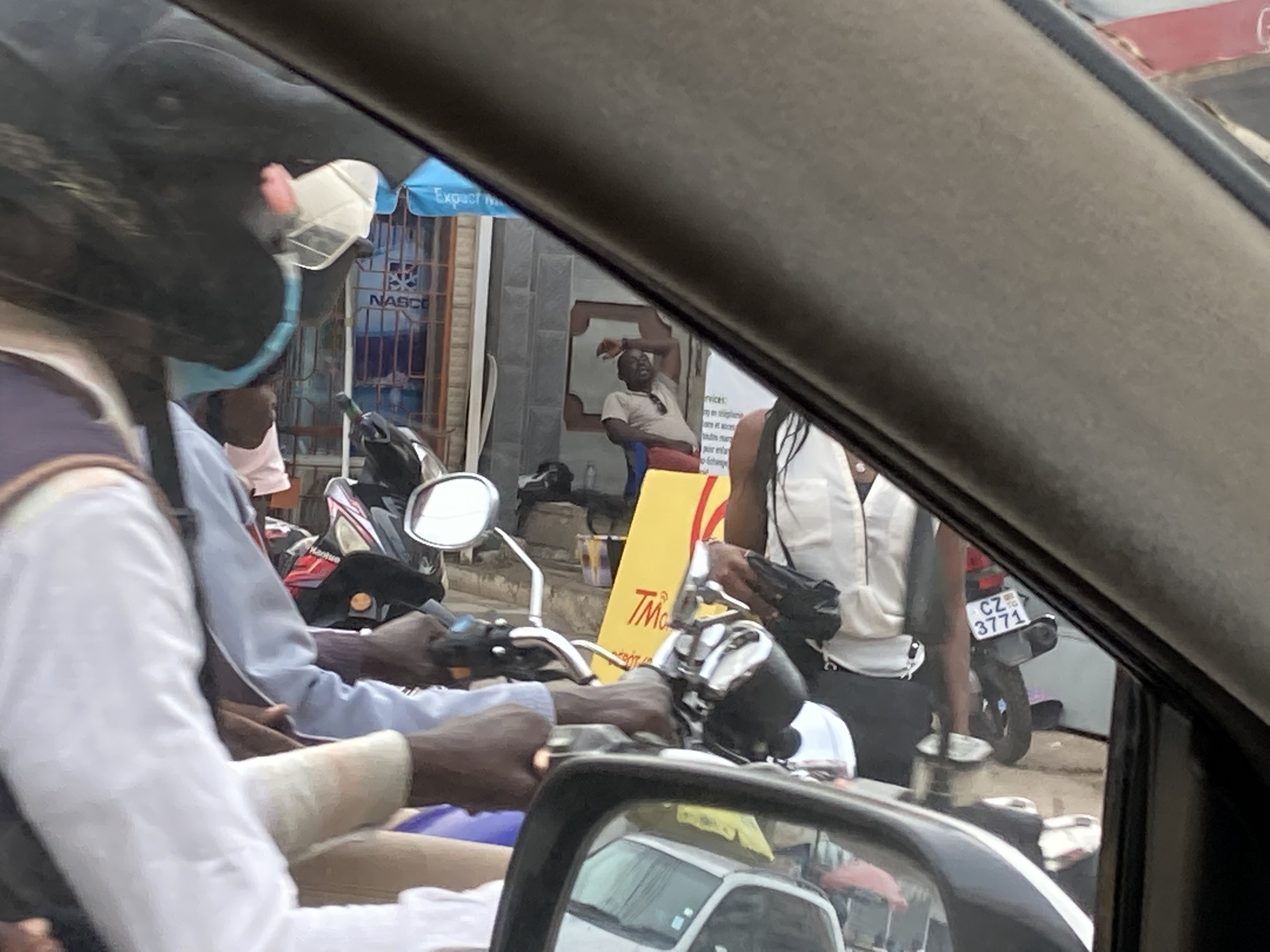
The zemidjans or motorbikes are a cheap and popular way to commute. A ride from Baguida to the Avepozo neighborhood, for example, almost 2 miles away, cost 300 CFA. My experience is that a lot of car drivers dislike the zemidjans, which seem to be the majority of vehicles in Lomé, because drivers say they do not follow traffic rules. Should they have their own traffic lanes?
Mototaxi center at the N2 in Avepozo, Lomé, TogoThe Zemidjans (motorbikes in the Ewe (Mina) language are an important means of transportation in Lomé, Togo. The word originally comes from the Efôn language in Benin, etymologically Zem means “take me” and djan = “quick.“
Two traffic rules that I noticed are very different in Lomé from Europe and the US: In Lomé vehicles inside a roundabout have to yield to incoming traffic and motorbikes always have to yield to cars.
Mosquitoes and Flies
I think the living conditions you choose in Togo will determine what experience you have with these insects. Unfortunately the house we rented had an indoor kitchen and the live-in cook we hired left the kitchen door open at all times due to the high heat. This meant we had dozens and dozens of insects coming into the house all day. The mosquitoes are excellent at hiding inside drapes and everywhere and when I would go downstairs in the morning, I would easily get stung numerous times. The first couple of days I had 10-15 mosquito bites until I bought a fan, which I put in my room to sleep at night and this stopped mosquitoes from stinging me. A deet mosquito repellent I purchased in the U.S. also worked well and my experience is that it’s best to spray it in your hand and then onto your body. I did not put any on my clothes and I never was stung through them. Togolese mosquitoes liked my ankles and ear lobes a lot. Some of the members of our household reported vaseline was very effective as a repellent but apparently it can make you very hot with the sun. Vaseline also worked for me, which I used in the evenings.
Port de Pêche de Lomé (Port Fish Market in Lomé)
In Togo fish is plentiful and if you are in the Baguida neighborhood you are very close to the Fish market (Port de Pêche). Be ready for some serious negotiations and haggling, which can be quite aggressive with certain merchants.
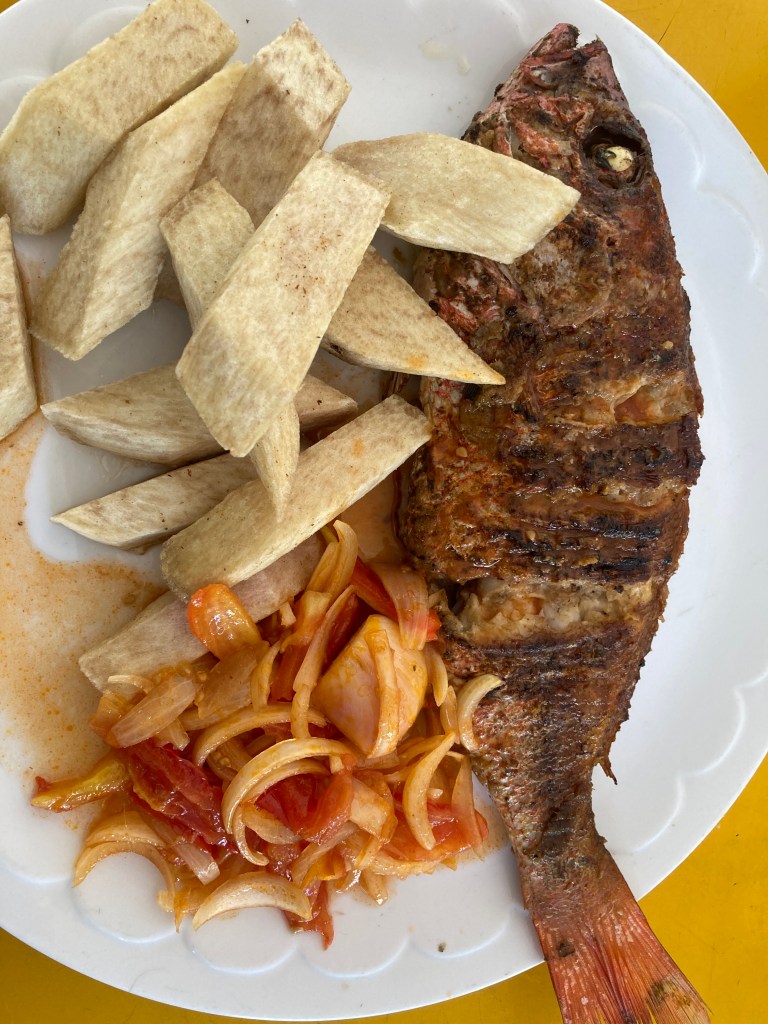
Grilled Red Snapper with fried yams and hot tomato sauce (Koliko avec akpavi poisson entouré avec yebessé)
Assigame Market
Once again this year we spent a lot of time in Assigame, the biggest market in Lomé. One could say it is like a huge open air Wal-Mart because they sell everything there. Many natives say one has to watch out for pickpockets and thieves but from having traveled to many big cities in different parts of the world, I can usually distinguish petty criminals and Togo still felt like a very safe place to me. In fact, we exchanged dollars in the market several times and never had a problem. Speaking of dollars, I didn’t find the exchange rate from withdrawing money in a bank any worse than exchanging it in the street, which is the natives’ preferred way of exchanging US dollars to CFAs.
Assigame is of course full of stands and shops but there are also hundreds if not thousands of walking vendors, who usually are quite aggressive. My experience is that the most pushy salespeople are those who sell shoes, belts and dress shirts. If you don’t want to be forced into buying something, don’t take anything in your hand, even when a walking vendor hands it to you, walk away and ignore the salesperson. You may be followed by an in-your-face salesman but you have to move along and be firm.
Natives say there are no jobs in Togo and people have no choice but to sell for a living and that perhaps this is why many walking vendors cannot take no for an answer.
We spent a lot of time in this hotel because the owners are my wife’s in-laws. The staff is very friendly, the food, excellent and it is right on the beach. The Wi-Fi works very well too.
Sickle Cell Anemia
In this last trip my wife, who suffers from sickle cell anemia, started using Drepanostat, an easy to find medication in Togolese pharmacies. According to my wife it has the same positive effect on her as the Burkina Faso medicine FA-CA, which we know is made from extracts from the Senegalese Prickly Ash tree and the Apple of Sodom plant. FA stands for Fagara Jaune, which is Prickly Ash in English, and CA stands for the Calotropis procera, Latin for the Apple of Sodom, Pommier de Sodome in French.
This medicine for sickle cell anemia is common in Togolese pharmacies and costs a little les than 5000 CFA or about $9 USDThis Burkina Faso company manufactures this medicine for the treatment of Sickle Cell Anemia
Last year my wife discovered this article, which basically states that certain plants have produced positive effects in the anti-sickling of red blood cells, and she started taking the above medicine, FA-CA from Burkina Faso.
Disclaimer: Although my wife has experienced positive effects with the above West African medicines, I don’t know if they would be effective with other people who suffer from sickle cell anemia and I am not promoting them. I am simply describing that my wife’s experience with them has been positive. There’s a lot of information on the internet regarding different medicines and/or plants which are used in West Africa to treat sickle cell anemia. Some of the information I have found is in French, from France, Benin and other Francophone countries but there’s a lot of information on the web in English from Nigeria as well. Please consult with a doctor before taking anything. Do not rely on this article or my wife’s experience.
Poverty
Togo is in European and American standards considered a poor country. The natives say there is a lack of jobs there and many people with college degrees are forced to work either driving the zemidjans or as walking street vendors. While I was in Togo, I was only in Lomé, and I did not see anyone who appeared under nourished. The great majority of children I saw wore shoes. I also didn’t see any children with swollen bellies which would indicate Kwashiorkor. However when I travel to Spain or Togo it pains me to see African walking vendors who one can notice are often struggling under the hot sun. Sometimes I have given some street salespeople a little bit of money like 100CFA or even 500CFA (approx. $1 USD). However some of them get offended and would rather sell you something. When I’m in Togo I’m basically never in need to buy anything from a walking vendor, who often sell items for the local population, I prefer to give them a bottle of water, which is always very well received.
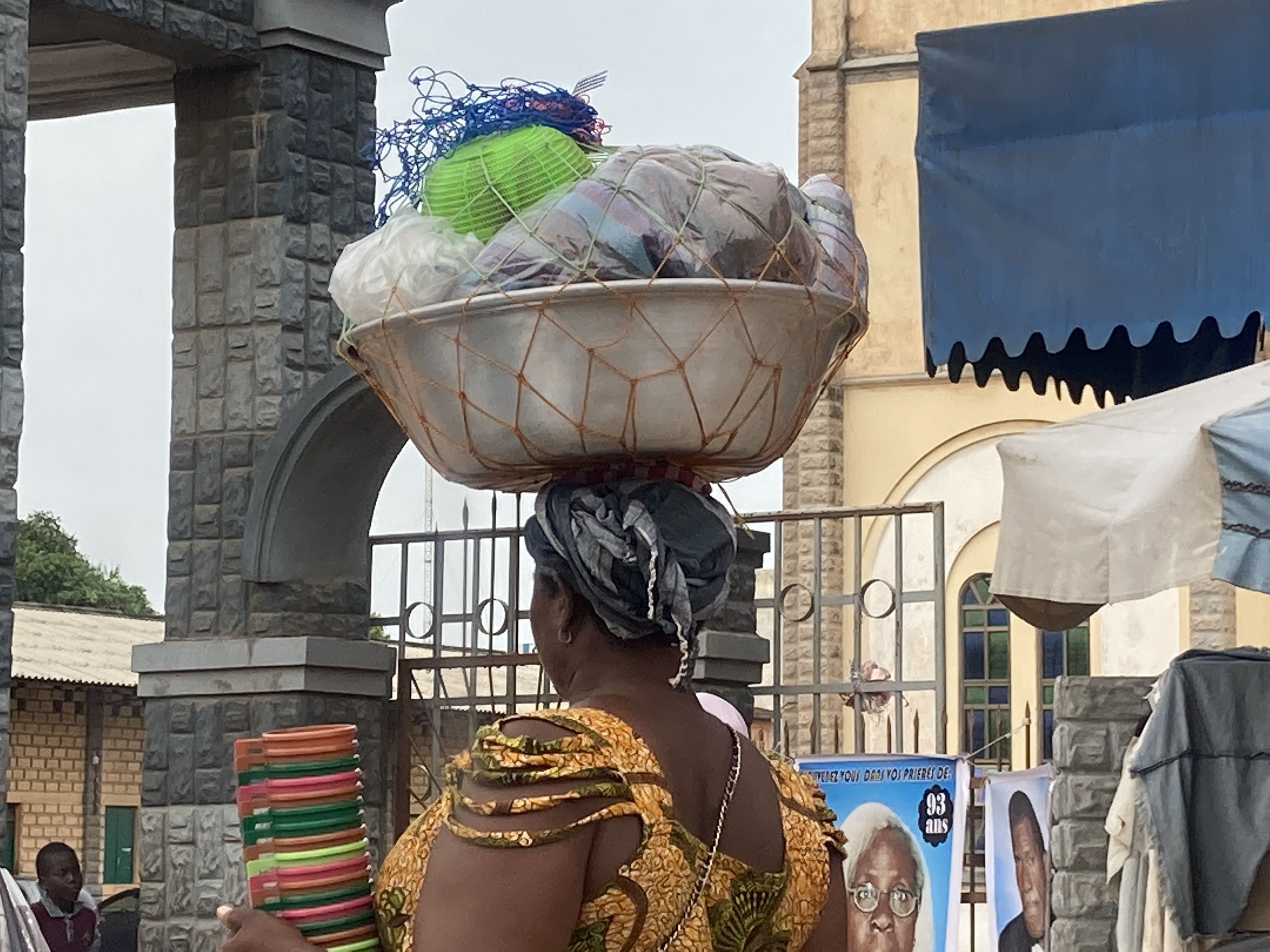
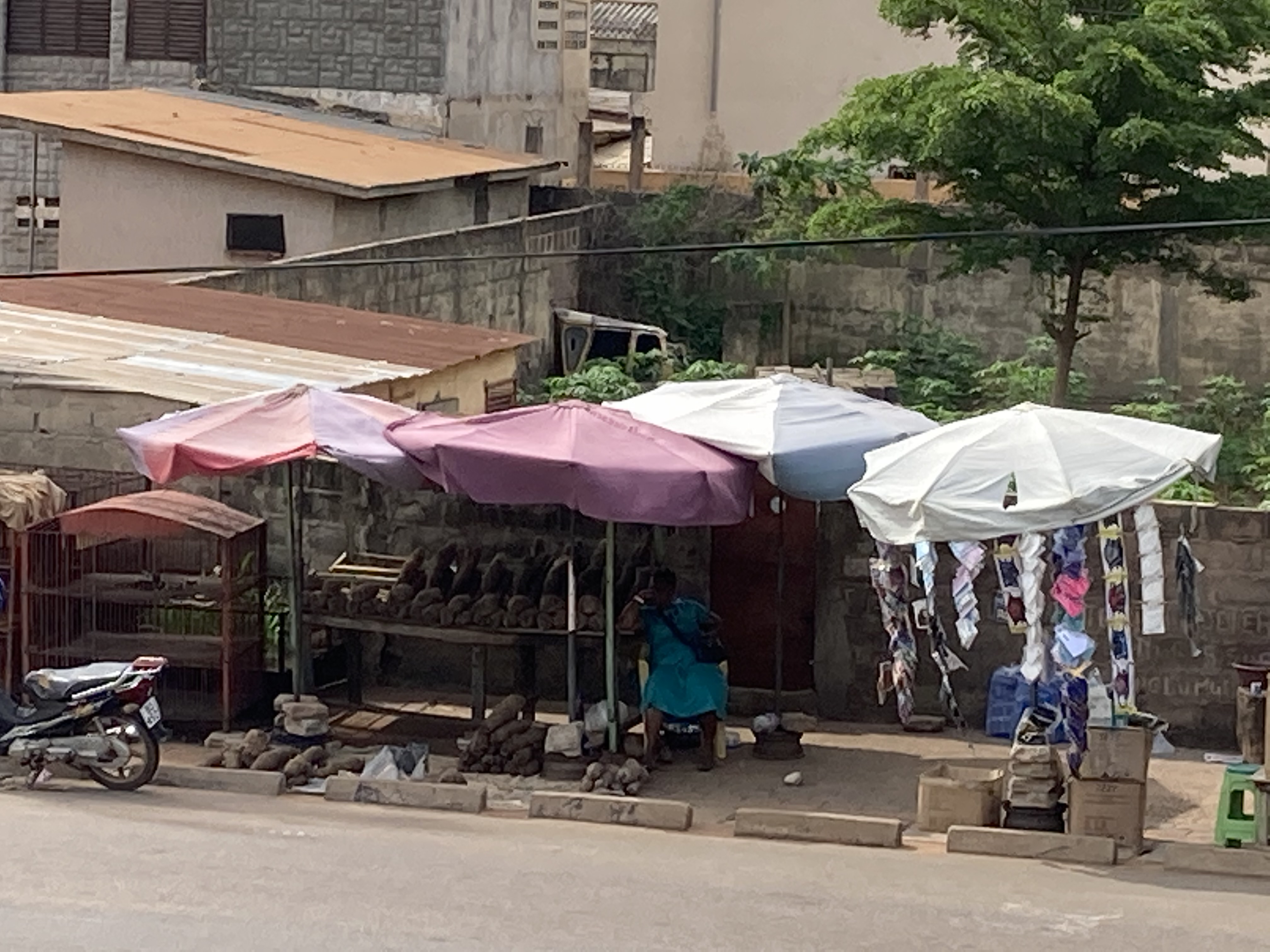
Waking vendor by the Cathedral Sacré CoeurWalking vendor returning home in the Baguida neighborhoodTypical Street Stand in LoméStreet vendor selling yams, a staple in Togo
I think I started to fear flying when I was about 10 or 11. I didn’t tell my parents or anyone. It didn’t occur to me and I didn’t think it would change anything to do so. I was probably also too embarrassed to share those feelings and I didn’t know telling others would have helped me deal with my fear.
One of the jobs I had when I was in college was driving a taxi and I would often pick up the airline crews from the airport to take them to their hotel. One time a couple of flight attendants said I should get some professional help and made it clear the fear I had was not normal. Looking at some of the statistics of how many thousands of flights there are up in the air every day and how many people die from airplane crashes per year, one may realize that the fear of flying is absurd; as absurd as fearing having a car accident every time you drive. In addition, thousands of flight attendants and flight personnel fly every day, probably without any fear whatsoever. When you see them aboard the airplanes, they go about their jobs nonchalantly making flying seem the most normal thing in the world.
Sometimes when I look at airplanes flying they terrify me. The noise they make, their speed and magnitude are overwhelming. It’s hard to wrap my head around the concept of a tube with wings with people inside, flying at hundreds of miles per hour through the air . Looking down from the stratosphere while inside an airplane has given me high anxiety. I’ve had mini panic attacks when I fly and rushing thoughts of what if the airplane suddenly disintegrated, or plunged into a dive. I’ve only been able to overcome these feelings with prayer. Saying the Serenity Prayer, or the Hail Mary in my head, over and over again has calmed my mind and heart. During these episodes of panic, my heart beats so fast I’ve often thought I might die of cardiac arrest before there even would be an airplane crash. Quite frankly, my emotions during some flights have been almost out of control.
My worst experience in the air was on one flight from New York city to Haiti about 20 years ago. Due the very high turbulence, no meals were served and the flight attendants did not leave their seats. It was not the common bumpy type, but rather fierce winds, which made the airplane move and shake sideways more than vertically and horizontally. The gusts were relentless and intermittent for about 3 hours. We were flying above the regular clouds one always sees in the sky but I noticed there were very high and thin wispy clouds above us, which I’m not sure if they had anything to do with the turbulence. It was a December 25th and I remember wondering if I was going to die on a Christmas day as I thought about my parents and my brothers. And it was terrifying but the prayers, which eventually became chants due to the severity and duration of the turbulence, worked. I was not the only person verbalizing prayers, but most people were quiet. I think the majority of passengers were not going through the extreme panic and fear I had. Luckily the last 2 hours of the flight the ride the turbulence vanished and the ride was very smooth . I was able to relax and felt very much relieved as if I had just lived a true life and death experience, which I’m not sure if it really was.
Since then, I’ve continued to fly every year at least once or twice and some years as much as 12 to 15 times. Interestingly, I’m always more scared on flights going to my destination and not as much on the way back home. I find the take off and the climbing part of the flight much more more frightening than the final descent and landing, which according to Boeing is statistically the most dangerous. Somehow I find the thought of returning to land comforting. Fear is not rational.
This year I went on two transatlantic flights and unfailingly, I became anxious on the week before the flights with thoughts of the possibility of dying in an airplane crash. Projecting about the future is of course bad because we have to live one day at a time. Anything can happen tomorrow or even later on today, for example something fatal, but I cannot live my life worrying about it, I need to live now, in the moment. Applying the one day at a time principle to my thoughts and emotions has relieved my fears, which at the end of the day are a waste of time. When I’m in an airplane, I’m completely powerless of what may or may not happen, the same way as I’m powerless over many things in life.
Flying over the Alps 2021
The specific worries I’ve had on the days before boarding an airplane are that I’m too young to die, that it’s unnatural to fly, that it’s not meant to be and that it isn’t right. There is of course an argument to be made that the carbon footprint and effects on the environment of air travel are too high and therefore we should not fly. But we humans need to progress and learn from our experiences too. Flying is of course a choice but I’ve always chosen to fly and never hesitated.
On my last transatlantic flight this year, I thought of the time one pilot told me turbulence is his favorite part because he knows the pilot is in essence subduing the wind. I was able to see turbulence as something positive and deal with it one second at time, surprisingly without fear and an elevated heart rate. During the usual safety announcements I thought about the statement this particular airline made “we take passenger safety very seriously.” The realization that there are many things I don’t know about airplanes and air travel was comforting, There are many people behind the air industry after all . It’s not about me, I’m not the only person in this world. Fear can be my own mental creation too, a kind of solitary downward spiral. I have been in dozens and dozens of flights in my lifetime. I have to trust the system and forget about what I cannot control. I have to let go. The Higher Power, God, or the Universe has a plan. It’s Their Will, not mine.
Hace dos semanas cenaba en la casa de mi madre en Alicante con mi hermano y su esposa senegalesa. Mi madre suele tener la radio encendida mientras desayuna o cena y de repente escucho en la radio la pregunta <<¿Por qué es racista decir que los negros tienen la polla más grande?>>.
Creo que fui el único que lo oyó, pues estábamos metidos en una conversación entretenida, pero poco después pregunté, incrédulo, ¿será posible lo que acaban de decir en la radio? Me pareció extremadamente grosera y racista la pregunta. La periodista Pepa Bueno (minuto 14:00) aunque esté hablando de un vídeo de Moha Gerehou, a quien está entrevistando, formula la pregunta de esa manera. No dice el hombre africano, de origen africano, o el hombre negro, tiene el pene más grande. O sea que había dos cosas que estaban mal con la pregunta de Pepa, el haber usado la palabra negro cuando no era imprescindible y el haber usado una palabrota, pues no he visto ningún vídeo del señor Gerehou en el que use ese taco. Desde luego en los EEUU, donde vivo, hablar de esa forma en la radio es la manera más rápida de quedarse sin trabajo, pues tales palabras siempre dan lugar a que se malentiendan y van a ser interpretadas como completament racistas, irresponsables e irrespetuosas.
La mañana siguiente hablando sobre el tema con mi hermano y su mujer, que al igual que mi madre, viven en Alicante, me enteré que a mi hermano también le da horror oír la palabra negro o negra en España cuando se usa como substantivo para describir a gente de piel oscura, africana, de origen africana, o afroamericana. Los dos estamos casados con mujeres africanas, yo con una togolesa, y tenemos hijos birraciales, que así los llamo, pues me disgusta la palabra mulato. Mi cuñada también opina que el uso de la palabra negro en España es racista. Mi mujer no podría opinar pues no habla castellano.
En Chicago donde vivo, cuando hablo español, jamás se me ocurriría llamar a los afroamericanos negros, ni siquiera los llamaría personas negras. Aunque tal vez algún hispanohablante use este vocablo, creo la gran mayoría de la gente me miraría mal. Tampoco hay muchos españoles por aquí, y aunque el español es un idioma muy importante, nuestra modalidad dialéctica peninsular es bastante desconocida por estos lares.
Familiares míos en España me han comentado que cómo va a ser racista la palabra. Se oye bastante, que si los negros esto, que si los negros aquello. El que así piense tal vez podría preguntarle a un africano que viva en España, ¿le molesta que le llame negro o negra cuando le hable? O tal vez a una persona asiática le podemos preguntar si le molesta que le llamemos amarillo. De la misma forma en España sería de mala educación llamar a un vecino “blanco” simplemente porque nos apetezca. Alguna persona habrá a la que tal vez no le moleste pero tampoco significa que no sea racista usar la palabra negro cuando no sea necesario. Me recuerda a una situación en Haití, cuando fui con mi primera esposa a la ciudad de Arcahaie. Yo era la única persona blanca y -aunque quizás no fuera cierto- sentía que llamaba muchísimo la atención en esa ciudad provinciana. En un determinado momento, una tarde, unas sobrinas de mi ex-mujer me llamaron blanc. La verdad es que me hirió los sentimientos y hasta se me saltaron las lágrimas. Me pareció cruel y falsa la palabra, a pesar del mucho orgullo que puedan sentir los haitianos de haberse quitado a los franceses de encima. Yo no soy un blanc, pensé, soy el marido de vuestra tía, que la quiere. No soy esa idea, ese estereotipo, ese preconcepto, como se llama en Brasil.
Hoy en día los científicos saben que las razas humanas no existen. Tener el color de la piel diferente, el pelo, la nariz, son simplemente rasgos del ser humano. No existe la raza negra, ni la amarilla, ni la roja, ni la blanca. Las razas son exclusivamente conceptos culturales y lingüísticos. Sería incorrecto llamar a la gente con sobrepeso, de raza gorda, a los de la nariz grande, narigones, etc.
A finales de los años 80, cuando estudiaba en la universidad de Wisconsin, era común el debate de cómo denominar correctamente a los afroamericanos. Leí bastante sobre la palabra “black” en inglés y que a mucha gente afroamericana le disgusta. Ya existía el sinónimo “African-American” como substituto, y aunque lo políticamente correcto tenga sus enemigos, se necesita una palabra para no ofender a nuestros hermanos. Sí, aquellos que los europeos esclavizamos durante siglos y a quienes les quitamos sus tierras en África y contra los que cometimos genocidio.
Es verdad que la palabra black ha sobrevivido, se sigue usando, lo hemos visto con el Black Lives Matter, y con otros ejemplos, pero no deja de ser un adjetivo incorrecto. No, no son blacks, son gente de piel oscura. No somos blancos tampoco, somos gente de piel clara. Que no se nos olvide. En el fondo son palabras injustas, creaciones de la mente ignorante del ser humano que no encajan para describir las verdades de los pueblos de este planeta.
En aquella universidad en Madison aprendí que el racismo puede ser ignorancia también. No es sólo el odio a otras “razas”. Cuando oigo a alguien decir que no es racista porque tiene amigos negros, o que no puede ser racista porque, por ejemplo, su hermano está casado con una mujer negra, o inclusive cuando oigo a alguien negar ser racista tan convencido, inmediatamente entiendo la ignorancia que hay en ese tipo de comentario. El que cree no ser racista con tal certidumbre lamentablemente no tiene ni idea y -curiosamente- hace poco escuchamos a la familia real británica afirmarlo. El problema no es que una persona por dentro no sea racista sino que hay comentarios que son racistas, y no se pueden hacer, a pesar de que una persona no haya tenido intenciones racistas, o que para sus adentros crea que no lo sea. Sé que si a mi hermano o a mí se nos acusara de ser racista, jamás argumentaríamos que estamos casados con mujeres africanas y que por lo tanto eso es imposible. Averiguaríamos qué hubiéramos dicho que fuera racista, cómo no volver a cometer ese error, aprenderíamos de esa experiencia, pediríamos disculpas y prometeríamos no volver a hacerlo. Nadie es perfecto y no se puede saberlo todo, por mucho tiempo que haya vivivo en los EEUU, en el sur de Chicago, entre una mayoría de gente afroamericana, casado con una mujer togolesa; con dos hijos adolescentes que aquí son considerados afroamericanos, ni por muchos años que mi hermano haya vivido en Senegal. Nadie es perfecto, ni lo puede saber todo.
Yo también cometí ese error cuando tenía 19 años. En una conversación con un chico y una chica afroamericanos, mientras bebíamos mucha cerveza, se me ocurrió comentar, que el hombre africano tiene el pene más grande. No me lo creía cuando me dijeron que era un comentario racista pues pensé era un halago, todo un honor tenerla más grande. No me daba cuenta que es un estereotipo deshumanizador, que cómo se va a saber, de todos los millones de seres humanos que hay, ¿quién lo va a saber y cómo? Sobrio no lo hubiera dicho. ¿Pero a quién se le ocurre decir semejante disparate y cómo venía al cuento tal pregunta con unas personas que apenas conocía?
Un amigo senegalés en España me comentaba que en una clase para ser azafato, que al expresar que le era difícil nadar, pues uno de los requisitos para serlo es superar una prueba de natación, el profesor dijo que los negros no saben nadar muy bien. Después para arreglarlo, al ver que se había equivocado, pero indudablemente sin entender el porqué, el profesor comenzó a decir a la clase que los negros son más musculosos. Ahí el senegalés le frenó al profesor, que -por favor-no dijera nada más. Después de la clase fue a hablar con su alumno <<Por favor no me odies, no me odies, sé que he metido la pata>> pero no le pidió disculpas. El profesor no se dio cuenta que había dicho algo racista y le preocupó más quedar bien con su alumno, no corregir su gran desacierto.
En Chicago en mi trabajo de intérprete judicial he participado en casos en los que algún testigo ha hablado de una persona afroamericana y usado la palabra moreno, que es la que los hispanohablantes de esta zona usan. Con esta acepción es una palabra de origen puertorriqueño, si no me engaño, y por supuesto la prefiero mil veces a la palabra negro. Siendo español, esta palabra me parecía rara hace muchos años cuando empecé a trabajar de intérprete. En España obviamente, estar moreno no es lo mismo que ser oscuro de piel o de ascendencia africana. Pero está claro que una de las razones de que exista esta palabra es para evitar decir negro porque el puertorriqueño entiende que no es correcto llamar negros a los afrocaribeños, o a los afrodescendientes, y está mal visto hacerlo en esa tierra.
Por lo tanto si en Puerto Rico no se usa la palabra negro, en España no debemos usarla tampoco. Recientemente hablando con un amigo puertorriqueño de este tema, me comentaba, <<la palabra moreno es bonita. Es bonito estar moreno>>.
Supongo la palabra negro seguirá siendo usada en ciertos contextos, se me ocurre uno que he vivido:
Abogado: Can you please describe the man you saw?
Intérprete: ¿Por favor, puede describir a la persona que usted vio?
Testigo: Era un moreno.
Intérprete: He was a swarthy fellow. [Era un tipo moreno. En inglés moreno, swarthy, es adjetivo. Traducirlo He was a black man sería una traducción correcta también pero si el testigo no es puertorriqueño, el intérprete no debe asumir, pues podría ser, por ejemplo, una persona hindú de piel muy oscura. La primera acepción de black man sería de hombre de color de piel oscura pero de origen africano].
Abogado: What do you mean? Was he black? Was he a black man? Was he an African-American? Somebody of African descent?
Intérprete: ¿Qué quiere decir usted? ¿Era negro? ¿Era un hombre negro? Era un africano-americano? ¿Alguien de ascendencia africana?









































 El descampado